


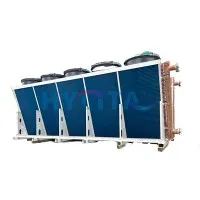
As an economizer recovery system supplier, I've been in the thick of the industry for quite some time, and I often get asked about how to measure the performance of these systems. It's a crucial topic, as understanding the performance metrics can help businesses make informed decisions about their energy efficiency and cost savings. In this blog, I'll share some of the methods we use to measure the performance of an economizer recovery system.
1. Heat Transfer Efficiency
One of the most fundamental ways to measure the performance of an economizer recovery system is by looking at its heat transfer efficiency. This metric tells us how effectively the system can transfer heat from the exhaust gas to the working fluid, like water or steam.
To calculate heat transfer efficiency, we use the formula:
[ \text{Heat Transfer Efficiency} = \frac{\text{Actual Heat Transfer}}{\text{Maximum Possible Heat Transfer}} \times 100% ]
The actual heat transfer is the amount of heat that is successfully transferred from the exhaust gas to the working fluid. We can measure this by monitoring the temperature change of both the exhaust gas and the working fluid. The maximum possible heat transfer is the theoretical amount of heat that could be transferred if the system was 100% efficient.
A high heat transfer efficiency means that the economizer recovery system is doing a great job of capturing and utilizing the waste heat. It also indicates that the system is well - designed and maintained. For example, if we have an Exhaust Gas Heat Exchanger with a high heat transfer efficiency, it can significantly reduce the energy consumption of a boiler or other industrial processes.
2. Energy Savings
Another important performance indicator is the energy savings achieved by the economizer recovery system. Energy savings are directly related to cost savings, so this is a metric that businesses really care about.
We can calculate energy savings by comparing the energy consumption of a system before and after the installation of an economizer recovery system. For instance, if a boiler was using a certain amount of fuel to produce steam before the economizer was installed, and after the installation, the fuel consumption decreased, the difference in fuel consumption represents the energy savings.
Let's say a factory's boiler was using 100 units of fuel per day to produce the required steam. After installing our economizer recovery system, the fuel consumption dropped to 80 units per day. The energy savings in this case would be 20 units per day. Over time, these savings can add up to a significant amount of money. And that's where our Waste Heat Recovery solutions really shine, as they help businesses make the most of the otherwise wasted heat.
3. Pressure Drop
Pressure drop is an often - overlooked but important factor in measuring the performance of an economizer recovery system. Pressure drop refers to the decrease in pressure of the exhaust gas as it passes through the economizer.
A high pressure drop can indicate several problems. It could mean that there is a blockage in the system, such as a build - up of dirt or debris in the Economizer Tube. It can also suggest that the system is not designed properly, causing excessive resistance to the flow of the exhaust gas.
We measure pressure drop using pressure sensors at the inlet and outlet of the economizer. A normal pressure drop is expected, but if it exceeds a certain threshold, it can lead to increased energy consumption for the fans or blowers that are used to move the exhaust gas through the system. So, keeping an eye on the pressure drop is essential for maintaining the efficiency of the economizer recovery system.
4. Steam or Hot Water Production
For many applications, the main goal of an economizer recovery system is to produce steam or hot water. Measuring the amount and quality of steam or hot water produced is a direct way to assess the system's performance.


We can measure the steam production rate by using flow meters. The quality of steam is determined by its dryness fraction, which indicates the amount of water vapor in the steam. A high - quality steam with a high dryness fraction is more efficient for industrial processes.
Similarly, for hot water production, we measure the flow rate and the temperature of the hot water. If the system can produce the required amount of steam or hot water at the desired temperature and quality, it is considered to be performing well.
5. Payback Period
The payback period is a financial metric that measures how long it takes for the cost of installing an economizer recovery system to be recovered through energy savings. It's an important consideration for businesses, as they want to know when they'll start seeing a return on their investment.
To calculate the payback period, we divide the total cost of the system (including installation) by the annual energy savings. For example, if the total cost of installing an economizer recovery system is $100,000 and the annual energy savings are $20,000, the payback period would be 5 years.
A shorter payback period is generally more attractive to businesses. Our team at the supplier side works hard to design systems that offer a reasonable payback period, so that our customers can quickly start reaping the benefits of energy savings.
Why Choose Our Economizer Recovery Systems?
We've been in the business of providing economizer recovery systems for years, and we've built a reputation for quality and performance. Our systems are designed using the latest technology to ensure high heat transfer efficiency, low pressure drop, and maximum energy savings.
We also offer comprehensive after - sales support, including regular maintenance and troubleshooting. Our team of experts is always ready to help our customers get the most out of their economizer recovery systems.
If you're interested in learning more about how our economizer recovery systems can improve your energy efficiency and save you money, don't hesitate to reach out. We'd be more than happy to have a detailed discussion with you about your specific needs and how our solutions can fit into your operations. Whether you're in the manufacturing, power generation, or any other industry that generates waste heat, we have the right solution for you.
References
- ASHRAE Handbook of HVAC Systems and Equipment.
- Industrial Energy Efficiency Manual.
- Heat Exchanger Design Handbook.