


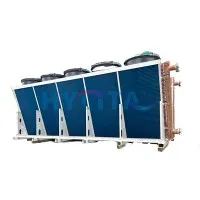
Hey there! As a supplier of hot water economisers, I've had my fair share of customers asking about the operating costs. It's a pretty important topic, right? After all, nobody wants to invest in a product that's going to burn a hole in their pocket in the long run. So, let's dive into what the operating costs of a hot water economiser actually are.
1. Installation Costs
First off, we've got to talk about the initial installation. This is a one - time cost, but it can vary quite a bit. The complexity of the installation depends on a few factors. For instance, if your existing system is already set up in a way that's compatible with the hot water economiser, the installation might be a breeze. But if there are a lot of modifications needed, like rerouting pipes or adjusting the boiler setup, that's going to add to the cost.
The size of the economiser also plays a role. A larger economiser for an industrial - scale operation will obviously cost more to install than a smaller one for a small business or a residential property. On average, installation costs can range from a few hundred dollars for a simple setup to several thousand dollars for a more complex industrial installation.
2. Energy Consumption
Now, let's get to the heart of the matter - energy consumption. The whole point of a hot water economiser is to save energy, but it still uses some power to operate. The main energy - using components are the pumps and controls.
Pumps are used to circulate the water through the economiser. The energy they consume depends on their size and the flow rate they need to maintain. Smaller pumps for domestic use will use less energy compared to large industrial pumps. Controls, on the other hand, are used to regulate the operation of the economiser. They're usually low - energy devices, but they still add to the overall energy consumption.
However, the good news is that the energy savings from a hot water economiser far outweigh the energy it consumes. By recovering waste heat from exhaust gases or other sources, it reduces the amount of energy needed to heat the water. For example, in a commercial kitchen, a hot water economiser can recover heat from the flue gases of a boiler and use it to pre - heat the incoming cold water. This means the boiler doesn't have to work as hard, resulting in significant energy savings.
3. Maintenance Costs
Maintenance is another factor that contributes to the operating costs. Regular maintenance is essential to keep the hot water economiser running efficiently. This includes tasks like cleaning the heat exchanger surfaces, checking the pumps and controls for proper operation, and inspecting the pipes for leaks.
Cleaning the heat exchanger is crucial because over time, dirt, scale, and other deposits can build up on its surfaces. This reduces the heat transfer efficiency, which means the economiser has to work harder to achieve the same results. Depending on the environment in which the economiser is installed, cleaning might need to be done quarterly, semi - annually, or annually.
Checking the pumps and controls ensures that they're functioning correctly. If a pump fails, it can disrupt the water circulation, and if the controls malfunction, the economiser might not operate at its optimal level. Inspecting the pipes for leaks is also important because even a small leak can lead to water loss and reduced efficiency.
The cost of maintenance can vary depending on the size and complexity of the economiser. For a small domestic economiser, you might be able to do some of the maintenance tasks yourself, which will save you money. But for larger industrial economisers, you'll probably need to hire a professional maintenance service. On average, maintenance costs can range from a few hundred dollars per year for a small unit to several thousand dollars per year for a large industrial one.
4. Replacement Parts
Over time, some parts of the hot water economiser will wear out and need to be replaced. The most common parts that might need replacement are the pumps, valves, and heat exchanger tubes.
Pumps are subject to mechanical wear and tear, especially if they're running continuously. Valves can also fail due to corrosion or improper operation. Heat exchanger tubes can develop leaks or become damaged over time, especially if they're exposed to high - temperature or corrosive environments.
The cost of replacement parts depends on the type and size of the part. For example, a small domestic pump might cost a few hundred dollars to replace, while a large industrial pump could cost several thousand dollars. Valve replacement costs can range from a few tens of dollars for a simple valve to several hundred dollars for a more complex one. Heat exchanger tube replacement can be quite expensive, especially if the economiser has a large number of tubes.
5. Comparison with Similar Products
When considering the operating costs of a hot water economiser, it's also useful to compare it with similar products. For example, an Exhaust Heat Exchanger is another type of heat - recovery device. While it can also recover waste heat, its operating costs might be different.
An exhaust heat exchanger might have different installation requirements, which could affect the initial cost. Its energy consumption might also vary depending on its design and the application. Similarly, an Air Preheater and Economiser and a Vapour Economizer in Boiler have their own unique operating characteristics and costs.
In general, a hot water economiser is often a more cost - effective option for applications where the main goal is to pre - heat water. It's designed specifically for this purpose, which means it can achieve higher energy savings and lower operating costs compared to some other heat - recovery devices in certain situations.
Conclusion
So, as you can see, the operating costs of a hot water economiser are made up of several components - installation, energy consumption, maintenance, and replacement parts. While there are upfront and ongoing costs, the long - term energy savings usually make it a worthwhile investment.
If you're interested in learning more about our hot water economisers or want to discuss how they can fit into your specific situation, we'd love to hear from you. Whether you're a small business owner looking to reduce your energy bills or an industrial operator aiming for more efficient operations, our team can provide you with all the information you need. Just reach out to us, and we can start a conversation about how our hot water economisers can work for you.


References
- Industry reports on heat - recovery systems
- Manufacturer's manuals for hot water economisers