


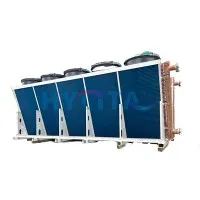
In the realm of industrial operations, energy efficiency has emerged as a critical factor, not only for cost - effectiveness but also for environmental sustainability. Heat energy recovery technologies play a pivotal role in this context, enabling industries to capture and reuse waste heat that would otherwise be lost. As a leading heat energy recovery supplier, we have witnessed firsthand the remarkable performance improvements brought about by new heat energy recovery technologies.
Enhanced Heat Transfer Efficiency
One of the most significant performance improvements of new heat energy recovery technologies lies in their enhanced heat transfer efficiency. Traditional heat exchangers often suffered from limitations in transferring heat effectively between the hot and cold fluids. However, modern heat recovery systems, such as the Economiser Heat Exchanger, are designed with advanced materials and geometries to maximize heat transfer.
New heat exchangers utilize high - conductivity materials like stainless steel and advanced alloys. These materials have excellent thermal properties, allowing for faster and more efficient heat transfer. Additionally, innovative tube designs, such as finned tubes, increase the surface area available for heat exchange. Finned tubes can significantly enhance the heat transfer coefficient, enabling more heat to be transferred in a smaller space. This means that industries can achieve the same level of heat recovery with a more compact and cost - effective heat exchanger.
For example, in a power generation plant, an old - style heat exchanger might have a heat transfer efficiency of around 60 - 70%. In contrast, a modern economiser heat exchanger can achieve efficiencies of up to 90% or more. This increase in efficiency translates into substantial energy savings, as more of the waste heat can be recovered and reused in the process.
Improved Durability and Reliability
Another area where new heat energy recovery technologies shine is in their improved durability and reliability. Older heat recovery systems were often prone to corrosion, fouling, and mechanical failures, which could lead to costly downtime and maintenance. New technologies address these issues through the use of better materials and advanced manufacturing techniques.
The Carbon Steel Economiser is a prime example of a durable heat recovery solution. Carbon steel, when properly treated and coated, offers excellent resistance to corrosion. Specialized coatings can protect the steel from the harsh chemicals and high - temperature environments often found in industrial processes. This not only extends the lifespan of the economiser but also reduces the need for frequent maintenance.
In addition, modern manufacturing processes ensure greater precision in the construction of heat recovery systems. Computer - aided design and manufacturing (CAD/CAM) technologies allow for more accurate fabrication of components, resulting in a better - fitting and more reliable system. This reduces the risk of leaks and other mechanical failures, ensuring continuous and efficient operation.
Flexibility and Adaptability
New heat energy recovery technologies are also more flexible and adaptable to different industrial processes. In the past, heat recovery systems were often designed for specific applications and were difficult to modify or expand. Today's systems, however, are built with modularity in mind.
Modular heat recovery units can be easily combined and configured to meet the specific needs of different industries. For instance, a chemical plant may require a different heat recovery setup compared to a food processing facility. With modular systems, it is possible to select the appropriate modules and arrange them in a way that maximizes heat recovery for the particular process.
Moreover, new technologies can handle a wider range of operating conditions. The Heat Exhaust Recovery systems, for example, can operate at different temperatures and flow rates. This flexibility allows industries to recover heat from various sources, including exhaust gases from furnaces, boilers, and engines. Whether the exhaust gas is at a high temperature or a relatively low temperature, modern heat exhaust recovery systems can be optimized to extract as much heat as possible.
Energy Savings and Cost - Effectiveness
The performance improvements of new heat energy recovery technologies ultimately lead to significant energy savings and cost - effectiveness. By recovering and reusing waste heat, industries can reduce their reliance on primary energy sources, such as fossil fuels. This not only lowers energy costs but also reduces greenhouse gas emissions.
For a large industrial facility, the energy savings from implementing a modern heat recovery system can be substantial. Consider a manufacturing plant that spends a significant amount of money on heating and steam generation. By installing an efficient heat recovery system, it can recover a large portion of the waste heat from its processes and use it to pre - heat water or generate steam. This can result in a reduction of up to 30% or more in energy consumption for heating and steam generation.
In addition to direct energy savings, the cost - effectiveness of new heat recovery technologies is also enhanced by their lower maintenance requirements and longer lifespan. As mentioned earlier, the improved durability and reliability of modern systems mean less downtime and fewer maintenance expenses over the long term.
Environmental Benefits
The environmental benefits of new heat energy recovery technologies cannot be overstated. In an era of increasing concern about climate change and environmental degradation, reducing energy consumption and greenhouse gas emissions is of utmost importance.


By recovering waste heat, industries can reduce their carbon footprint. For example, a power plant that recovers heat from its exhaust gases and uses it to generate additional electricity can reduce its coal or natural gas consumption. This directly translates into a reduction in carbon dioxide emissions. In addition, heat recovery systems can also reduce other pollutants, such as nitrogen oxides and particulate matter, by improving the overall efficiency of the industrial process.
Conclusion
As a heat energy recovery supplier, we are excited about the performance improvements offered by new heat energy recovery technologies. These technologies not only provide significant energy savings and cost - effectiveness but also contribute to a more sustainable and environmentally friendly industrial future.
If you are looking to improve the energy efficiency of your industrial process, reduce your operating costs, and minimize your environmental impact, we invite you to explore our range of heat energy recovery solutions. Our team of experts can work with you to design and implement a customized heat recovery system that meets your specific needs. Contact us today to start the conversation about how we can help you achieve your energy and sustainability goals.
References
- Incropera, F. P., & DeWitt, D. P. (2002). Fundamentals of Heat and Mass Transfer. John Wiley & Sons.
- Cengel, Y. A., & Boles, M. A. (2015). Thermodynamics: An Engineering Approach. McGraw - Hill Education.
- ASHRAE Handbook: HVAC Systems and Equipment. (2016). American Society of Heating, Refrigerating and Air - Conditioning Engineers.