


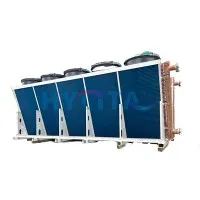
Hey there! As a chiller cooling system supplier, I often get asked about the space requirements for these systems. It's a crucial question because getting the space right can make a huge difference in how well the chiller works and how easy it is to maintain. So, let's dive into this topic and break down what you need to know.
Understanding the Basics of Chiller Cooling Systems
First off, let's quickly go over what a chiller cooling system does. In simple terms, chillers are used to remove heat from a liquid through a vapor - compression or absorption refrigeration cycle. This cooled liquid can then be circulated through a heat exchanger to cool equipment or air in a building. There are different types of chiller cooling systems, like Stainless Steel Air Fin Cooler, Water - cooled Chiller Cooler, and Air Chiller with Free Cooling. Each type has its own unique space requirements.
Factors Affecting Space Requirements
Physical Size of the Chiller Unit
The most obvious factor is the actual size of the chiller unit itself. Chillers come in all shapes and sizes, depending on their capacity. A small chiller for a single - room application might be relatively compact, while a large industrial chiller can be the size of a small truck. When planning the space, you need to measure the length, width, and height of the chiller and make sure there's enough room for it to fit comfortably.
Clearance for Maintenance
Maintenance is a must for any chiller cooling system. You need to have enough space around the chiller to access all the components for regular check - ups, repairs, and cleaning. Typically, you should leave at least 3 to 5 feet of clearance on all sides of the chiller. This allows technicians to open panels, remove parts, and work safely without any restrictions.
Ventilation Requirements
Chillers generate heat during operation, and proper ventilation is essential to dissipate this heat. For air - cooled chillers, they need a large amount of fresh air to cool the condenser coils. You should have an open area in front of the air - cooled chiller where air can freely enter and exit. The ventilation area should be at least twice the size of the chiller's frontal area.
Water - cooled chillers, on the other hand, require a separate cooling tower or heat exchanger for heat rejection. These additional components also need space and proper ventilation. The cooling tower needs to be placed in an area where there's good air circulation to prevent hot air from recirculating back into the tower.
Piping and Ductwork
If your chiller system involves piping for the coolant or ductwork for air distribution, you need to factor in the space for these as well. Pipes and ducts need to be installed in a way that allows for easy access and maintenance. They also need to be routed in a way that minimizes bends and turns to reduce pressure drops.
Space Requirements for Different Types of Chillers
Air - Cooled Chillers
Air - cooled chillers are popular because they're relatively easy to install and don't require a separate cooling tower. However, they do need a significant amount of space for ventilation. As mentioned earlier, they need an open area in front of the unit for air intake and exhaust.
In addition to the ventilation space, you also need to consider the space for the electrical connections and controls. These should be easily accessible and located in a dry area to prevent any electrical hazards.
Water - Cooled Chillers
Water - cooled chillers are more efficient in terms of energy consumption but require more complex installations. They need a cooling tower or a heat exchanger, which takes up additional space. The cooling tower should be placed on a flat, stable surface and should be located away from any sources of contamination.
The water - cooled chiller itself also needs space for the water piping, valves, and pumps. These components need to be installed in a way that allows for easy maintenance and inspection.


Absorption Chillers
Absorption chillers use a different refrigeration cycle compared to vapor - compression chillers. They are often used in large commercial and industrial applications. These chillers require space for the absorption unit, the generator, and the condenser. They also need a source of heat, such as natural gas or steam, which means there needs to be space for the heat source and the associated piping.
Planning the Space for Your Chiller Cooling System
Site Survey
Before installing a chiller cooling system, it's a good idea to conduct a site survey. This involves measuring the available space, checking the structural integrity of the area, and identifying any potential obstacles. A professional site survey can help you determine if the space is suitable for the chiller and if any modifications need to be made.
Layout Design
Once you have the survey results, you can start designing the layout of the chiller system. This includes deciding where to place the chiller, the cooling tower (if applicable), the piping, and the electrical components. A well - designed layout can improve the efficiency of the system and make maintenance easier.
Future Expansion
When planning the space, it's also important to consider future expansion. If your business is growing, you might need to upgrade your chiller system in the future. Leave some extra space around the existing chiller to accommodate any future additions or replacements.
Conclusion
In conclusion, the space requirements for a chiller cooling system depend on several factors, including the type of chiller, its physical size, maintenance needs, ventilation requirements, and the associated piping and ductwork. By carefully considering these factors and planning the space accordingly, you can ensure that your chiller system operates efficiently and is easy to maintain.
If you're in the market for a chiller cooling system and need help with space planning or have any other questions, don't hesitate to reach out. We're here to assist you in finding the perfect chiller solution for your needs. Whether it's an Stainless Steel Air Fin Cooler, a Water - cooled Chiller Cooler, or an Air Chiller with Free Cooling, we've got you covered. Contact us today to start the procurement process and let's work together to create a cooling system that meets your requirements.
References
- ASHRAE Handbook of Refrigeration
- Chiller Manufacturer's Installation and Maintenance Guides
- Industrial Refrigeration Design and Application Manuals