


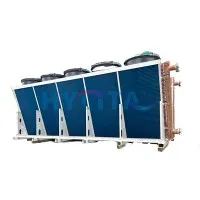
Hey there! As a supplier of economizer recovery equipment, I've been getting a lot of questions lately about the standards for this type of gear. So, I thought I'd break it down for you in this blog post.
First off, let's talk about what economizer recovery equipment is all about. Essentially, it's designed to capture and reuse waste heat that would otherwise be lost. This not only saves energy but also reduces operational costs for industries. There are various types of economizer recovery equipment, like the Economizer Tube and the SS Economiser Heat Exchanger, which play crucial roles in waste - heat recovery processes.
Efficiency Standards
One of the most important standards for economizer recovery equipment is its efficiency. In a nutshell, we're talking about how well the equipment can transfer heat from the waste - heat source to the working fluid. High - efficiency equipment should have a minimal temperature difference between the inlet and outlet of the heat transfer process.
The efficiency of an economizer is often measured by its heat transfer coefficient. A higher coefficient means that heat can be transferred more effectively. For example, modern economizers are expected to have heat transfer coefficients that meet or exceed industry benchmarks. This can be achieved through careful design of the heat exchanger surfaces, such as using fins or other enhanced geometries.
Another aspect of efficiency is the amount of energy that can actually be recovered. This is typically expressed as a percentage of the total available waste heat. In many industries, the goal is to recover at least 60 - 80% of the waste heat. If the equipment can't reach this level, it might not be worth the investment.
Material Standards
The materials used in economizer recovery equipment are also super important. They need to be able to withstand high temperatures, corrosive environments, and mechanical stress. For instance, the SS Economiser Heat Exchanger often uses stainless steel because of its excellent corrosion resistance.
Stainless steel can withstand a wide range of temperatures and is resistant to oxidation, which is crucial when dealing with hot waste gases. Additionally, the tubes in an economizer should be made from materials that have good thermal conductivity. Copper and aluminum alloys are sometimes used in addition to stainless steel. They can transfer heat quickly, improving the overall efficiency of the equipment.
But it's not just about the bulk materials. The joints and welds in the equipment also need to meet high - quality standards. Poorly welded joints can lead to leaks, which not only reduce efficiency but can also be a safety hazard.
Safety Standards
Safety is a top priority when it comes to economizer recovery equipment. The equipment should be designed to prevent over - pressurization. Pressure relief valves are commonly installed to ensure that if the pressure inside the system gets too high, it can be safely released.
Another safety aspect is the prevention of fires and explosions. Since the equipment is dealing with hot gases and potentially flammable substances, proper ventilation and fire - prevention measures are essential. Electrical components in the equipment should also be properly grounded and protected to prevent electrical fires.
In addition, the equipment should have clear safety labels and instructions. Operators need to know how to use the equipment safely and what to do in case of an emergency.
Durability Standards
Durability is closely related to the material and design of the equipment. The economizer should be able to operate continuously for long periods without major breakdowns. This means that the components need to be wear - resistant.
For example, the tube bundle in an economizer should be designed to resist erosion from the high - velocity waste gases flowing through it. Coatings and linings can be used to protect the tubes from wear and tear. Regular maintenance is also crucial for ensuring durability. The equipment should be designed in a way that makes maintenance easy and cost - effective.
Environmental Standards
In today's world, environmental standards are more important than ever. Economizer recovery equipment should help industries reduce their carbon footprint. By recovering waste heat, the equipment reduces the need for additional fuel to generate heat, which in turn reduces greenhouse gas emissions.
The equipment should also comply with local and international environmental regulations regarding air and water pollution. For example, if the waste heat recovery process involves the use of water, the water should be treated properly to prevent pollution.


Performance Monitoring and Control Standards
Modern economizer recovery equipment should have built - in performance monitoring and control systems. These systems can track important parameters such as temperature, pressure, and flow rate. By continuously monitoring these parameters, operators can ensure that the equipment is operating at its optimal level.
The control systems should be able to adjust the operation of the equipment based on the monitored data. For example, if the temperature of the waste gas increases, the control system can adjust the flow rate of the working fluid to maintain the desired heat transfer efficiency.
Industry - Specific Standards
Different industries have different requirements for economizer recovery equipment. For example, the power generation industry may have different standards compared to the food processing industry. In the power generation industry, the equipment needs to be able to handle large volumes of waste heat from power plants.
On the other hand, the food processing industry requires equipment that meets strict hygiene standards. This means that the materials used in the equipment should be easy to clean and sterilize, and there should be no risk of contamination of the food products.
Cost - Effectiveness Standards
Finally, cost - effectiveness is always a consideration. The initial cost of the equipment should be balanced with its long - term savings in energy and maintenance. A more expensive but highly efficient economizer may save more money in the long run compared to a cheaper but less efficient one.
When evaluating the cost - effectiveness of economizer recovery equipment, it's important to consider the payback period. This is the time it takes for the savings in energy costs to equal the initial investment in the equipment. A shorter payback period is generally more desirable.
If you're in the market for economizer recovery equipment and want to learn more about how our products meet these standards, feel free to reach out. We're here to help you make the best decision for your business. Whether you need information about the Economizer Tube, SS Economiser Heat Exchanger, or Waste Heat Recovery options, don't hesitate to start a conversation about potential procurement.
References
- ASME Boiler and Pressure Vessel Code
- ISO Standards for Heat Exchangers
- Industry - specific guidelines from relevant trade associations