


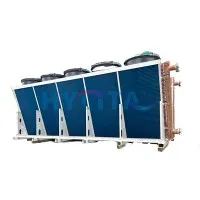
Condenser coils are essential components in various cooling and refrigeration systems. As a condenser coil supplier, I've had the privilege of working with different types of condenser coils and understanding their unique features and applications. In this blog post, I'll share some insights into the various types of condenser coils out there.
Air-Cooled Condenser Coils
Air-cooled condenser coils are probably the most common type you'll come across. They're used in a wide range of applications, from small residential air conditioning units to large commercial refrigeration systems. The way they work is pretty straightforward. They use air to remove heat from the refrigerant inside the coils.
These coils typically have a series of fins attached to them. The fins increase the surface area of the coils, which helps in better heat transfer. The air is blown over the coils by fans, and as it passes, it absorbs the heat from the refrigerant and carries it away.
One of the big advantages of air-cooled condenser coils is their simplicity. They don't require a separate water source like water-cooled coils, which makes them easier to install and maintain. They're also more cost-effective in terms of installation because you don't have to deal with all the plumbing required for water cooling. However, they're not as efficient as water-cooled coils in areas with high ambient temperatures. Industrial Condenser Unit often use air-cooled condenser coils due to their ease of use and relatively low installation cost.
Water-Cooled Condenser Coils
Water-cooled condenser coils use water as the cooling medium to remove heat from the refrigerant. They're commonly used in large commercial and industrial applications where high cooling capacities are required. In a water-cooled system, water is circulated through the condenser coils, and as it does, it absorbs the heat from the refrigerant.
There are different types of water-cooled condensers, such as shell-and-tube condensers and plate-and-frame condensers. Shell-and-tube condensers consist of a shell (a large cylindrical vessel) and a series of tubes inside it. The refrigerant flows through the tubes, and the cooling water flows around the tubes in the shell. Plate-and-frame condensers, on the other hand, use a series of plates to separate the refrigerant and the cooling water. The heat is transferred through the plates.
Water-cooled condenser coils are more efficient than air-cooled ones, especially in hot climates. They can handle larger cooling loads and maintain better performance in high ambient temperatures. However, they require a reliable water source and a more complex installation process. There are also ongoing costs associated with water treatment and maintenance. Marine Condenser Unit often rely on water-cooled condenser coils because seawater can be used as the cooling medium.


Evaporative Condenser Coils
Evaporative condenser coils combine the principles of both air-cooled and water-cooled systems. They use a combination of air and water evaporation to remove heat from the refrigerant. In an evaporative condenser, water is sprayed over the outside of the condenser coils, and a fan blows air over the wet coils. As the water evaporates, it absorbs a large amount of heat from the refrigerant, which cools it down.
These types of condenser coils are very efficient, especially in hot and dry climates. They can achieve high levels of heat transfer with relatively low energy consumption. The evaporation process helps to cool the air even more, making them more effective than air-cooled coils in similar conditions. However, they require a constant supply of water, and there are some concerns about water quality and scale formation on the coils. Regular maintenance is necessary to keep them running smoothly.
Condenser Coils for Specialized Applications
Apart from the common types mentioned above, there are also condenser coils designed for specialized applications. For example, Condenser and Coil for Data Center Cooling. Data centers generate a huge amount of heat, and they need reliable and efficient cooling systems to keep the servers running at optimal temperatures. The condenser coils used in data centers are often designed to be highly efficient and have strict requirements for reliability and temperature control.
Some condenser coils are also used in medical refrigeration systems, where precise temperature control is crucial. These coils need to meet strict hygiene and safety standards to ensure the proper storage of medical supplies and samples.
Choosing the Right Condenser Coils
When it comes to choosing the right condenser coils for your application, there are several factors to consider. First, you need to think about the cooling capacity required. The size and type of your system will determine how much heat needs to be removed, and this will influence the type of condenser coils you choose.
The ambient conditions in your area also play a significant role. If you're in a hot and dry climate, an evaporative or water-cooled condenser might be more suitable. In a cooler climate or where water is scarce, an air-cooled condenser could be a better option.
Cost is another important factor. You need to consider not only the initial installation cost but also the ongoing operating and maintenance costs. Water-cooled systems may have higher installation costs, but they can be more cost-effective in the long run if they offer better efficiency and reliability.
Why Choose Us as Your Condenser Coil Supplier
As a condenser coil supplier, we've got a lot to offer. We have a wide range of condenser coils to meet different needs and applications. Whether you're looking for air-cooled, water-cooled, or evaporative condenser coils, we've got you covered.
Our coils are made from high-quality materials, which ensures their durability and long service life. We use advanced manufacturing processes to ensure precise design and construction, which means better performance and efficiency.
We also offer excellent customer service. Our team of experts is always available to help you choose the right condenser coils for your specific requirements. We can provide technical support, installation advice, and maintenance tips to ensure that your cooling system runs smoothly.
If you're interested in purchasing condenser coils, or if you have any questions about our products, don't hesitate to get in touch. We're here to help you make the best decision for your cooling needs. You can reach out to us, and we'll be happy to have a detailed discussion with you and guide you through the purchasing process.
References
- ASHRAE Handbook of Refrigeration. American Society of Heating, Refrigerating and Air-Conditioning Engineers.
- Refrigeration and Air Conditioning Technology. Eugene Silberstein.