


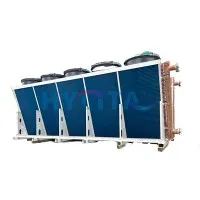
Hey there! I'm a supplier of chiller cooling systems, and I'm super excited to chat with you about the industrial processes that need chiller cooling. Chillers are like the unsung heroes in many industries, quietly doing their job to keep things running smoothly. Let's dive right in and explore where these chillers come into play.
Food and Beverage Industry
In the food and beverage world, chiller cooling is crucial. Think about breweries. During the fermentation process, yeast works its magic to turn sugars into alcohol. But this process generates a lot of heat. If the temperature gets too high, the yeast can die, and the quality of the beer goes down the drain. That's where chillers step in. They maintain the ideal temperature range for fermentation, ensuring that every batch of beer tastes just right.
Dairy products are another area. Milk needs to be cooled quickly after it's collected from the cows to prevent the growth of bacteria. Chillers help bring the milk temperature down to a safe level, extending its shelf life and keeping it fresh. And when it comes to making ice cream, the freezing process has to be precise. Chillers provide the consistent cold temperatures needed to create that creamy, smooth texture we all love.
Pharmaceutical Industry
The pharmaceutical industry is all about precision and quality control. Many drugs and vaccines are sensitive to temperature changes. During the manufacturing process, chemical reactions need to happen at specific temperatures. Chillers help regulate these temperatures, ensuring that the drugs are produced correctly and are safe for use.
Storage is also a big deal. Vaccines, in particular, must be kept at very low temperatures to maintain their effectiveness. Chiller systems are used in warehouses and transportation to keep these life - saving products at the right temperature. Without proper chiller cooling, a lot of valuable and potentially life - saving medications could be wasted.
Plastics Industry
In the plastics industry, chiller cooling plays a vital role in the molding process. When plastic is heated and injected into a mold, it needs to cool down quickly to take on the desired shape. If the cooling is too slow, the plastic can warp or develop other defects. Chillers provide a rapid and controlled cooling process, improving the quality and consistency of the plastic products.
For example, in the production of plastic bottles, the bottles are formed by injecting molten plastic into a mold. Chillers cool the mold, allowing the plastic to solidify rapidly. This results in bottles that are strong, have a smooth finish, and meet the required specifications.
Chemical Industry
The chemical industry involves a wide range of reactions, many of which generate a significant amount of heat. Chillers are used to remove this excess heat and maintain the reaction at a stable temperature. This is important for both safety and product quality.
In some chemical processes, if the temperature gets too high, it can lead to dangerous reactions, such as explosions or the formation of unwanted by - products. Chillers help prevent these situations by keeping the reaction under control. Additionally, by maintaining a consistent temperature, the chemical reactions can be more efficient, leading to higher yields and better - quality products.
Data Centers
In today's digital age, data centers are the backbone of our online world. These centers house thousands of servers that generate a huge amount of heat. If this heat isn't removed, the servers can overheat, leading to system failures, data loss, and downtime.
Chiller cooling systems are used to keep the temperature in data centers at a safe level. They circulate cold water through cooling coils, which absorb the heat from the servers. This ensures that the servers can operate efficiently and reliably, providing us with the online services we rely on every day.
Types of Heat Exchangers in Chiller Cooling
Now, let's talk a bit about the heat exchangers that are often used in chiller cooling systems. There are different types, each with its own advantages.
The Plate - fin Air Water Heat Exchanger is great for applications where there's a need to transfer heat between air and water. It has a high heat transfer efficiency and a compact design, making it suitable for use in many industrial settings.
The Water To Water Heat Exchanger is used when heat needs to be transferred between two water streams. This type of heat exchanger is commonly used in large - scale industrial processes where water is readily available and can be used as a cooling medium.
The Heat Pump Heat By Water is an energy - efficient option. It can transfer heat from a lower - temperature source to a higher - temperature sink, providing both heating and cooling capabilities. This makes it a versatile choice for industries that have varying temperature requirements throughout the year.
Why Choose Our Chiller Cooling Systems
As a chiller cooling supplier, we offer high - quality systems that are designed to meet the specific needs of different industries. Our chillers are built with the latest technology, ensuring energy efficiency and reliable performance. We understand that every industry has its own unique requirements, and we work closely with our customers to provide customized solutions.
Our team of experts is always on hand to offer technical support and maintenance services. We know that downtime can be costly for businesses, so we strive to keep your chiller systems running smoothly at all times. Whether you're in the food and beverage industry, pharmaceuticals, plastics, chemicals, or data centers, we have the right chiller solution for you.


Let's Connect!
If you're in an industry that requires chiller cooling and you're looking for a reliable supplier, we'd love to hear from you. Whether you need a new chiller system, an upgrade to your existing one, or just some advice on chiller cooling, we're here to help. Reach out to us, and let's start a conversation about how we can meet your cooling needs.
References
- "Industrial Refrigeration Handbook" by David Didion
- "Heat Exchangers: Selection, Rating, and Thermal Design" by Sadik Kakac and Hongtan Liu
- Industry reports from the Food and Drug Administration (FDA), Plastics Industry Association, and others.