


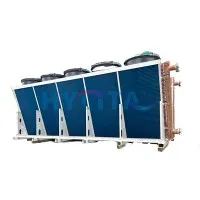
Efficiency is a cornerstone in the world of cooling coils, a critical component in numerous industrial and commercial applications. As a dedicated cooling coils supplier, I've witnessed firsthand the far - reaching impacts of a coil's efficiency on various systems. In this blog, we will delve deep into what efficiency means for cooling coils, the factors influencing it, and how to enhance it.
Defining Efficiency in Cooling Coils
When we talk about the efficiency of cooling coils, we primarily refer to their ability to transfer heat effectively. The core function of a cooling coil is to remove heat from a fluid (usually air or water) passing through it. Efficiency, in this context, is measured by how much heat can be transferred per unit of energy consumed.
A highly efficient cooling coil can achieve a significant temperature drop in the fluid with minimal energy input. This not only saves on operational costs but also reduces the environmental impact associated with energy consumption. For instance, in an air - conditioning system, an efficient cooling coil can cool a large volume of air to the desired temperature using less electricity, resulting in lower utility bills for the user.


Factors Affecting the Efficiency of Cooling Coils
1. Material Selection
The choice of material for a cooling coil plays a vital role in its efficiency. Different materials have different thermal conductivities, which determine how quickly heat can be transferred through the coil.
- Stainless Steel Coil Cooler: Stainless steel is a popular choice for cooling coils due to its corrosion resistance and durability. It has a relatively good thermal conductivity, which allows for efficient heat transfer. To learn more about our Stainless Steel Coil Cooler, you can visit our product page.
- Titanium Coil: Titanium is another excellent material for cooling coils, especially in harsh environments. It has a high strength - to - weight ratio and outstanding corrosion resistance. Although its thermal conductivity is slightly lower than some other metals, its long - term performance and reliability can offset this drawback. Check out our Titanium Coil for more details.
2. Coil Design
The design of the cooling coil, including its shape, size, and the arrangement of tubes and fins, can significantly impact its efficiency.
- Tube Arrangement: The way tubes are arranged in a coil affects the flow pattern of the fluid and the heat transfer surface area. A well - designed tube arrangement can ensure uniform fluid distribution and maximize the contact between the fluid and the coil surface, leading to better heat transfer.
- Fin Geometry: Fins are used to increase the heat transfer surface area of the coil. Different fin geometries, such as straight fins, wavy fins, or louvered fins, have different effects on heat transfer and pressure drop. Optimizing the fin geometry can enhance the efficiency of the cooling coil.
3. Fluid Flow Rate
The rate at which the fluid (either the fluid being cooled or the coolant) flows through the coil is crucial for efficient heat transfer. If the flow rate is too low, the heat transfer process may be limited by the slow movement of the fluid, resulting in poor efficiency. On the other hand, if the flow rate is too high, it may cause excessive pressure drop and increase energy consumption. Therefore, finding the optimal flow rate is essential for maximizing the efficiency of the cooling coil.
4. Maintenance
Regular maintenance is essential for keeping a cooling coil operating at peak efficiency. Over time, dirt, dust, and debris can accumulate on the coil surface, reducing its heat transfer efficiency. Additionally, corrosion or damage to the coil can also affect its performance. By cleaning the coil regularly, checking for leaks, and performing necessary repairs, we can ensure that the cooling coil continues to operate efficiently.
Measuring the Efficiency of Cooling Coils
There are several ways to measure the efficiency of cooling coils. One of the most common methods is to calculate the Coefficient of Performance (COP). The COP is defined as the ratio of the heat removed by the cooling coil to the energy input required to operate the coil. A higher COP indicates a more efficient cooling coil.
Another important metric is the Overall Heat Transfer Coefficient (U). The U - value represents the rate of heat transfer through the coil per unit area and per unit temperature difference. A higher U - value means that the coil can transfer heat more efficiently.
Enhancing the Efficiency of Cooling Coils
1. Advanced Manufacturing Techniques
Using advanced manufacturing techniques can improve the quality and efficiency of cooling coils. For example, precision machining can ensure accurate tube diameters and fin spacing, which are critical for optimal heat transfer. Additionally, advanced coating technologies can be applied to the coil surface to enhance its corrosion resistance and heat transfer properties.
2. System Optimization
Integrating the cooling coil into an optimized system can also improve its efficiency. This includes proper sizing of the coil based on the specific application requirements, ensuring the right balance between the fluid flow rate and the energy input, and coordinating the operation of the cooling coil with other components in the system, such as pumps and fans.
3. Energy - Saving Technologies
Incorporating energy - saving technologies, such as variable - speed drives for pumps and fans, can further enhance the efficiency of cooling coils. These technologies allow the system to adjust its operation based on the actual cooling demand, reducing energy consumption during periods of low load.
Applications of High - Efficiency Cooling Coils
High - efficiency cooling coils have a wide range of applications in various industries.
- HVAC Systems: In heating, ventilation, and air - conditioning (HVAC) systems, cooling coils are used to cool and dehumidify the air. An efficient cooling coil can improve the comfort level in buildings while reducing energy costs.
- Industrial Processes: Many industrial processes generate a large amount of heat that needs to be removed. Cooling coils are used in these processes to maintain the temperature of the equipment and the process fluid within the desired range. High - efficiency cooling coils can help industries save energy and improve productivity.
- Refrigeration Systems: In refrigeration systems, cooling coils are used to cool the refrigerant and maintain the low temperature required for storing perishable goods. An efficient cooling coil can ensure the proper operation of the refrigeration system and reduce energy consumption.
Conclusion
The efficiency of cooling coils is a complex but crucial aspect of their performance. By understanding the factors that affect efficiency, measuring it accurately, and taking steps to enhance it, we can provide high - quality cooling coils that meet the diverse needs of our customers.
As a cooling coils supplier, we are committed to providing our customers with the most efficient and reliable cooling solutions. Whether you are looking for a Stainless Steel Coil Cooler, a Titanium Coil, or a Shell and Tube Coil Cooler, we have the expertise and products to meet your requirements.
If you are interested in learning more about our cooling coils or would like to discuss a specific project, please feel free to contact us. We look forward to working with you to find the best cooling solution for your needs.
References
- Incropera, F. P., & DeWitt, D. P. (2002). Fundamentals of Heat and Mass Transfer. John Wiley & Sons.
- ASHRAE Handbook - HVAC Systems and Equipment. American Society of Heating, Refrigerating and Air - Conditioning Engineers.