


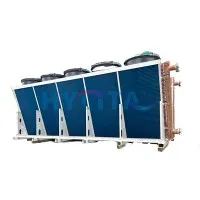
As a supplier of Titanium Coil, I am often asked about the heat resistance of this remarkable product. Titanium Coil is a crucial component in many industries, especially those that require high - performance heat exchange equipment. In this blog, I will delve into the heat - resistance properties of Titanium Coil, exploring its characteristics, advantages, and applications in various heat - related scenarios.
Understanding Titanium Coil
Titanium Coil is made from titanium, a metal known for its excellent corrosion resistance, high strength - to - weight ratio, and remarkable heat - related properties. The coil is formed by winding titanium strips or tubes into a spiral shape, which provides a large surface area for efficient heat transfer. This design makes it an ideal choice for heat exchangers in a wide range of industries, including chemical processing, power generation, and marine applications.
Heat Resistance Mechanisms of Titanium Coil
The heat resistance of Titanium Coil can be attributed to several factors. Firstly, titanium has a relatively high melting point of about 1668°C (3034°F). This high melting point allows Titanium Coil to withstand extremely high temperatures without melting or deforming easily. When exposed to high - temperature environments, the structure of the titanium remains stable, ensuring the integrity of the coil during heat - transfer processes.
Secondly, titanium forms a passive oxide layer on its surface when exposed to oxygen. This oxide layer, mainly composed of titanium dioxide (TiO₂), acts as a protective barrier. It prevents further oxidation and corrosion of the underlying titanium metal, even at elevated temperatures. This self - passivating property is crucial for maintaining the heat - resistance and long - term performance of Titanium Coil.
Heat - Resistance Performance in Different Environments
High - Temperature Gas Environments
In high - temperature gas environments, such as in industrial furnaces or power - generation turbines, Titanium Coil can perform well. The high melting point and the protective oxide layer enable it to resist the effects of hot gases. For example, in some power - generation plants, Titanium Coil is used in heat exchangers to transfer heat from hot exhaust gases to a working fluid. The coil can withstand the high - temperature exhaust gases, which may reach several hundred degrees Celsius, and efficiently transfer the heat while maintaining its structural integrity.
High - Temperature Liquid Environments
Titanium Coil also exhibits excellent heat resistance in high - temperature liquid environments. In chemical processing plants, where corrosive and high - temperature liquids are common, Titanium Coil is often used. For instance, in the production of certain chemicals, the reaction mixtures may be at high temperatures. Titanium Coil can be used to cool or heat these mixtures. The corrosion - resistant nature of titanium ensures that the coil does not react with the chemicals, and its heat - resistant properties allow it to function effectively even when in contact with hot liquids.
Comparison with Other Coil Materials
Shell and Tube Coil Cooler
When compared to other types of coils, such as the Shell and Tube Coil Cooler, Titanium Coil offers distinct advantages in terms of heat resistance. Shell and tube coil coolers are commonly made of materials like copper or stainless steel. While these materials have their own merits, titanium has a higher melting point and better corrosion resistance. In high - temperature and corrosive environments, Titanium Coil can last longer and maintain better heat - transfer efficiency than shell and tube coil coolers made of other materials.
Stainless Steel Coil Cooler
Similarly, compared to Stainless Steel Coil Cooler, Titanium Coil outperforms in heat - resistance aspects. Although stainless steel is also a popular material for heat exchangers, titanium has a more stable oxide layer at high temperatures. Stainless steel may experience oxidation and corrosion under certain high - temperature and high - humidity conditions, which can reduce its heat - transfer efficiency and lifespan. Titanium Coil, on the other hand, is more resistant to these issues, making it a better choice for applications where high - temperature stability is crucial.
Applications Based on Heat Resistance
Chemical Industry
In the chemical industry, Titanium Coil is widely used in heat exchangers for processes such as distillation, evaporation, and reaction heating or cooling. The ability of Titanium Coil to withstand high temperatures and corrosive chemicals makes it an ideal choice. For example, in the production of sulfuric acid, where the reaction involves high - temperature and highly corrosive substances, Titanium Coil can be used to transfer heat safely and efficiently.
Power Generation
In power - generation plants, whether it is a fossil - fuel power plant or a nuclear power plant, heat exchangers play a vital role. Titanium Coil can be used in condensers, pre - heaters, and other heat - exchange equipment. Its heat - resistance properties ensure that it can handle the high - temperature steam and hot water involved in the power - generation process, improving the overall efficiency and reliability of the power plant.
Marine Industry
In the marine industry, Titanium Coil is used in shipboard heat exchangers. The seawater environment is highly corrosive, and the heat - exchange equipment on ships needs to withstand the combination of high - temperature engine coolant and seawater. Titanium Coil's heat resistance and corrosion resistance make it suitable for these applications, providing long - term and reliable heat - transfer performance.
Maintenance and Long - Term Heat Resistance
To ensure the long - term heat resistance of Titanium Coil, proper maintenance is essential. Although titanium is highly corrosion - resistant, it is still important to keep the coil clean. Regular cleaning can prevent the accumulation of dirt, scale, and other contaminants on the surface of the coil, which can reduce its heat - transfer efficiency.


In addition, when installing Titanium Coil, it is necessary to ensure that the installation environment is suitable. Avoiding contact with substances that may damage the protective oxide layer, such as certain strong acids or alkalis, can help maintain the heat - resistance and overall performance of the coil.
Conclusion
In conclusion, the heat resistance of Titanium Coil is one of its most outstanding features. Thanks to its high melting point, self - passivating oxide layer, and excellent corrosion resistance, Titanium Coil can perform well in a variety of high - temperature environments, including high - temperature gas and liquid environments. When compared to other types of coil materials like those used in Shell and Tube Coil Cooler and Stainless Steel Coil Cooler, Titanium Coil offers superior heat - resistance and long - term reliability.
If you are in need of high - performance heat - exchange solutions, our Titanium Coil is an excellent choice. We are a professional supplier of Titanium Coil, committed to providing high - quality products and excellent service. Whether you are in the chemical, power - generation, or marine industry, our Titanium Coil can meet your heat - transfer requirements. If you are interested in our products, please feel free to contact us for more information and to discuss your specific needs for procurement.
References
- "Titanium: Properties, Production, and Applications" by John C. Williams.
- "Heat Exchanger Design Handbook" edited by William M. Kays and A. L. London.
- Industry reports on heat - exchanger materials and their applications in various industries.