


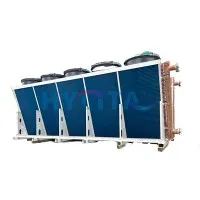
Hey there! As a supplier of Heat Exhaust Recovery systems, I've seen firsthand how this technology can make a huge difference in industrial processes. Today, I wanna chat about the impact of heat exhaust recovery on product quality.
Let's start with the basics. Heat exhaust recovery is all about capturing and reusing the heat that would otherwise go to waste. In industrial settings, a lot of energy is used to heat up materials, run machinery, and perform various processes. A significant amount of this heat is released into the environment as exhaust. By using heat recovery systems, we can capture this heat and use it for other purposes, like pre - heating incoming materials or powering other parts of the process.
One of the key ways heat exhaust recovery impacts product quality is through temperature control. In many industrial processes, maintaining a consistent temperature is crucial for producing high - quality products. For example, in the food and beverage industry, precise temperature control is necessary during cooking, pasteurization, and fermentation. If the temperature fluctuates too much, it can lead to inconsistent product quality, such as unevenly cooked food or spoiled beverages.
Heat recovery systems can help maintain a stable temperature by providing a reliable source of pre - heated energy. Let's say you have a boiler in a manufacturing plant. The exhaust from the boiler contains a lot of heat. By using an Economiser Heat Exchanger, you can transfer this heat to the incoming water that will be used in the boiler. This pre - heated water requires less energy to reach the desired temperature, and it also helps the boiler operate more consistently. As a result, the steam produced is more stable, which can have a positive impact on the quality of the products being manufactured.
Another area where heat exhaust recovery can improve product quality is in reducing contaminants. In some industrial processes, high - temperature exhaust can carry with it various pollutants and impurities. If these are not properly managed, they can end up in the final product, affecting its quality and safety.
Heat recovery systems can be designed to include filtration and purification steps. For instance, when recovering heat from a chemical processing plant, the exhaust may contain harmful chemicals. A well - designed heat recovery system can filter out these contaminants before reusing the heat. This not only makes the recovered heat safer to use but also helps prevent the introduction of impurities into the product, leading to a cleaner and higher - quality end result.
In the textile industry, heat is used for processes like dyeing and drying. The exhaust from these processes often contains moisture and small particles of dye. By implementing a Heat Energy Recovery system, the heat can be recovered, and the moisture and particles can be removed. This ensures that the heat used for subsequent processes is clean, which helps in achieving more consistent color and texture in the textiles.


Now, let's talk about energy efficiency and its relation to product quality. When a company uses a heat exhaust recovery system, it becomes more energy - efficient. This means that the overall production process is more stable and less prone to disruptions caused by energy shortages or fluctuations in energy prices.
For example, in the metalworking industry, melting and shaping metals require a large amount of energy. If the energy supply is inconsistent, it can lead to problems like incomplete melting or uneven cooling of the metal. With a heat recovery system, the energy used in the process is optimized, and the metal can be processed more precisely. This results in better - quality metal products, with fewer defects and a more uniform structure.
Carbon steel is widely used in many industrial applications, and a Carbon Steel Economiser can play a vital role in improving the quality of products made from carbon steel. In a steel mill, the exhaust from the furnaces contains a vast amount of heat. A carbon steel economiser can recover this heat and use it to pre - heat the incoming air or fuel for the furnace. This pre - heating reduces the energy required to reach the high temperatures needed for steelmaking. As a result, the steel can be melted and refined more efficiently, leading to a higher - quality final product with better mechanical properties.
Moreover, heat exhaust recovery can also have an impact on the quality of products through its effect on production speed. When a process is more energy - efficient, it can often be carried out more quickly. In the electronics manufacturing industry, for example, soldering is a critical process. By using heat recovery to pre - heat the soldering equipment, the soldering process can be completed faster and more accurately. This reduces the risk of over - heating or under - heating the components, which can improve the overall quality of the electronic products.
In addition to all these direct impacts on product quality, heat exhaust recovery also has a positive effect on the environment. By reducing the amount of waste heat released into the atmosphere, it helps in lowering greenhouse gas emissions. This is not only good for the planet but can also enhance a company's reputation. Consumers are increasingly concerned about the environmental impact of the products they buy. A company that uses heat recovery systems to produce high - quality products in an environmentally friendly way is likely to be more attractive to customers.
So, if you're an industrial business owner looking to improve the quality of your products, reduce energy costs, and be more environmentally friendly, heat exhaust recovery is definitely worth considering. Our heat exhaust recovery systems are designed to be efficient, reliable, and customizable to meet the specific needs of your industry. Whether you're in the food, textile, metal, or electronics industry, we have the solutions to help you take your product quality to the next level.
If you're interested in learning more about how our heat exhaust recovery systems can benefit your business, don't hesitate to reach out. We'd be more than happy to have a chat with you, understand your requirements, and provide you with a customized solution. Let's work together to make your industrial processes more efficient and your products of the highest quality.
References
- Smith, J. (2020). Industrial Heat Recovery: Principles and Practices. Publisher XYZ.
- Brown, A. (2019). Energy Efficiency in Manufacturing Processes. Journal of Industrial Engineering, 15(2), 45 - 58.
- Green, C. (2021). The Impact of Heat Recovery on Product Quality in the Food Industry. Food Science Review, 22(3), 78 - 90.