


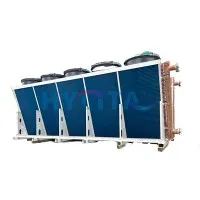
Hey there! As a provider of Heat Exhaust Recovery systems, I often get asked about the payback period for these systems. It's a super important question, and in this blog, I'm gonna break it all down for you.
Let's first understand what a heat exhaust recovery system is. In simple terms, it's a system that captures the heat that would otherwise be wasted from industrial processes or exhaust gases and puts it to good use. This not only helps in saving energy but also reduces operational costs.
Now, when it comes to calculating the payback period for a heat exhaust recovery system, there are several factors at play. One of the most significant factors is the initial investment. The cost of a heat exhaust recovery system can vary widely depending on its size, complexity, and the specific needs of your operation. For instance, a small - scale system for a local bakery might cost a few thousand dollars, while a large - scale system for a manufacturing plant could run into hundreds of thousands or even millions.
Another crucial factor is the energy savings. The amount of energy you can save with a heat exhaust recovery system depends on the type of process you're running and the amount of heat that's being wasted. For example, in a boiler system, a Economiser Heat Exchanger can pre - heat the feedwater using the waste heat from the flue gases. This reduces the amount of fuel needed to heat the water to the desired temperature, resulting in significant energy savings.
Let's take a look at a real - world example. Suppose you have a medium - sized food processing plant. The plant currently uses a boiler to heat water for various processes, and a large amount of heat is being wasted through the flue gases. You decide to install a Heat Exhaust Recovery system. The system costs you $50,000 to purchase and install.
Before the installation, your monthly energy bill for the boiler was $5,000. After the installation of the heat exhaust recovery system, you notice that your monthly energy bill has dropped to $3,500. This means you're saving $1,500 per month on energy costs.
To calculate the payback period, we divide the initial investment by the monthly savings. So, $50,000 divided by $1,500 gives us approximately 33.33 months, or a little over 2.75 years. This is a rough estimate, and in reality, the payback period could be shorter or longer depending on other factors.
Maintenance costs also play a role in determining the payback period. Most heat exhaust recovery systems are relatively low - maintenance, but there are still some costs associated with regular inspections, cleaning, and occasional repairs. However, these costs are usually much lower compared to the energy savings you'll achieve.
The type of material used in the heat exhaust recovery system can also impact the payback period. For example, a Carbon Steel Economiser is a popular choice because it's relatively inexpensive and has good heat transfer properties. But it might not be as durable as some other materials in certain environments. If you choose a more expensive but more durable material, the initial investment will be higher, but you might save on long - term maintenance and replacement costs.
In addition to energy savings, there are other benefits to installing a heat exhaust recovery system. It can help reduce your carbon footprint, which is becoming increasingly important in today's environmentally - conscious world. Many governments also offer incentives and tax breaks for businesses that invest in energy - efficient technologies, which can further shorten the payback period.
Now, you might be wondering if a heat exhaust recovery system is right for your business. Well, the best way to find out is to conduct an energy audit. An energy audit will help you determine how much heat is being wasted in your processes and how much energy you could potentially save with a heat exhaust recovery system.


If you're interested in learning more about our Heat Exhaust Recovery systems or want to get a quote for your specific needs, don't hesitate to reach out. We're here to help you make the most of your energy resources and reduce your operational costs. Whether you're a small business or a large industrial facility, we have a solution that can fit your requirements.
In conclusion, the payback period for a heat exhaust recovery system can vary widely depending on the initial investment, energy savings, maintenance costs, and other factors. But in most cases, it's a worthwhile investment that can pay for itself in a relatively short period of time. So, if you're looking for a way to save energy, reduce costs, and be more environmentally friendly, a heat exhaust recovery system is definitely worth considering.
References
- Various industry reports on energy efficiency in industrial processes
- Case studies on the implementation of heat exhaust recovery systems in different sectors