


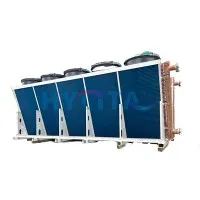
Hey there! As a supplier of cooling coils, I've seen firsthand how these nifty devices stack up against other cooling methods. In this blog, I'll break down the pros and cons of cooling coils compared to some of the more common cooling techniques out there.
Let's start by talking a bit about what cooling coils are. Cooling coils are essentially heat exchangers that transfer heat from one medium to another. They're often used in HVAC systems, refrigeration units, and industrial processes to cool air or liquids. They work by circulating a refrigerant through a series of tubes, which absorb heat from the surrounding air or liquid and then release it outside the system.
One of the biggest advantages of cooling coils is their efficiency. Because they use a refrigerant to transfer heat, they can cool air or liquids much more quickly and effectively than other methods. This means that they can save energy and reduce costs in the long run. For example, in an HVAC system, a well-designed cooling coil can lower the temperature of the air by several degrees in just a few minutes, which can make a big difference in terms of comfort and energy consumption.
Another benefit of cooling coils is their versatility. They can be used in a wide range of applications, from small residential air conditioners to large industrial refrigeration units. They can also be customized to meet the specific needs of different industries and environments. For instance, if you're in the food and beverage industry, you might need a cooling coil that's designed to meet strict hygiene standards. Or, if you're working in a harsh industrial environment, you might need a coil that's made from a more durable material, like Titanium Coil.
Now, let's compare cooling coils to some other popular cooling methods. One of the most common alternatives to cooling coils is the use of fans. Fans work by moving air around, which can create a cooling effect by evaporating sweat from your skin. While fans can be effective in providing a bit of relief on a hot day, they don't actually lower the temperature of the air. They just make you feel cooler. In contrast, cooling coils actually remove heat from the air, which can make a much bigger difference in terms of comfort, especially in hot and humid climates.
Another alternative to cooling coils is the use of air coolers, also known as swamp coolers. Air coolers work by evaporating water into the air, which cools the air as it evaporates. While air coolers can be effective in dry climates, they're not as efficient in humid environments. This is because the air is already saturated with moisture, so there's not much room for the water to evaporate. Cooling coils, on the other hand, can work effectively in both dry and humid conditions, making them a more versatile option.


Refrigeration systems that use compressors are also a popular alternative to cooling coils. These systems work by compressing a refrigerant gas, which raises its temperature and pressure. The hot gas is then passed through a condenser, where it releases heat and condenses into a liquid. The liquid refrigerant is then expanded through an expansion valve, which lowers its temperature and pressure. Finally, the cold refrigerant is passed through an evaporator, where it absorbs heat from the surrounding air or liquid. While these systems can be very effective at cooling, they're also more complex and expensive to install and maintain than cooling coils.
Now, let's talk about the Shell and Tube Coil Cooler. This type of cooling coil is a popular choice for industrial applications because it's very efficient and can handle large volumes of fluid. It consists of a series of tubes that are enclosed in a shell. The fluid to be cooled flows through the tubes, while the cooling medium (usually water or a refrigerant) flows around the tubes in the shell. This design allows for a large surface area for heat transfer, which makes the shell and tube coil cooler very effective at cooling.
Another type of cooling coil that's worth mentioning is the Stainless Steel Coil Cooler. Stainless steel is a popular material for cooling coils because it's durable, corrosion-resistant, and easy to clean. This makes it a great choice for applications where hygiene is a concern, such as in the food and beverage industry or in pharmaceutical manufacturing.
In terms of maintenance, cooling coils are generally relatively easy to maintain. They usually just require regular cleaning to remove any dirt or debris that might accumulate on the coils. This can be done using a simple brush or a vacuum cleaner. However, it's important to make sure that the coils are properly installed and that the refrigerant levels are checked regularly to ensure optimal performance.
When it comes to cost, cooling coils can be a cost-effective option in the long run. While the initial investment might be higher than some other cooling methods, the energy savings and lower maintenance costs can make up for it over time. Additionally, because cooling coils are so versatile, they can often be used in multiple applications, which can further reduce the overall cost.
So, if you're in the market for a cooling solution, whether it's for your home, your business, or an industrial application, I highly recommend considering cooling coils. They offer a number of advantages over other cooling methods, including efficiency, versatility, and cost-effectiveness. And as a supplier of cooling coils, I can help you find the right coil for your specific needs.
If you're interested in learning more about our cooling coils or have any questions about how they compare to other cooling methods, please don't hesitate to reach out. We're here to help you make the best decision for your cooling needs. Whether you need a small coil for a residential air conditioner or a large industrial-grade coil, we've got you covered.
Let's work together to find the perfect cooling solution for your situation. Contact us today to start the conversation and explore how our cooling coils can benefit you.
References
- "Fundamentals of Heat and Mass Transfer" by Frank P. Incropera, David P. DeWitt, Theodore L. Bergman, and Adrienne S. Lavine
- "HVAC Systems and Equipment" by R. Terry Holness
- Various industry reports and whitepapers on cooling technologies