


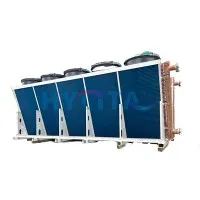
In the realm of energy - efficient systems, combined heat and power (CHP) systems have emerged as a cornerstone of sustainable energy management. A CHP system, also known as cogeneration, simultaneously produces electricity and useful heat from a single fuel source. This integrated approach significantly enhances energy efficiency compared to separate production of electricity and heat. One crucial component that plays a pivotal role in optimizing the performance of a CHP system is the hot water economiser. As a supplier of Hot Water Economiser, I am well - versed in the importance of this device and its contributions to CHP systems.
Understanding the Basics of a CHP System
Before delving into the role of a hot water economiser, it's essential to understand the fundamentals of a CHP system. A typical CHP system consists of a prime mover, such as a gas turbine, reciprocating engine, or fuel cell, which generates electricity. During this electricity - generation process, a substantial amount of heat is produced as a by - product. Instead of wasting this heat, a CHP system captures and utilizes it for various heating applications, such as space heating, water heating, or industrial processes.
The efficiency of a CHP system is measured by its overall energy utilization factor, which takes into account both the electrical and thermal outputs. By maximizing the utilization of the heat generated during electricity production, CHP systems can achieve overall efficiencies of up to 80 - 90%, far higher than the typical 30 - 40% efficiency of conventional power plants.
The Function of a Hot Water Economiser
A hot water economiser is a heat recovery device that is specifically designed to recover heat from the exhaust gases of a CHP system. The exhaust gases leaving the prime mover are typically at a high temperature, often containing a significant amount of untapped thermal energy. The hot water economiser works by transferring this heat from the exhaust gases to a stream of water flowing through the device.
The basic principle behind a hot water economiser is heat exchange. The exhaust gases pass over a series of tubes or plates through which the water is flowing. As the hot exhaust gases come into contact with the cooler water, heat is transferred from the gases to the water, raising the temperature of the water. The heated water can then be used for various purposes, such as pre - heating boiler feedwater, providing domestic hot water, or supplying heat to industrial processes.
Improving Energy Efficiency in CHP Systems
One of the primary roles of a hot water economiser in a CHP system is to improve energy efficiency. By recovering heat from the exhaust gases that would otherwise be wasted, the hot water economiser reduces the amount of primary energy required to heat the water. This, in turn, reduces the overall fuel consumption of the CHP system.
For example, in a CHP system used for a large commercial building, the hot water economiser can pre - heat the boiler feedwater. When the feedwater is pre - heated, less energy is needed to raise its temperature to the boiling point in the boiler. This not only saves fuel but also reduces the wear and tear on the boiler, extending its lifespan.
In addition, by increasing the amount of useful heat output from the CHP system, the hot water economiser helps to improve the overall energy utilization factor of the system. This means that more of the energy input into the system is converted into useful electrical and thermal energy, resulting in a more efficient and cost - effective operation.
Enhancing System Performance and Reliability
Another important role of the hot water economiser is to enhance the performance and reliability of the CHP system. By reducing the temperature of the exhaust gases, the hot water economiser helps to protect downstream equipment from the damaging effects of high - temperature gases. High - temperature exhaust gases can cause corrosion, thermal stress, and other forms of damage to components such as exhaust ducts, silencers, and emission control devices.
By lowering the exhaust gas temperature, the hot water economiser also helps to improve the efficiency of any emission control systems installed in the CHP system. For example, some emission control technologies, such as selective catalytic reduction (SCR), are more effective at lower temperatures. By pre - cooling the exhaust gases, the hot water economiser can ensure that the SCR system operates at its optimal performance, reducing harmful emissions.


Compatibility with Other Heat Recovery Devices
Hot water economisers can be used in conjunction with other heat recovery devices in a CHP system to further enhance energy recovery. For instance, they can be combined with Exhaust Heat Exchanger and Air Preheater and Economiser. An exhaust heat exchanger can be used to recover heat from the exhaust gases at a higher temperature range, while the hot water economiser can recover the remaining heat at a lower temperature range.
The air preheater and economiser can be used to pre - heat the combustion air and boiler feedwater, respectively. By working together, these devices can maximize the amount of heat recovered from the exhaust gases and improve the overall efficiency of the CHP system.
Cost - Effectiveness and Return on Investment
Investing in a hot water economiser for a CHP system can provide significant cost savings over the long term. The initial cost of purchasing and installing a hot water economiser is offset by the savings in fuel costs and the reduced maintenance requirements of the CHP system.
The payback period for a hot water economiser depends on several factors, such as the size of the CHP system, the cost of fuel, and the amount of heat that can be recovered. In many cases, the payback period can be as short as 1 - 3 years, making it a highly attractive investment for both commercial and industrial users.
Customization and Flexibility
As a Hot Water Economiser supplier, we understand that every CHP system is unique. That's why we offer customized hot water economisers that can be tailored to the specific requirements of each application. Whether it's a small - scale residential CHP system or a large - scale industrial cogeneration plant, we can design and manufacture a hot water economiser that meets the exact needs of our customers.
Our hot water economisers are available in a variety of configurations, including shell - and - tube, plate - type, and finned - tube designs. We can also offer different materials of construction, such as stainless steel, carbon steel, and titanium, depending on the operating conditions and the type of exhaust gases.
Conclusion and Call to Action
In conclusion, the hot water economiser plays a crucial role in a combined heat and power system. It improves energy efficiency, enhances system performance and reliability, and provides significant cost savings. By recovering heat from the exhaust gases that would otherwise be wasted, the hot water economiser helps to make CHP systems more sustainable and cost - effective.
If you are considering implementing a CHP system or looking to improve the performance of your existing CHP system, a hot water economiser is an essential component that you should not overlook. As a leading supplier of Hot Water Economiser, we have the expertise and experience to provide you with the best - in - class products and solutions. Contact us today to discuss your specific requirements and explore how our hot water economisers can benefit your CHP system. We look forward to working with you to achieve your energy efficiency goals.
References
- Cengel, Y. A., & Boles, M. A. (2015). Thermodynamics: An Engineering Approach. McGraw - Hill Education.
- Kreith, F., & Manglik, R. M. (2011). Principles of Heat Transfer. Cengage Learning.
- ASHRAE Handbook: HVAC Systems and Equipment. (2016). American Society of Heating, Refrigerating and Air - Conditioning Engineers.