


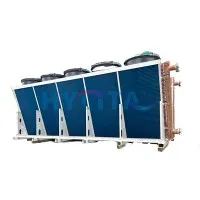
Hey there! I'm a supplier of cooler condensers, and today I wanna chat about the refrigerants used in these nifty devices. Cooler condensers are crucial components in various cooling systems, and the choice of refrigerant can have a big impact on their performance, efficiency, and environmental friendliness.
First off, let's talk about some of the most common refrigerants out there. One of the well - known ones is R - 22, also known as chlorodifluoromethane. It used to be super popular in cooler condensers and other HVAC systems. R - 22 is great at absorbing and releasing heat, which is exactly what we need in a refrigerant. It has a relatively low boiling point, so it can change from a liquid to a gas easily when it absorbs heat from the environment in the evaporator part of the cooling system. Then, in the condenser, it releases that heat and turns back into a liquid.
However, R - 22 has a major drawback. It contains chlorine, and when it's released into the atmosphere, it can damage the ozone layer. That's why the production and import of R - 22 have been phased out in many countries as part of the Montreal Protocol. So, while there are still some older systems using R - 22, it's not a sustainable option for new cooler condensers.
Another widely used refrigerant is R - 410A. It's a blend of difluoromethane (R - 32) and pentafluoroethane (R - 125). R - 410A is a replacement for R - 22 in many modern cooling systems, including cooler condensers. It doesn't contain chlorine, so it's much better for the ozone layer.

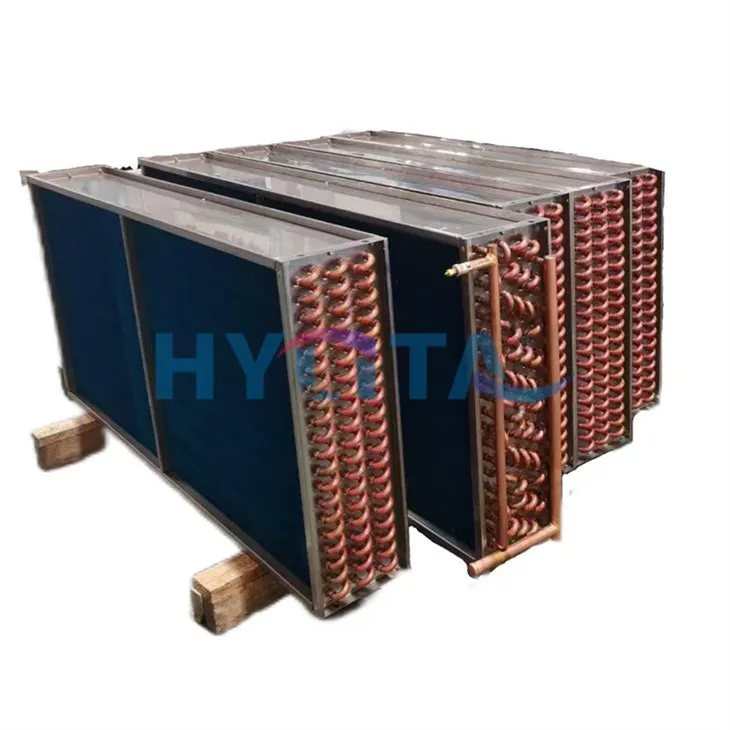
One of the advantages of R - 410A is that it operates at higher pressures than R - 22. This means that cooler condensers designed for R - 410A can be more compact and efficient. They can transfer heat more effectively, which leads to better cooling performance. But here's the catch: because it operates at higher pressures, the equipment needs to be specifically designed to handle it. You can't just swap R - 22 with R - 410A in an existing system; you usually need to replace or modify some components.
Now, let's look at some natural refrigerants. One of my favorites is ammonia (NH₃). Ammonia has been used as a refrigerant for a long time, especially in industrial applications. It has excellent thermodynamic properties, which means it can absorb and release a large amount of heat efficiently.
Ammonia is also very environmentally friendly. It has zero ozone - depletion potential (ODP) and a very low global - warming potential (GWP). In cooler condensers, ammonia can provide high - performance cooling, especially in large - scale industrial processes. However, ammonia is toxic and flammable, so proper safety measures need to be in place when using it. The equipment needs to be well - designed and maintained to prevent leaks.
Carbon dioxide (CO₂) is another natural refrigerant that's gaining popularity. It's non - toxic, non - flammable, and has a very low GWP. In cooler condensers, CO₂ can be used in transcritical or subcritical cycles. In transcritical cycles, the CO₂ operates at high pressures, and it can be used in applications where high - temperature heat rejection is required.
The use of CO₂ in cooler condensers is still growing, and there are some challenges to overcome. For example, the high - pressure operation requires more robust equipment, which can increase the initial cost. But as technology advances, the cost is coming down, and more and more companies are starting to see the benefits of using CO₂ as a refrigerant.
Propane (R - 290) is also a natural refrigerant option. It's a hydrocarbon with excellent thermodynamic properties. Propane has a low boiling point and can absorb and release heat quickly. It's also very energy - efficient, which can lead to lower operating costs for cooler condensers.
Like ammonia, propane is flammable, so safety is a concern. But with proper design and installation, it can be used safely in cooler condensers. It's often used in small - to - medium - sized cooling systems where its energy - efficiency and environmental benefits can be fully realized.
When choosing a refrigerant for a cooler condenser, there are several factors to consider. First, of course, is the performance. You want a refrigerant that can provide the cooling capacity you need. Efficiency is also crucial. A more efficient refrigerant means lower energy consumption and lower operating costs over the life of the system.
Environmental impact is another important factor. As the world becomes more aware of climate change and ozone - layer depletion, choosing a refrigerant with a low ODP and GWP is becoming a must. Safety is also a top priority, especially when dealing with toxic or flammable refrigerants like ammonia and propane.
We offer a wide range of cooler condensers that can be customized to use different refrigerants. Whether you're looking for a system that uses a traditional refrigerant like R - 410A or a more environmentally friendly option like CO₂ or propane, we've got you covered.
If you're in the market for an Air Intermediate Cooler, an Oil Intermediate Cooler, or an Evaporative Cooler Industrial, we can help you select the right refrigerant for your specific needs.
If you have any questions or want to discuss your cooling requirements, don't hesitate to reach out. We're here to help you make the best choice for your business. Whether it's a small - scale cooling system for a local shop or a large - scale industrial application, we have the expertise and the products to meet your needs. Let's work together to find the perfect cooler condenser and refrigerant combination for you.
References
ASHRAE Handbook - Refrigeration. American Society of Heating, Refrigerating and Air - Conditioning Engineers.
"Refrigerants and the Environment". International Institute of Refrigeration.