


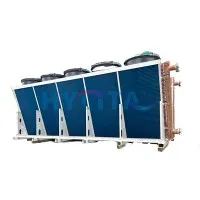
When it comes to industrial equipment, noise is often a concern for operators and facility managers alike. One such piece of equipment that may raise questions about noise levels is the hot water economiser. As a supplier of hot water economisers, I've encountered numerous inquiries regarding the noise generated during their operation. In this blog post, I aim to address this common concern and provide a comprehensive understanding of whether hot water economisers are noisy during operation.
Understanding Hot Water Economisers
Before delving into the noise aspect, it's essential to have a basic understanding of what a hot water economiser is and how it functions. A Hot Water Economiser is a heat recovery device designed to pre - heat water using waste heat from industrial processes. It typically consists of a series of tubes or coils through which the water flows, and these are exposed to the hot exhaust gases or other waste heat sources. By capturing and transferring this waste heat to the water, the economiser reduces the energy required to heat the water to the desired temperature, resulting in significant energy savings.
Factors Affecting Noise Generation
The noise produced by a hot water economiser during operation can be influenced by several factors. Let's take a closer look at these factors:
1. Fluid Flow
The flow of water and the hot gases through the economiser can generate noise. When water or gases move at high velocities through the tubes or channels of the economiser, they can create turbulence. Turbulence causes vibrations, which in turn produce noise. The design of the economiser, including the size and shape of the tubes, the flow rate, and the pressure drop, can all affect the level of turbulence and, consequently, the noise generated. For example, if the tubes are too narrow or the flow rate is too high, the fluid may experience more significant turbulence, leading to increased noise.
2. Mechanical Components
Hot water economisers may have mechanical components such as pumps, fans, or valves. These components can be a source of noise. Pumps, for instance, generate noise due to the rotation of their impellers and the movement of the fluid through them. Fans, if used for forced convection or to move the hot gases, can also produce noise as the blades cut through the air. Valves can create noise when they open and close, especially if there is a sudden change in pressure or flow.
3. Vibration
Vibration is another significant factor contributing to noise. The economiser may vibrate due to the fluid flow, the operation of mechanical components, or external factors such as nearby machinery. If the economiser is not properly installed or supported, these vibrations can be transmitted to the surrounding structure, amplifying the noise. Additionally, resonance can occur when the natural frequency of the economiser or its components matches the frequency of the vibrations, leading to a significant increase in noise levels.
Noise Levels in Practice
In general, well - designed and properly installed hot water economisers do not produce excessive noise. Most modern economisers are engineered to minimize noise generation. Manufacturers take into account the factors mentioned above during the design process to ensure that the noise levels are within acceptable limits.
For example, the tube design is optimized to reduce turbulence. The tubes may have smooth internal surfaces and appropriate diameters to allow for a laminar flow of the fluid, which reduces noise. The mechanical components are also selected and installed with noise reduction in mind. Pumps and fans are often equipped with noise - dampening features such as rubber mounts or acoustic enclosures.
In a typical industrial setting, the noise level of a hot water economiser is comparable to that of other common industrial equipment. It may range from 60 to 80 decibels (dB), depending on the size, type, and operating conditions of the economiser. To put this into perspective, normal conversation typically occurs at around 60 dB, while a vacuum cleaner operates at about 70 - 80 dB.
Noise Mitigation Strategies
If noise is a concern in a particular application, there are several strategies that can be employed to mitigate it:
1. Design Optimization
As mentioned earlier, proper design is crucial in reducing noise. This includes optimizing the tube geometry, selecting the right mechanical components, and ensuring proper installation. For example, using larger - diameter tubes can reduce fluid velocity and turbulence, thereby reducing noise.
2. Acoustic Insulation
Acoustic insulation can be used to reduce the noise emitted from the economiser. Insulating materials such as fiberglass or mineral wool can be wrapped around the economiser to absorb and dampen the sound waves. This is particularly effective for reducing the noise transmitted to the surrounding environment.
3. Vibration Isolation
To prevent the transmission of vibrations to the surrounding structure, vibration isolation mounts can be used. These mounts are made of rubber or other elastic materials that absorb the vibrations and prevent them from being transferred to the floor or walls.
Comparison with Similar Equipment
When comparing hot water economisers with other heat recovery equipment, such as Exhaust Heat Exchanger and Vapour Economizer in Boiler, the noise levels are generally similar. All these types of equipment involve fluid flow and mechanical components, which can generate noise. However, the specific noise levels may vary depending on the design and operating conditions of each piece of equipment.


Exhaust heat exchangers, for example, may have similar noise characteristics to hot water economisers if they are used to transfer heat from exhaust gases to a fluid. The noise generated by the flow of exhaust gases and the fluid through the exchanger can be influenced by the same factors as in a hot water economiser.
Vapour economizers in boilers also operate based on heat transfer principles and may have mechanical components such as pumps or valves. The noise levels of these economizers are also affected by fluid flow, vibration, and the operation of mechanical components.
Conclusion
In conclusion, while hot water economisers can generate some noise during operation, it is usually not excessive. The noise levels are influenced by factors such as fluid flow, mechanical components, and vibration. However, modern design and installation practices can effectively minimize the noise. With proper design optimization, acoustic insulation, and vibration isolation, the noise from a hot water economiser can be kept within acceptable limits.
If you are considering the installation of a hot water economiser for your industrial process and have concerns about noise, our team of experts is here to assist you. We can provide you with detailed information about the noise levels of our products and recommend the most suitable solutions for your specific needs. Whether you need a standard hot water economiser or a customized solution, we have the expertise and experience to meet your requirements.
Contact us today to start a discussion about your hot water economiser needs. We look forward to helping you achieve energy savings while ensuring a quiet and efficient operation in your facility.
References
- ASHRAE Handbook - HVAC Systems and Equipment. American Society of Heating, Refrigerating and Air - Conditioning Engineers.
- Industrial Noise Control and Acoustics. CRC Press.