


In the realm of industrial materials, titanium coils stand out as a remarkable choice, offering a unique blend of strength, corrosion resistance, and lightweight properties. As a seasoned titanium coil supplier, I've witnessed firsthand the diverse applications and the fluctuating costs associated with different grades of titanium coils. In this blog, I'll delve into the factors that influence the cost of titanium coils based on their grades, providing insights that can help you make informed decisions for your projects.
Understanding Titanium Grades
Titanium comes in various grades, each with distinct chemical compositions and mechanical properties. These grades are primarily classified by the ASTM (American Society for Testing and Materials) standards, which define the specific requirements for each grade. The most common grades of titanium used in coil manufacturing include Grade 1, Grade 2, Grade 5, and Grade 7.
- Grade 1 Titanium Coil: This is the purest form of commercially available titanium, with a minimum titanium content of 99.5%. It offers excellent corrosion resistance, high ductility, and good formability. Grade 1 titanium coils are often used in applications where corrosion resistance is critical, such as in the chemical processing industry, marine environments, and food processing equipment.
- Grade 2 Titanium Coil: Similar to Grade 1, Grade 2 titanium has a high purity level, with a minimum titanium content of 99%. It provides slightly higher strength than Grade 1 while maintaining good corrosion resistance and formability. Grade 2 titanium coils are widely used in a variety of industries, including aerospace, automotive, and medical applications.
- Grade 5 Titanium Coil: Also known as Ti-6Al-4V, Grade 5 is the most commonly used titanium alloy. It contains 6% aluminum and 4% vanadium, which significantly enhance its strength and heat resistance. Grade 5 titanium coils are popular in aerospace applications, such as aircraft frames and engine components, as well as in high-performance sporting goods and medical implants.
- Grade 7 Titanium Coil: Grade 7 titanium is an alloy that contains 0.12 - 0.25% palladium, which improves its corrosion resistance in reducing acids and environments containing chlorides. It is often used in chemical processing, oil and gas, and desalination plants.
Factors Affecting the Cost of Titanium Coils by Grade
The cost of titanium coils can vary significantly depending on the grade, and several factors contribute to these price differences.
1. Raw Material Costs
The primary factor influencing the cost of titanium coils is the price of the raw materials. The purity and alloying elements in each grade determine the cost of the base titanium. For example, Grade 1 and Grade 2, being relatively pure forms of titanium, generally have lower raw material costs compared to alloyed grades like Grade 5 and Grade 7. The addition of alloying elements such as aluminum, vanadium, and palladium increases the cost of the raw material, as these elements are often more expensive and require additional processing steps to incorporate into the titanium matrix.
2. Manufacturing Complexity
The manufacturing process for titanium coils can be complex and costly, especially for higher-grade alloys. The production of titanium involves multiple steps, including mining, extraction, purification, and alloying. Higher-grade alloys require more precise control over the alloying process to ensure the desired chemical composition and mechanical properties. Additionally, the forming and finishing processes for titanium coils, such as rolling, annealing, and surface treatment, can be more challenging and time-consuming for certain grades, further adding to the manufacturing cost.
3. Market Demand and Supply
The market demand for different grades of titanium coils also plays a significant role in determining their cost. Grades that are in high demand, such as Grade 5 for aerospace applications, tend to have higher prices due to limited supply and increased competition among buyers. On the other hand, grades with lower demand may have more stable or lower prices. Fluctuations in the global economy, geopolitical factors, and changes in industry trends can also impact the supply and demand dynamics of titanium coils, leading to price variations.
4. Quality and Certification Requirements
In some industries, such as aerospace and medical, strict quality and certification requirements must be met for titanium coils. These requirements often involve extensive testing and inspection procedures to ensure that the coils meet the specified standards. The additional cost of quality control and certification can be significant, especially for higher-grade alloys that are used in critical applications.
Cost Comparison of Different Grades of Titanium Coils
To illustrate the cost differences between different grades of titanium coils, let's consider a hypothetical scenario. Assume that we are looking at titanium coils with a standard thickness, width, and length.


- Grade 1 Titanium Coil: Due to its high purity and relatively simple manufacturing process, Grade 1 titanium coils are generally the most affordable option. They are suitable for applications where cost is a major consideration and corrosion resistance is the primary requirement.
- Grade 2 Titanium Coil: Slightly more expensive than Grade 1, Grade 2 offers a balance between cost and performance. It is a popular choice for a wide range of applications, providing good strength and corrosion resistance at a reasonable price.
- Grade 5 Titanium Coil: As the most widely used titanium alloy, Grade 5 is typically more expensive than Grades 1 and 2. The addition of aluminum and vanadium significantly enhances its strength and heat resistance, making it suitable for high-performance applications. However, the higher raw material cost and more complex manufacturing process contribute to its higher price.
- Grade 7 Titanium Coil: Grade 7 titanium coils are among the most expensive due to the addition of palladium, which improves their corrosion resistance in specific environments. The cost of palladium is relatively high, and the alloying process requires precise control, resulting in a higher overall cost for Grade 7 titanium coils.
Applications and Cost - Benefit Analysis
When selecting a grade of titanium coil for your project, it's essential to consider the specific application requirements and conduct a cost - benefit analysis.
- Cost - Effective Solutions: For applications where corrosion resistance is the main concern and high strength is not required, Grade 1 or Grade 2 titanium coils may be the most cost - effective choice. These grades offer good corrosion protection at a lower cost compared to higher - grade alloys. For example, in a chemical processing plant where the equipment is exposed to corrosive chemicals but does not require high mechanical strength, using Grade 1 or Grade 2 titanium coils can save on material costs without sacrificing performance.
- High - Performance Applications: In industries such as aerospace and high - end medical devices, the performance requirements often justify the higher cost of Grade 5 or Grade 7 titanium coils. The superior strength, heat resistance, and corrosion resistance of these grades are crucial for ensuring the safety and reliability of the components. For instance, in an aircraft engine, where components are subjected to high temperatures and stresses, using Grade 5 titanium coils can enhance the engine's performance and durability, despite the higher cost.
Related Products and Their Costs
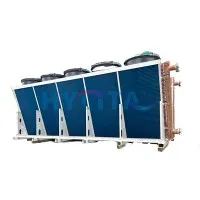
In addition to titanium coils, there are other types of coil coolers available in the market, such as Shell and Tube Coil Cooler and Stainless Steel Coil Cooler. The cost of these products also varies depending on factors such as material, size, and performance.
- Shell and Tube Coil Cooler: These coolers are commonly used in industrial applications for heat transfer. The cost of a shell and tube coil cooler can vary depending on the materials used (such as titanium, stainless steel, or copper), the size of the unit, and the design complexity. Titanium shell and tube coil coolers are generally more expensive than those made of stainless steel or copper due to the higher cost of titanium.
- Stainless Steel Coil Cooler: Stainless steel is a popular choice for coil coolers due to its corrosion resistance and relatively low cost compared to titanium. Stainless steel coil coolers are suitable for a wide range of applications where the corrosion environment is not extremely harsh. However, in highly corrosive environments, titanium coils may offer better long - term performance, despite the higher initial cost.
Conclusion
As a titanium coil supplier, I understand that choosing the right grade of titanium coil for your project is crucial. The cost of titanium coils varies significantly with grade, depending on factors such as raw material costs, manufacturing complexity, market demand, and quality requirements. By carefully considering the specific application requirements and conducting a cost - benefit analysis, you can select the most appropriate grade of titanium coil that offers the best balance between performance and cost.
If you are interested in purchasing Titanium Coil for your project, I encourage you to contact me for more information and to discuss your specific needs. I can provide detailed product specifications, pricing, and technical support to help you make an informed decision.
References
- ASTM International. (2023). ASTM Standards for Titanium and Titanium Alloys.
- ASM Handbook, Volume 2: Properties and Selection: Nonferrous Alloys and Special - Purpose Materials. ASM International, 2001.
- "Titanium: Technology, Applications, and Markets." Titanium Information Group, 2022.