


Hey there! As a supplier of dry coolers, I've been getting quite a few questions lately about government incentives for using these nifty devices. So, I thought I'd sit down and write a blog post to share what I've learned.
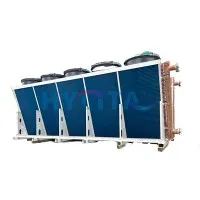
First off, let's talk about what dry coolers are. In a nutshell, dry coolers are heat exchangers that use air to cool a fluid, usually water or a water-glycol mixture. They're a great alternative to traditional cooling towers, which use water evaporation to cool the fluid. Dry coolers are more energy-efficient, require less maintenance, and are better for the environment because they don't use as much water.
Now, let's get to the big question: are there any government incentives for using dry coolers? The answer is yes, in many cases. Governments around the world are increasingly concerned about energy efficiency and environmental sustainability, and they're offering a variety of incentives to encourage businesses and homeowners to use more energy-efficient technologies, including dry coolers.
Types of Government Incentives
Tax Credits
One of the most common types of government incentives for using dry coolers is tax credits. Tax credits are a dollar-for-dollar reduction in the amount of taxes you owe. For example, if you install a dry cooler and the government offers a 10% tax credit, you can deduct 10% of the cost of the dry cooler from your taxes. This can be a significant savings, especially for larger commercial installations.
Grants
Another type of government incentive is grants. Grants are essentially free money that you can use to offset the cost of purchasing and installing a dry cooler. Unlike tax credits, which are a reduction in your taxes, grants are actual cash payments. Grants are usually awarded based on a competitive application process, and you'll need to demonstrate that your project meets certain criteria, such as energy efficiency or environmental sustainability.
Rebates
Rebates are similar to grants in that they're a form of financial assistance, but they're typically offered by utility companies rather than the government. Utility companies offer rebates to encourage their customers to use less energy, and dry coolers are a great way to do that. Rebates can be a percentage of the cost of the dry cooler or a fixed amount, depending on the utility company's program.
Low-Interest Loans
Some governments and financial institutions offer low-interest loans to help businesses and homeowners finance the purchase and installation of energy-efficient technologies, including dry coolers. These loans typically have lower interest rates than traditional loans, which can make them more affordable. Low-interest loans can be a great option if you don't have the upfront capital to pay for a dry cooler but still want to take advantage of the energy savings.


Examples of Government Incentives Around the World
United States
In the United States, there are a number of federal and state-level incentives for using dry coolers. At the federal level, the Investment Tax Credit (ITC) offers a 26% tax credit for commercial and residential solar energy systems, including dry coolers that use solar power. Additionally, many states offer their own incentives, such as tax credits, grants, and rebates. For example, California offers a rebate program for energy-efficient commercial refrigeration systems, which can include dry coolers.
Europe
In Europe, the European Union (EU) has set ambitious targets for reducing greenhouse gas emissions and increasing energy efficiency. As a result, many EU member states offer incentives for using energy-efficient technologies, including dry coolers. For example, Germany offers a grant program for energy-efficient building projects, which can include the installation of dry coolers. The Netherlands offers a tax incentive for businesses that invest in energy-efficient equipment, including dry coolers.
Asia
In Asia, countries like Japan and South Korea are also offering incentives for using energy-efficient technologies. Japan offers a subsidy program for the installation of energy-efficient equipment, including dry coolers, in commercial buildings. South Korea offers a tax credit for businesses that invest in energy-efficient technologies, including dry coolers.
How to Find Government Incentives
So, how do you find out if there are any government incentives available for using dry coolers in your area? The first step is to do some research. You can start by visiting the websites of your local government agencies, utility companies, and environmental organizations. These websites often have information about available incentives, as well as application forms and guidelines.
You can also consult with a professional dry cooler supplier, like me! We have experience working with government incentives and can help you navigate the application process. We can also provide you with information about the different types of dry coolers available and which ones are eligible for incentives.
Our Dry Cooler Products
As a dry cooler supplier, we offer a wide range of high-quality dry coolers to meet the needs of our customers. Here are some of our popular products:
- Cooler Radiator Dry Cooler: This type of dry cooler is designed for use in a variety of applications, including industrial processes, HVAC systems, and power generation. It features a compact design and high efficiency, making it a great choice for space-constrained applications.
- Horizontal Dry Cooler: Our horizontal dry coolers are ideal for applications where space is limited. They feature a low-profile design and can be installed horizontally, making them a great choice for rooftop installations.
- Injection Mold Cooling Dry Cooler: This specialized dry cooler is designed for use in the injection molding industry. It provides precise temperature control and efficient cooling, helping to improve the quality and productivity of the injection molding process.
Conclusion
In conclusion, there are many government incentives available for using dry coolers around the world. These incentives can help you offset the cost of purchasing and installing a dry cooler, making it a more affordable and attractive option. If you're interested in learning more about our dry coolers or the government incentives available in your area, please don't hesitate to contact us. We'd be happy to answer your questions and help you find the right dry cooler for your needs. Let's work together to make your project more energy-efficient and environmentally friendly!
References
- Energy.gov. (n.d.). Energy Efficiency and Renewable Energy Incentives. Retrieved from [Energy.gov website]
- European Commission. (n.d.). Energy Efficiency in Buildings. Retrieved from [European Commission website]
- Japan Ministry of Economy, Trade and Industry. (n.d.). Energy Efficiency Promotion Measures. Retrieved from [METI website]
- South Korea Ministry of Trade, Industry and Energy. (n.d.). Energy Efficiency Policies. Retrieved from [MOTIE website]