


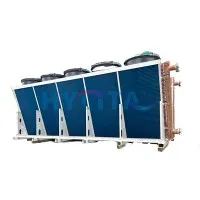
Can a finned tube radiator be used in a glass industry? That's a question I've been getting a lot lately, and as a finned tube radiator supplier, I'm more than happy to dive into this topic.
First off, let's talk about what a finned tube radiator is. It's a heat exchanger that uses fins to increase the surface area of the tubes, which in turn enhances the heat transfer efficiency. These radiators are known for their ability to handle high - temperature and high - pressure situations, making them a popular choice in many industrial applications.
Now, let's get into the glass industry. The glass manufacturing process is a complex one that involves a lot of heat. From melting the raw materials at extremely high temperatures to annealing and tempering the glass, heat management is crucial. During the melting process, furnaces can reach temperatures of over 1500°C. After the glass is formed, it needs to be cooled down in a controlled manner to avoid thermal stress and cracking. This is where a finned tube radiator could potentially play a role.
One of the main advantages of using a finned tube radiator in the glass industry is its high heat transfer efficiency. In the annealing process, for example, the glass needs to be cooled slowly and evenly. A finned tube radiator can quickly transfer the heat from the glass to the surrounding coolant, ensuring a consistent cooling rate. This helps in producing high - quality glass products with fewer defects.
Another benefit is the durability of finned tube radiators. The glass industry often operates in harsh environments with high temperatures, dust, and sometimes corrosive substances. Finned tube radiators are typically made of materials like stainless steel or copper, which can withstand these conditions. Stainless steel radiators, like the ones you can check out at SS Radiator, are resistant to corrosion and can last for a long time, even in tough industrial settings.
Copper finned tube radiators also have their advantages. Copper is an excellent conductor of heat, which means that a Copper Finned Tube Vacuum Furnace Heat Exchanger can transfer heat more effectively than some other materials. In the glass melting process, where rapid heat transfer is sometimes required, copper finned tube radiators can be a great option.
However, there are also some challenges to using finned tube radiators in the glass industry. One of the main issues is the potential for fouling. The dust and debris in the glass manufacturing environment can accumulate on the fins, reducing the heat transfer efficiency. Regular maintenance and cleaning are essential to keep the radiators working properly.
Another consideration is the cost. Finned tube radiators can be more expensive upfront compared to some other types of heat exchangers. But when you consider their long - term durability and high performance, the investment can pay off in the long run.
In addition to their use in the annealing and cooling processes, finned tube radiators can also be used in other areas of the glass industry. For example, they can be used to pre - heat the air or gas that is fed into the furnaces. By recovering waste heat from other parts of the process and using it to pre - heat the incoming air, energy efficiency can be significantly improved.
Plate air exchangers are another type of heat exchanger that can be used in conjunction with finned tube radiators in the glass industry. Plate air exchangers, like the ones described at Plate Air Exchanger, offer a large surface area for heat transfer and can be very effective in certain applications. They can be used to cool the air that is used for ventilation or to transfer heat between different fluid streams.
When it comes to choosing the right finned tube radiator for the glass industry, several factors need to be considered. The size and capacity of the radiator should be matched to the specific requirements of the glass manufacturing process. The type of coolant used also matters. Water is a common coolant, but in some cases, other fluids may be more suitable depending on the temperature range and the specific application.
In conclusion, a finned tube radiator can definitely be used in the glass industry. Its high heat transfer efficiency, durability, and potential for energy savings make it a viable option for various processes in glass manufacturing. However, proper maintenance and careful selection are necessary to ensure optimal performance.


If you're in the glass industry and are interested in learning more about how finned tube radiators can benefit your operations, I'd love to have a chat. Whether it's discussing the specific requirements of your process or helping you choose the right radiator, I'm here to assist. Reach out, and let's start a conversation about how we can improve your heat management and production efficiency.
References
- "Industrial Heat Exchangers: Selection, Design, and Thermal Calculation" by A. P. Fraas and M. A. Ozisik
- "Heat Transfer in Glass Manufacturing Processes" - Journal of Glass Science and Technology