


Hey there! I'm a supplier of Titanium Coil, and I often get asked if titanium coils can be used in optical applications. Well, let's dive right into this topic and find out.
First off, let's talk a bit about titanium itself. Titanium is an amazing metal. It's super strong, lightweight, and has excellent corrosion resistance. These properties make it a popular choice in many industries, from aerospace to medical. But when it comes to optical applications, things get a bit more interesting.
In optical applications, we're usually looking for materials that have specific optical properties, like high transparency, low absorption, and good refractive index control. Titanium, in its pure form, isn't typically thought of as an optical material because it's not transparent like glass or some plastics. However, titanium compounds and coatings can play a significant role in optical systems.
One of the key ways titanium is used in optics is through thin - film coatings. Titanium dioxide (TiO₂) is a well - known material for thin - film coatings. These coatings can be applied to lenses, mirrors, and other optical components. Titanium dioxide has a high refractive index, which means it can bend light more effectively than many other materials. This property is crucial for making anti - reflection coatings. Anti - reflection coatings are used on eyeglasses, camera lenses, and telescope mirrors to reduce glare and improve the clarity of the image. When light hits an optical surface, some of it is reflected. This reflection can cause unwanted glare and reduce the amount of light that passes through the lens. A thin coating of titanium dioxide can be designed to interfere with the reflected light waves, canceling them out and reducing the reflection.


Another application of titanium in optics is in the manufacturing of optical filters. Optical filters are used to selectively transmit or block certain wavelengths of light. Titanium - based filters can be engineered to have specific absorption and transmission characteristics. For example, in a spectrometer, which is an instrument used to analyze the spectrum of light, titanium - based filters can be used to isolate specific wavelengths for accurate measurement.
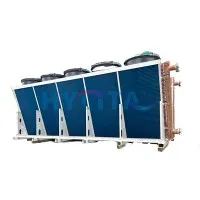
Now, let's talk about our Titanium Coil. While the coil itself might not be directly used in the optical component, it can be part of the cooling system for optical equipment. Many high - power optical devices, such as lasers, generate a lot of heat during operation. Excessive heat can damage the optical components and affect their performance. That's where our titanium coil comes in handy.
Titanium's excellent corrosion resistance makes it a great choice for cooling coils. In a cooling system, the coil is used to transfer heat from the optical device to a coolant. If the coil were made of a less corrosion - resistant material, it could rust or corrode over time, reducing its efficiency and potentially contaminating the coolant. Our titanium coil ensures long - term reliability and efficient heat transfer.
Compared to other types of coils, like the Stainless Steel Coil Cooler, titanium has some distinct advantages. Stainless steel is also a popular choice for cooling coils, but it's heavier than titanium. In applications where weight is a concern, such as in portable optical equipment or aerospace - related optical systems, titanium is the clear winner.
We also offer Shell and Tube Coil Cooler options with titanium coils. These coolers are designed to provide efficient heat transfer in a compact space. The shell - and - tube design allows for a large surface area for heat exchange, and the titanium coil ensures durability and corrosion resistance.
In addition to its use in cooling systems, titanium can also be used in the mechanical parts of optical equipment. For example, the frames and mounts for lenses and mirrors can be made of titanium. Its strength - to - weight ratio makes it ideal for these applications. A lightweight titanium frame can hold the optical components securely without adding unnecessary weight to the overall system.
However, there are also some challenges when using titanium in optical applications. Titanium is more expensive than some other materials, such as aluminum or stainless steel. This cost factor can be a consideration, especially for large - scale production. Also, working with titanium requires specialized equipment and expertise. Machining titanium can be difficult due to its high strength and low thermal conductivity.
Despite these challenges, the benefits of using titanium in optical applications often outweigh the drawbacks. The long - term reliability, excellent corrosion resistance, and unique optical properties of titanium compounds make it a valuable material in the optical industry.
If you're in the optical industry and looking for a reliable supplier of titanium coils for your cooling systems or other applications, I'd love to hear from you. Whether you're working on a small - scale research project or a large - scale production line, we can provide high - quality titanium coils that meet your specific needs. Contact us to start a discussion about your requirements and how our titanium coils can fit into your optical applications.
In conclusion, while titanium might not be the first material that comes to mind when thinking about optical applications, it has a lot to offer. From thin - film coatings to cooling systems and mechanical parts, titanium can play a crucial role in enhancing the performance and reliability of optical equipment.
References:
- "Optical Thin Films and Coatings: From Materials to Applications" by Angus Macleod
- "Titanium: A Technical Guide" by John C. Williams