


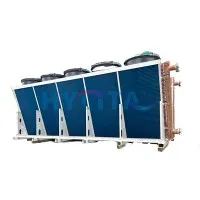
Hey there! As a supplier of cooler condensers, I often get asked about how to measure the temperature of a cooler condenser. It's a crucial aspect, especially when it comes to ensuring the efficient operation of these cooling systems. In this blog, I'll share some practical ways to measure the temperature of a cooler condenser.
First off, let's understand why measuring the temperature of a cooler condenser is so important. A cooler condenser plays a vital role in the cooling process. It's responsible for removing heat from the refrigerant and transferring it to the surrounding environment. If the temperature of the condenser is too high or too low, it can affect the overall performance of the cooling system. For example, an over - heated condenser may lead to reduced cooling capacity and increased energy consumption. On the other hand, a condenser that's too cold might indicate a problem with the refrigerant flow or the cooling mechanism.
One of the simplest and most common ways to measure the temperature of a cooler condenser is by using a contact thermometer. There are several types of contact thermometers available in the market, such as thermocouples and resistance temperature detectors (RTDs).
Thermocouples are quite popular because they're relatively inexpensive and can measure a wide range of temperatures. They work based on the principle of the Seebeck effect, where a voltage is generated at the junction of two different metals when there's a temperature difference. To use a thermocouple to measure the condenser temperature, you simply need to attach the thermocouple probe to the surface of the condenser. Make sure the probe is in good contact with the condenser to get an accurate reading. You can use a clamp or some thermal paste to ensure proper contact.
RTDs, on the other hand, are more accurate than thermocouples, especially in the lower temperature ranges. They work by measuring the change in electrical resistance of a metal wire as the temperature changes. RTDs are a bit more expensive than thermocouples, but they offer better precision. Similar to thermocouples, you need to attach the RTD probe to the condenser surface for an accurate temperature measurement.
Another option is to use a non - contact infrared thermometer. This type of thermometer is great because you don't need to touch the condenser to measure its temperature. It works by detecting the infrared radiation emitted by the object and converting it into a temperature reading. Non - contact infrared thermometers are very convenient, especially when dealing with hard - to - reach areas or when you don't want to disrupt the operation of the condenser. However, they can be affected by factors such as the emissivity of the condenser surface and the presence of dust or other contaminants. So, you need to make sure to follow the manufacturer's instructions carefully when using a non - contact infrared thermometer.
Now, let's talk about where exactly you should measure the temperature on the cooler condenser. The temperature can vary across the condenser, so it's important to choose the right measurement points.
One common measurement point is at the inlet and outlet of the refrigerant. Measuring the temperature at the inlet can give you an idea of the temperature of the refrigerant as it enters the condenser. This can help you determine if the refrigerant is at the right temperature before it starts the cooling process. Measuring the temperature at the outlet can tell you how much heat has been removed from the refrigerant as it passes through the condenser.
You can also measure the temperature at different points on the condenser coils. The coils are where the heat transfer actually takes place, so measuring the temperature at various points along the coils can help you identify any hot spots or areas where the heat transfer might be less efficient. This can be useful for troubleshooting and optimizing the performance of the condenser.
If you're using a cooler condenser in an industrial setting, you might also want to consider installing a temperature monitoring system. A temperature monitoring system can continuously measure the temperature at multiple points on the condenser and provide real - time data. This can be very helpful for detecting any sudden changes in temperature, which could indicate a problem with the condenser or the cooling system as a whole.
There are different types of cooler condensers available, such as Air Intermediate Cooler, Evaporative Cooler Industrial, and Water Intermediate Cooler. Each type of condenser may have slightly different temperature measurement requirements.
For an air - cooled condenser, the temperature of the air entering and leaving the condenser is also an important factor to consider. You can measure the air temperature using a thermometer or a temperature sensor. This can help you determine the efficiency of the air - cooling process and if the condenser is getting enough air flow.
In an evaporative cooler industrial condenser, the temperature of the water used for evaporation is crucial. Measuring the water temperature can help you ensure that the evaporation process is working effectively and that the condenser is able to remove heat efficiently.
A water - cooled condenser, on the other hand, requires measuring the temperature of the water entering and leaving the condenser. This can give you an idea of how much heat is being transferred from the refrigerant to the water.
In conclusion, measuring the temperature of a cooler condenser is an important part of maintaining its performance and efficiency. Whether you're using a contact thermometer, a non - contact infrared thermometer, or a temperature monitoring system, make sure to choose the right measurement points and follow the proper procedures.
If you're in the market for a cooler condenser or have any questions about temperature measurement or the operation of cooler condensers, don't hesitate to reach out. We're here to help you find the best solution for your cooling needs. Contact us for more information and to start a procurement discussion.
References

- "Thermometry: Principles and Practice" by John R. Preston - Thomas
- "Industrial Refrigeration Handbook" by Gustav Lorentzen and Donald R. McMahon