


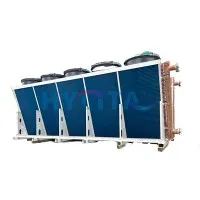
Hey there! As a chiller cooling supplier, I've seen firsthand how important the relationship between chiller cooling and humidity control is in various settings. In this blog, I'm gonna break down this connection, explain why it matters, and show you how our chiller cooling solutions can play a key role in maintaining the right humidity levels.
Let's start with the basics. A chiller is a machine that removes heat from a liquid via a vapor - compression or absorption refrigeration cycle. This cooled liquid then circulates through a building or a process to absorb heat and cool the environment. Now, humidity is the amount of water vapor present in the air. The two are closely intertwined, and here's why.
When air is cooled by a chiller, its ability to hold water vapor decreases. As the temperature of the air drops, the water vapor in the air starts to condense. This is similar to what happens when you take a cold can of soda out of the fridge on a hot day. You'll notice water droplets forming on the outside of the can. In a chiller system, this condensation process is used to remove moisture from the air, effectively controlling humidity.
In many commercial and industrial settings, proper humidity control is crucial. For instance, in data centers, high humidity can lead to condensation on electronic components, which can cause short - circuits and equipment failures. On the other hand, low humidity can generate static electricity, which can also damage sensitive electronics. Our chiller cooling systems are designed to maintain the optimal humidity range in such environments, protecting your valuable equipment.
In the food and beverage industry, humidity control is equally important. High humidity can promote the growth of mold and bacteria, spoiling products and posing health risks. By using our chiller cooling solutions, you can keep the humidity at a level that inhibits microbial growth, ensuring the quality and safety of your food products.
Let's take a closer look at some of the components in our chiller systems that contribute to humidity control. The Chiller Evaporator is a key part. It's where the refrigerant absorbs heat from the water or air being cooled. As the air passes over the cold evaporator coils, the moisture in the air condenses on the coils. This condensed water is then collected and drained away, reducing the humidity of the air.
Another important component is the Water To Water Heat Exchanger. It transfers heat between two water streams without mixing them. This helps in maintaining the right temperature of the chilled water, which in turn affects the humidity control process. If the chilled water temperature is too high, it won't be as effective in condensing the moisture in the air. Our heat exchangers are designed to ensure efficient heat transfer, allowing for precise temperature and humidity control.
The Heat Pump Heat By Water also plays a role. It can be used to adjust the temperature of the air after the dehumidification process. Sometimes, after the air has been cooled and dehumidified, it may be too cold. The heat pump can add a bit of heat back to the air, bringing it to a comfortable and appropriate temperature while still maintaining the reduced humidity level.
Now, let's talk about how our chiller cooling systems are different from others on the market. We focus on energy efficiency. Our chillers are designed to use less energy while still providing effective cooling and humidity control. This not only saves you money on your energy bills but also reduces your carbon footprint.


We also offer customized solutions. Every facility has different requirements when it comes to cooling and humidity control. Whether you have a small office space or a large industrial plant, we can design a chiller system that meets your specific needs. Our team of experts will work with you to understand your requirements, assess your space, and recommend the best chiller configuration for you.
In addition, our chiller systems are easy to maintain. We use high - quality components that are built to last, and we provide comprehensive maintenance services. Regular maintenance ensures that your chiller system operates at peak performance, providing consistent cooling and humidity control over time.
If you're in the market for a chiller cooling system that can effectively control humidity, look no further. Our products are reliable, energy - efficient, and customizable. Whether you're dealing with a humidity - sensitive environment like a museum, a hospital, or a manufacturing facility, we have the solution for you.
Don't let improper humidity levels damage your equipment, spoil your products, or make your space uncomfortable. Contact us today to start a conversation about your chiller cooling and humidity control needs. We're here to help you find the best solution for your business.
References
ASHRAE Handbook - HVAC Systems and Equipment. American Society of Heating, Refrigerating and Air - Conditioning Engineers.
Industrial Refrigeration Handbook. CRC Press.