


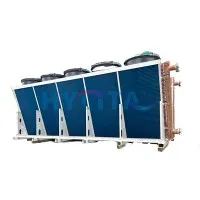
Cooling coils are a fundamental component in central air conditioning systems, playing a crucial role in the cooling process. As a cooling coils supplier, I have in - depth knowledge of how these coils function and their significance in maintaining a comfortable indoor environment. In this blog, I'll explain the working principles of cooling coils in a central air conditioning system.


Basic Components and Working Environment
A central air conditioning system consists of several key parts: an outdoor unit (condenser), an indoor unit (evaporator), a compressor, and refrigerant lines. The cooling coil is mainly located in the indoor unit, which is often placed in the air - handling unit (AHU) or near the furnace. It is here that the magic of cooling happens.
The refrigerant, a special fluid with unique thermodynamic properties, is the life - blood of the cooling process. It circulates through the entire system, moving between the indoor and outdoor units. The refrigerant's ability to change from a liquid to a gas and vice versa at relatively low temperatures is what enables the cooling coil to perform its function.
The Cooling Process in Cooling Coils
Evaporation Stage
When the central air conditioning system starts, the refrigerant enters the cooling coil as a low - pressure, low - temperature liquid. The warm air from the indoor environment is drawn into the air - handling unit by a blower. As this warm air passes over the cooling coil, heat transfer occurs.
The refrigerant inside the coil absorbs the heat from the warm air. Due to the heat absorption, the refrigerant starts to evaporate, changing from a liquid state to a gaseous state. This phase change is a key part of the cooling process because it requires a significant amount of energy, which is taken from the warm air. As a result, the temperature of the air passing over the coil drops significantly.
For example, if the indoor air temperature is 28°C, after passing over the cooling coil, it can be cooled down to around 12 - 15°C, depending on the design and efficiency of the system. This cooled air is then distributed back into the indoor space through the ductwork, lowering the overall temperature of the room.
Heat Absorption Mechanism
The cooling coil is designed with a large surface area to maximize the contact between the refrigerant and the warm air. The coil is usually made up of a series of tubes that are often finned. The fins increase the surface area of the coil, allowing for more efficient heat transfer.
The heat transfer rate is determined by several factors, including the temperature difference between the air and the refrigerant, the surface area of the coil, and the thermal conductivity of the materials used in the coil. A well - designed cooling coil can transfer heat very effectively, ensuring that the air is cooled rapidly.
Role in the Overall Central Air Conditioning Cycle
The cooling coil is just one part of the larger refrigeration cycle in a central air conditioning system. After the refrigerant evaporates in the cooling coil and becomes a low - pressure gas, it is then drawn into the compressor located in the outdoor unit.
The compressor compresses the low - pressure gas into a high - pressure, high - temperature gas. This high - pressure gas then flows into the condenser coil in the outdoor unit. In the condenser, the refrigerant releases the heat it absorbed from the indoor air to the outside environment. As it releases heat, the refrigerant condenses back into a liquid state.
The liquid refrigerant then passes through an expansion valve, which reduces its pressure and temperature, and then it returns to the cooling coil to start the cycle all over again. This continuous cycle of evaporation, compression, condensation, and expansion keeps the central air conditioning system running and the indoor environment cool.
Different Types of Cooling Coils
As a cooling coils supplier, we offer a variety of cooling coils to meet different customer needs.
Titanium Coil
Titanium coils are known for their excellent corrosion resistance. They are ideal for use in harsh environments where the coil may be exposed to corrosive substances. For example, in industrial settings or coastal areas where the air contains salt. You can learn more about our Titanium Coil.
Stainless Steel Coil Cooler
Stainless steel coil coolers are also popular due to their durability and relatively low cost. They are suitable for general commercial and residential applications. Stainless steel can withstand normal wear and tear and is resistant to rust. Check out our Stainless Steel Coil Cooler.
Shell and Tube Coil Cooler
Shell and tube coil coolers are often used in large - scale industrial applications. They have a high heat transfer capacity and can handle large volumes of refrigerant and air. If you are looking for a solution for an industrial air - conditioning system, our Shell and Tube Coil Cooler might be the right choice.
Maintenance and Efficiency
Proper maintenance of cooling coils is essential for the efficient operation of a central air conditioning system. Over time, dust, dirt, and debris can accumulate on the surface of the coil, reducing its heat transfer efficiency. This can lead to higher energy consumption and a decrease in the cooling performance of the system.
Regular cleaning of the cooling coil is recommended. This can be done by using a soft brush or a low - pressure water spray. In addition, checking the refrigerant level and the integrity of the coil tubes is also important. Any leaks or blockages in the coil can significantly affect the system's performance.
Conclusion
Cooling coils are an indispensable part of a central air conditioning system. Their ability to absorb heat from the indoor air through the evaporation of refrigerant is what makes it possible to create a comfortable indoor environment. As a cooling coils supplier, we understand the importance of providing high - quality coils that are efficient, durable, and suitable for different applications.
If you are in the market for cooling coils for your central air conditioning system, whether it's for a new installation or a replacement, we are here to help. Our team of experts can provide you with professional advice and the right products to meet your specific needs. Contact us to start a procurement discussion and let us work together to ensure your air - conditioning system runs at its best.
References
- ASHRAE Handbook - HVAC Systems and Equipment. American Society of Heating, Refrigerating and Air - Conditioning Engineers.
- Stoecker, W. F., & Jones, J. W. (1982). Refrigeration and Air Conditioning. McGraw - Hill.