


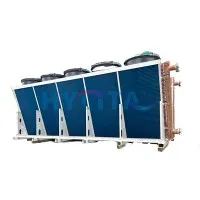
In the realm of natural gas cooling systems, cooling coils play a pivotal role. As a seasoned cooling coils supplier, I've witnessed firsthand the significance of these components in ensuring the efficient operation of natural gas cooling setups. In this blog, I'll delve into how cooling coils work in a natural gas cooling system, exploring the underlying principles, types of cooling coils, and their applications.
The Basics of a Natural Gas Cooling System
Before we jump into the workings of cooling coils, it's essential to understand the broader context of a natural gas cooling system. Natural gas cooling systems are designed to regulate the temperature of natural gas, which is crucial for various industrial processes and applications. These systems are commonly used in gas processing plants, refineries, and power generation facilities, among others.
The primary goal of a natural gas cooling system is to remove heat from the natural gas stream, which can be generated during compression, transportation, or other processes. By cooling the natural gas, the system can improve its quality, enhance its efficiency, and prevent damage to downstream equipment.
How Cooling Coils Fit into the Picture
Cooling coils are an integral part of a natural gas cooling system. They act as heat exchangers, transferring heat from the natural gas to a cooling medium, such as water or air. The cooling medium absorbs the heat and carries it away, effectively reducing the temperature of the natural gas.
The basic principle behind the operation of cooling coils is the transfer of heat through conduction and convection. When the natural gas flows through the cooling coils, it comes into contact with the inner surface of the coils. The heat from the natural gas is then conducted through the coil walls to the outer surface, where it is transferred to the cooling medium through convection.
Types of Cooling Coils Used in Natural Gas Cooling Systems
There are several types of cooling coils available, each with its own unique features and advantages. As a cooling coils supplier, I offer a wide range of options to meet the diverse needs of my customers. Here are some of the most common types of cooling coils used in natural gas cooling systems:
Stainless Steel Coil Cooler
Stainless steel coil coolers are known for their durability, corrosion resistance, and high thermal conductivity. They are ideal for use in harsh environments where the natural gas may contain corrosive substances. Stainless Steel Coil Cooler can withstand high pressures and temperatures, making them suitable for a variety of natural gas cooling applications.
Shell and Tube Coil Cooler
Shell and tube coil coolers consist of a series of tubes enclosed within a shell. The natural gas flows through the tubes, while the cooling medium flows around the tubes in the shell. This design provides a large surface area for heat transfer, resulting in efficient cooling. Shell and Tube Coil Cooler are commonly used in large-scale natural gas cooling systems due to their high capacity and reliability.
Titanium Coil
Titanium coils offer excellent corrosion resistance and high strength-to-weight ratio. They are particularly suitable for use in applications where the natural gas is highly corrosive or where weight is a concern. Titanium Coil can provide long-term performance and reliability in demanding natural gas cooling environments.
The Working Process of Cooling Coils in a Natural Gas Cooling System
Now, let's take a closer look at how cooling coils work in a natural gas cooling system. The process can be divided into several steps:
Step 1: Inlet of Natural Gas
The natural gas enters the cooling coils at a high temperature. It flows through the inner tubes or passages of the coils, depending on the type of coil design.
Step 2: Heat Transfer
As the natural gas flows through the coils, heat is transferred from the gas to the coil walls through conduction. The coil walls, in turn, transfer the heat to the cooling medium on the outer side of the coils through convection.
Step 3: Cooling Medium Circulation
The cooling medium, such as water or air, is circulated around the coils to carry away the heat. The cooling medium absorbs the heat from the coils and is then pumped or blown away to a heat sink, where the heat is dissipated.
Step 4: Outlet of Cooled Natural Gas
After the heat transfer process, the cooled natural gas exits the cooling coils at a lower temperature. It can then be further processed or used in various applications.
Factors Affecting the Performance of Cooling Coils
Several factors can affect the performance of cooling coils in a natural gas cooling system. As a cooling coils supplier, I always consider these factors when designing and selecting the right coils for my customers. Here are some of the key factors:
Coil Material
The choice of coil material is crucial as it determines the corrosion resistance, thermal conductivity, and mechanical strength of the coils. Different materials have different properties, and the selection should be based on the specific requirements of the natural gas cooling system.
Coil Design
The design of the cooling coils, including the tube diameter, pitch, and fin configuration, can significantly impact the heat transfer efficiency. A well-designed coil can provide a larger surface area for heat transfer and improve the overall performance of the cooling system.
Flow Rate of Natural Gas and Cooling Medium
The flow rate of the natural gas and the cooling medium affects the heat transfer rate. If the flow rate is too low, the heat transfer may be inefficient. On the other hand, if the flow rate is too high, it may cause excessive pressure drop and energy consumption.
Temperature Difference
The temperature difference between the natural gas and the cooling medium is another important factor. A larger temperature difference generally results in a higher heat transfer rate. However, it's important to ensure that the temperature difference is within the acceptable range to avoid issues such as condensation or freezing.


Applications of Cooling Coils in Natural Gas Cooling Systems
Cooling coils are widely used in various natural gas cooling applications, including:
Gas Processing Plants
In gas processing plants, cooling coils are used to cool the natural gas after compression and before further processing. This helps to remove moisture and impurities from the gas and improve its quality.
Refineries
Refineries use cooling coils to cool the natural gas used in various refining processes. By cooling the gas, the refinery can enhance the efficiency of the processes and reduce energy consumption.
Power Generation Facilities
Power generation facilities that use natural gas as a fuel often require cooling coils to cool the gas before it enters the combustion chamber. This helps to improve the combustion efficiency and reduce emissions.
Why Choose Our Cooling Coils
As a leading cooling coils supplier, I take pride in offering high-quality cooling coils that are designed to meet the specific needs of my customers. Here are some reasons why you should choose our cooling coils:
Quality Assurance
We use only the highest quality materials and advanced manufacturing processes to ensure the reliability and performance of our cooling coils. Each coil undergoes rigorous testing and inspection before it leaves our factory.
Customization
We understand that every natural gas cooling system is unique. That's why we offer customized cooling coil solutions to meet the specific requirements of our customers. Our team of experts can work with you to design and manufacture the perfect cooling coils for your application.
Technical Support
We provide comprehensive technical support to our customers. Whether you need help with installation, maintenance, or troubleshooting, our experienced technicians are always ready to assist you.
Contact Us for Your Cooling Coil Needs
If you're looking for high-quality cooling coils for your natural gas cooling system, look no further. As a trusted cooling coils supplier, I'm committed to providing you with the best products and services. Contact us today to discuss your requirements and start the procurement process. We're eager to work with you and help you achieve optimal performance in your natural gas cooling applications.
References
- Incropera, F. P., & DeWitt, D. P. (2002). Fundamentals of Heat and Mass Transfer. John Wiley & Sons.
- Holman, J. P. (2010). Heat Transfer. McGraw-Hill.
- Kakaç, S., & Liu, H. (2002). Heat Exchangers: Selection, Rating, and Thermal Design. CRC Press.