


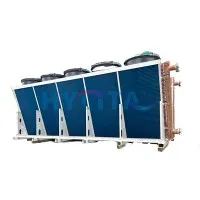
As a supplier in the heat energy recovery industry, I've witnessed firsthand the critical role that efficient heat recovery systems play in various industrial processes. One of the fundamental distinctions in this field is between direct and indirect heat energy recovery. Understanding these differences is essential for businesses aiming to optimize their energy usage and reduce operational costs. In this blog, I'll delve into the nuances of direct and indirect heat energy recovery, exploring their mechanisms, advantages, and applications.
Direct Heat Energy Recovery
Direct heat energy recovery involves the direct transfer of heat from a hot fluid or gas to a cold fluid or gas without the use of an intermediate heat transfer medium. This method is often employed when the hot and cold streams can be safely mixed or when the heat transfer process requires a high degree of efficiency.
One of the most common applications of direct heat energy recovery is in the Heat Exhaust Recovery systems. In industrial processes, a significant amount of heat is lost through exhaust gases. By directly transferring the heat from the exhaust gases to a cold fluid, such as air or water, businesses can recover a substantial portion of this wasted energy. For example, in a power plant, the hot exhaust gases from the boiler can be used to preheat the incoming combustion air. This not only reduces the energy required to heat the air but also improves the overall efficiency of the combustion process.
Another advantage of direct heat energy recovery is its simplicity. Since there is no need for an intermediate heat exchanger, the system design is relatively straightforward, resulting in lower capital costs and easier maintenance. Additionally, direct heat transfer can achieve high heat transfer rates, making it suitable for applications where rapid heat recovery is required.
However, direct heat energy recovery also has its limitations. One of the main challenges is the potential for contamination between the hot and cold streams. If the hot fluid contains pollutants or contaminants, these can be transferred to the cold fluid, which may not be acceptable in certain applications. For example, in the food and beverage industry, the direct mixing of hot exhaust gases with process water could introduce harmful substances, making the product unsafe for consumption.
Indirect Heat Energy Recovery
Indirect heat energy recovery, on the other hand, uses an intermediate heat transfer medium to transfer heat between the hot and cold streams. This medium can be a liquid, such as water or oil, or a gas, such as steam. The hot fluid transfers its heat to the intermediate medium, which then transfers the heat to the cold fluid.
One of the most well-known examples of indirect heat energy recovery is the Economiser Heat Exchanger. In a boiler system, an economizer is used to recover heat from the flue gases and transfer it to the feedwater. The feedwater is preheated before entering the boiler, reducing the amount of energy required to heat the water to the boiling point. This not only improves the efficiency of the boiler but also reduces fuel consumption and greenhouse gas emissions.
Indirect heat energy recovery offers several advantages over direct heat recovery. One of the main benefits is the ability to separate the hot and cold streams, preventing contamination. This makes it suitable for applications where the quality of the cold fluid is critical, such as in the pharmaceutical and semiconductor industries. Additionally, indirect heat exchangers can be designed to operate at different pressures and temperatures, allowing for greater flexibility in system design.
However, indirect heat energy recovery also has its drawbacks. The use of an intermediate heat transfer medium adds complexity to the system, resulting in higher capital costs and more maintenance requirements. Additionally, the presence of the intermediate medium introduces an additional thermal resistance, which can reduce the overall heat transfer efficiency compared to direct heat transfer.
Applications and Considerations
The choice between direct and indirect heat energy recovery depends on several factors, including the specific application, the characteristics of the hot and cold streams, and the desired level of heat recovery.
In applications where the hot and cold streams can be safely mixed and rapid heat transfer is required, direct heat energy recovery is often the preferred option. This includes applications such as industrial drying processes, where the hot exhaust gases can be used to directly heat the incoming air.
On the other hand, in applications where contamination is a concern or where the system requires greater flexibility in terms of operating conditions, indirect heat energy recovery is more suitable. This includes applications such as power generation, chemical processing, and food and beverage production.
When considering a heat energy recovery system, it's important to conduct a thorough feasibility study to determine the most appropriate technology for your specific needs. This study should take into account factors such as the heat source and sink temperatures, the flow rates of the hot and cold streams, the available space for the system, and the budget.
Conclusion
In conclusion, both direct and indirect heat energy recovery have their own unique advantages and disadvantages. Understanding the differences between these two methods is crucial for businesses looking to implement an efficient heat recovery system. As a Heat Energy Recovery supplier, I'm committed to helping my customers make informed decisions about their heat recovery needs. Whether you're looking for a simple and cost-effective direct heat recovery solution or a more complex indirect heat exchanger system, I can provide you with the expertise and products you need to optimize your energy usage and reduce your environmental impact.
If you're interested in learning more about our heat energy recovery solutions or would like to discuss your specific requirements, please don't hesitate to contact us. We look forward to working with you to achieve your energy efficiency goals.


References
- Incropera, F. P., & DeWitt, D. P. (2002). Fundamentals of Heat and Mass Transfer. John Wiley & Sons.
- Holman, J. P. (2002). Heat Transfer. McGraw-Hill.
- ASHRAE Handbook: Fundamentals. (2009). American Society of Heating, Refrigerating and Air-Conditioning Engineers.