


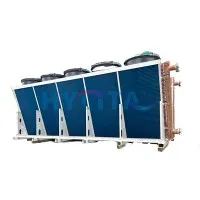
Hey there! I'm a supplier of cooling coils, and today I'm gonna break down how these nifty things work in a split system. If you've ever wondered about the magic behind your air - conditioner or refrigeration unit keeping things cool, you're in the right place.
The Basics of a Split System
First off, let's talk about split systems. A split system is basically made up of two main parts: an indoor unit and an outdoor unit. The indoor unit is usually mounted on a wall inside your room, office, or wherever you need cooling. The outdoor unit, on the other hand, sits outside the building. These two units are connected by refrigerant lines, which are super important for the whole cooling process.
The main job of a split system is to take heat from the indoor air and transfer it outside. This is where the cooling coils come into play. There are two main types of cooling coils in a split system: the evaporator coil and the condenser coil.
How the Evaporator Coil Works
Let's start with the evaporator coil, which is located in the indoor unit. The refrigerant, which is a special fluid that can easily change from a liquid to a gas and vice versa, enters the evaporator coil as a low - pressure liquid.
When warm indoor air is blown over the evaporator coil by the indoor fan, something really cool happens. The refrigerant in the coil absorbs the heat from the air. As it absorbs the heat, the refrigerant starts to evaporate, changing from a liquid to a gas. This process is called evaporation, and it's a key part of the cooling magic.
As the refrigerant changes to a gas, it cools down the air passing over the coil. The now - cooled air is then blown back into the room, making the indoor environment more comfortable. Meanwhile, the gaseous refrigerant leaves the evaporator coil and heads towards the outdoor unit through the refrigerant lines.
The evaporator coil is usually made of materials that are good at conducting heat, like copper or aluminum. These materials allow the heat transfer to happen quickly and efficiently. We also offer Titanium Coil, which is known for its high corrosion resistance and excellent heat transfer properties. It's a great option if you're looking for something more durable and long - lasting.
The Journey to the Condenser Coil
Once the gaseous refrigerant leaves the evaporator coil, it travels to the outdoor unit. But before it reaches the condenser coil, it goes through a compressor. The compressor is like the heart of the split system. It squeezes the gaseous refrigerant, increasing its pressure and temperature.
How the Condenser Coil Works
Now, let's focus on the condenser coil, which is in the outdoor unit. The high - pressure, high - temperature gaseous refrigerant enters the condenser coil. Here, the outdoor fan blows outdoor air over the condenser coil.
The condenser coil's job is to release the heat that the refrigerant absorbed inside the building. As the outdoor air passes over the coil, the refrigerant in the coil starts to lose heat. This causes the refrigerant to condense, changing from a gas back to a liquid. This process is called condensation.
The heat that is released from the refrigerant is then dissipated into the outdoor environment. Once the refrigerant has fully condensed into a liquid, it leaves the condenser coil and heads back towards the indoor unit through the refrigerant lines. And then the whole cycle starts all over again.
We have a great selection of Stainless Steel Coil Cooler for the condenser coil. Stainless steel is strong, resistant to rust, and can handle high pressures and temperatures. It's an ideal choice for the tough conditions in the outdoor unit.
Another option we offer is the Shell and Tube Coil Cooler. This type of cooler has a unique design that provides efficient heat transfer. The refrigerant flows through the tubes, while the cooling fluid (usually air or water) flows around the tubes in the shell. It's a reliable and effective way to cool the refrigerant in the condenser coil.
Factors Affecting Cooling Coil Performance
There are a few things that can affect how well the cooling coils work. One of the main factors is the cleanliness of the coils. If the coils get dirty, it can block the air flow and reduce the heat transfer efficiency. That's why it's important to regularly clean the coils to keep them in good working condition.


The size of the coils also matters. If the coils are too small for the space they're supposed to cool, they won't be able to transfer enough heat, and the system won't work as effectively. On the other hand, if the coils are too large, it can lead to higher energy consumption.
The refrigerant level is another crucial factor. If there's not enough refrigerant in the system, the cooling performance will suffer. And if there's too much refrigerant, it can cause problems with the compressor and other components.
Why Choose Our Cooling Coils
As a cooling coil supplier, we take pride in offering high - quality products. Our coils are designed and manufactured to meet the highest standards. We use the best materials and advanced manufacturing techniques to ensure that our coils are efficient, durable, and reliable.
Whether you need a cooling coil for a small residential split system or a large commercial one, we've got you covered. Our team of experts can help you choose the right coil for your specific needs. We also offer customization options, so you can get a coil that fits your exact requirements.
Let's Talk Business
If you're in the market for cooling coils for your split system, I'd love to have a chat with you. Whether you have questions about our products, need help with sizing, or just want to learn more about how our cooling coils can improve your system's performance, don't hesitate to reach out. We're here to provide you with the best solutions and support.
References
ASHRAE Handbook - Refrigeration. American Society of Heating, Refrigerating and Air - Conditioning Engineers.
Thermodynamics: An Engineering Approach. Yunus A. Cengel and Michael A. Boles.