


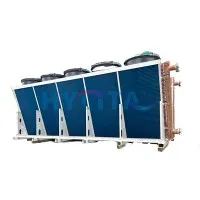
Evaporator coils play a pivotal role within an HVAC (Heating, Ventilation, and Air Conditioning) system. As a dedicated evaporator coil supplier, I've witnessed firsthand how these components interact with other parts of the system to ensure efficient and effective operation.
Interaction with the Compressor
The compressor is often considered the "heart" of the HVAC system, and its interaction with the evaporator coil is fundamental. The compressor is responsible for pressurizing the refrigerant. It takes in low - pressure, low - temperature refrigerant vapor from the evaporator coil.
Once the refrigerant enters the compressor, its pressure and temperature are significantly increased. The high - pressure, high - temperature refrigerant vapor then moves on to the condenser coil. The evaporator coil, on the other hand, acts as a suction point. It continuously draws in warm air from the surrounding environment, which passes over the refrigerant - filled tubes of the coil.


As the warm air comes into contact with the cold refrigerant, heat is transferred from the air to the refrigerant. This causes the refrigerant to evaporate, changing from a liquid state to a vapor state. The vapor is then drawn into the compressor. A smooth interaction between the evaporator coil and the compressor is essential for maintaining the proper refrigerant flow within the system. If the evaporator coil is dirty or malfunctioning, it may not be able to properly evaporate the refrigerant. This can lead to under - pressurized refrigerant reaching the compressor, causing it to work harder and potentially leading to premature failure.
Interaction with the Condenser Coil
The condenser coil is another crucial component that closely interacts with the evaporator coil. After the compressor raises the pressure and temperature of the refrigerant vapor, it sends it to the condenser coil. The main function of the condenser coil is to release the heat absorbed by the refrigerant in the evaporator coil to the outside environment.
The high - pressure, high - temperature refrigerant vapor enters the condenser coil and begins to cool down as it releases heat. As it cools, it condenses back into a liquid state. The liquid refrigerant then passes through an expansion valve before returning to the evaporator coil. The expansion valve reduces the pressure of the liquid refrigerant, allowing it to enter the evaporator coil at a lower pressure.
The efficiency of the condenser coil affects the performance of the evaporator coil. If the condenser coil is dirty or blocked, it cannot effectively release heat. This causes the refrigerant to remain at a higher temperature and pressure than normal. As a result, the evaporator coil may not be able to absorb heat efficiently from the indoor air, leading to reduced cooling capacity.
Interaction with the Blower
The blower is an integral part of the HVAC system that is directly related to the performance of the evaporator coil. The blower's primary function is to circulate air through the HVAC system. It draws in warm indoor air and forces it over the evaporator coil.
The warm air passing over the evaporator coil allows for the crucial heat - transfer process. The blower ensures that a sufficient volume of air is in contact with the evaporator coil, maximizing the heat - exchange efficiency. If the blower is not working correctly or is set at an inappropriate speed, it can have a negative impact on the evaporator coil's performance.
For example, if the blower speed is too low, the air may spend too much time in contact with the evaporator coil. This can cause the refrigerant to over - cool the air, potentially leading to ice formation on the coil. On the other hand, if the blower speed is too high, the air may not have enough time to transfer its heat to the refrigerant, resulting in reduced cooling effectiveness.
Interaction with the Thermostat
The thermostat acts as the control center for the HVAC system, and its interaction with the evaporator coil is vital for maintaining a comfortable indoor temperature. The thermostat senses the indoor temperature and sends signals to the HVAC system to turn on or off as needed.
When the thermostat detects that the indoor temperature has risen above the set point, it signals the blower to start and the compressor to engage. This initiates the cooling cycle, where the evaporator coil starts to absorb heat from the air. Once the indoor temperature reaches the set point, the thermostat sends a signal to stop the compressor and, in some cases, the blower.
A well - calibrated thermostat ensures that the evaporator coil operates at the right times and for the appropriate duration. If the thermostat is inaccurate, the evaporator coil may run for too long or too short a period. Running for too long can lead to excessive energy consumption and potential damage to the coil, while running for too short a time may not effectively cool the indoor space.
Importance of Quality Evaporator Coils
As an evaporator coil supplier, I understand the importance of providing high - quality coils. A well - designed and properly manufactured evaporator coil can significantly enhance the overall performance of the HVAC system. For instance, Stainless Steel Evap Coil offers excellent corrosion resistance, which is particularly useful in environments with high humidity or corrosive elements.
If an existing evaporator coil is damaged or inefficient, Evaporator Coil Replacement may be necessary. Replacing the coil with a high - quality one can restore the system's performance and energy efficiency. Additionally, Refrigeration Copper Coil is known for its high thermal conductivity, which allows for more efficient heat transfer.
Conclusion and Call to Action
The interaction of evaporator coils with other components in an HVAC system is a complex and delicate process. Each component depends on the others to function optimally, and any malfunction can disrupt the entire system's operation. As an evaporator coil supplier, I am committed to providing top - quality coils that ensure seamless interaction with other HVAC components.
If you are in the market for high - quality evaporator coils or need advice on coil replacement, I encourage you to reach out. Our team of experts can help you select the right coil for your specific HVAC system requirements and guide you through the installation process. Let's work together to enhance the performance and efficiency of your HVAC system.
References
- "HVAC Systems Design Handbook" - This comprehensive handbook provides in - depth knowledge about the various components of HVAC systems and their interactions.
- "Refrigeration and Air Conditioning Technology" - A widely - used textbook that offers detailed information on the principles and operations of refrigeration and air - conditioning systems, including the role of evaporator coils.
- Industry - specific research papers from journals such as the "Journal of Heating, Air - Conditioning and Refrigeration Research" that cover the latest advancements and research findings related to HVAC components and their interactions.