


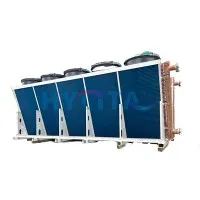
In the vast realm of industrial cooling systems, two major players stand out: oil coolers and radiator coolers. As a seasoned oil cooler supplier, I have witnessed firsthand the unique advantages and limitations of each technology. This blog aims to provide an in - depth comparison between oil coolers and radiator coolers, helping you make an informed decision for your specific cooling needs.
Working Principles
Let's first understand the fundamental working principles of these two types of coolers.


Oil coolers are designed to dissipate heat from oil. In many industrial applications, oil is used as a lubricant and a heat transfer medium. As oil circulates through the machinery, it absorbs heat generated by friction and other mechanical processes. The oil cooler then cools the heated oil by transferring its heat to a cooling medium, which can be air or water. For example, in an Oil - cooled Industrial Cooler, the oil passes through a series of tubes or channels, and the cooling medium (such as air or water) flows over these tubes to carry away the heat.
On the other hand, radiator coolers are commonly used in automotive and some industrial applications to cool engine coolant. The coolant absorbs heat from the engine and then flows through the radiator. The radiator consists of a large number of thin tubes and fins. As air passes through the radiator, heat is transferred from the coolant in the tubes to the surrounding air, thus cooling the coolant.
Cooling Efficiency
When it comes to cooling efficiency, both oil coolers and radiator coolers have their own characteristics.
Oil coolers are generally more efficient at cooling high - viscosity fluids like oil. Since oil has a relatively high heat capacity, it can absorb a large amount of heat. Oil coolers are specifically designed to handle this high - heat - carrying capacity of oil. For instance, Finned Oil Cooler has fins that increase the surface area for heat transfer, which improves the cooling efficiency of the oil. In applications where precise temperature control of the oil is required, such as in high - performance engines and industrial machinery, oil coolers can provide more accurate and consistent cooling.
However, radiator coolers are very effective in cooling engine coolant, which is usually a water - based solution. The large surface area of the radiator's fins and tubes allows for rapid heat transfer to the air. In automotive applications, radiator coolers can quickly lower the temperature of the engine coolant, preventing the engine from overheating. Nevertheless, radiator coolers may not be as effective in cooling high - viscosity fluids like oil due to the differences in fluid properties.
Application Scope
The application scope of oil coolers and radiator coolers also varies significantly.
Oil coolers are widely used in various industrial sectors. In the manufacturing industry, they are used in hydraulic systems to cool the hydraulic oil. Hydraulic systems generate a large amount of heat during operation, and if the oil temperature is too high, it can lead to reduced system efficiency and even damage to hydraulic components. Oil coolers are also used in power generation equipment, such as generators and turbines, to cool the lubricating oil. In addition, in the automotive and aerospace industries, oil coolers are used to cool the engine oil, transmission oil, and differential oil, ensuring the normal operation of these components.
Radiator coolers are most commonly associated with automotive applications. Every car on the road is equipped with a radiator cooler to cool the engine coolant. Apart from the automotive industry, radiator coolers are also used in some small - to - medium - sized industrial engines and some types of heat exchangers. However, their application in industries that require cooling of high - viscosity fluids or in high - precision cooling scenarios is relatively limited.
Maintenance Requirements
Maintenance is another important aspect to consider when comparing oil coolers and radiator coolers.
Oil coolers generally require regular maintenance to ensure their proper functioning. The oil filter in the oil cooler system needs to be replaced regularly to prevent contaminants from clogging the cooler. The cooling medium (air or water) also needs to be kept clean. If water is used as the cooling medium, there is a risk of scale formation inside the cooler, which can reduce the cooling efficiency. Therefore, water treatment may be required to prevent scale formation. In addition, the oil cooler should be inspected regularly for leaks and damage to ensure its integrity.
Radiator coolers also need maintenance. The radiator fins can become clogged with dirt, dust, and debris, which reduces the air flow through the radiator and thus the cooling efficiency. Regular cleaning of the radiator fins is necessary to maintain the proper air flow. The coolant level in the radiator also needs to be checked regularly, and the coolant should be replaced according to the manufacturer's recommendations to prevent corrosion and other problems.
Cost Considerations
Cost is a crucial factor for many customers when choosing between oil coolers and radiator coolers.
The initial cost of oil coolers can be relatively high, especially for high - performance and large - scale oil cooler systems. The cost of materials, such as high - quality tubes, fins, and the cooling medium, can contribute to the overall cost. In addition, the installation of oil coolers may require more complex piping and control systems, which also adds to the cost. However, in the long run, the precise temperature control and high - efficiency cooling provided by oil coolers can lead to reduced maintenance costs and longer service life of the equipment they are installed in.
Radiator coolers are generally more cost - effective in terms of initial cost. They are widely mass - produced for automotive and some industrial applications, which helps to reduce the cost. The installation of radiator coolers is also relatively simple in many cases. However, if the radiator cooler fails to provide sufficient cooling, it may lead to engine overheating and subsequent costly repairs.
Conclusion
In conclusion, both oil coolers and radiator coolers have their own strengths and weaknesses. Oil coolers are more suitable for applications that require cooling of high - viscosity fluids and precise temperature control, such as industrial machinery and high - performance vehicles. They offer high - efficiency cooling for oil - based systems but may have a relatively high initial cost and require regular maintenance. Radiator coolers, on the other hand, are well - known for their use in automotive applications and are cost - effective in terms of initial purchase and installation. However, their application scope is relatively limited in industrial settings, especially for high - precision cooling requirements.
As an oil cooler supplier, I understand that choosing the right cooling solution is not an easy task. If you are in need of a reliable and efficient cooling solution for your oil - related applications, our range of oil coolers, including the Oil - cooled Industrial Cooler, Finned Oil Cooler, and Air - cooled Industrial Cooler, can meet your diverse needs. We are committed to providing high - quality products and excellent customer service. If you have any questions or are interested in our products, please feel free to contact us for further discussion and procurement negotiations. We look forward to working with you to find the best cooling solution for your business.
References
- ASHRAE Handbook - HVAC Systems and Equipment. American Society of Heating, Refrigerating and Air - Conditioning Engineers.
- Perry's Chemical Engineers' Handbook. McGraw - Hill.
- Cooling Tower Institute Technical Information Series. Cooling Tower Institute.