


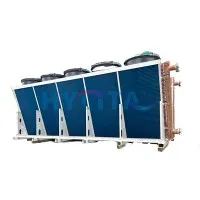
A condenser coil fan is an integral component in various cooling systems, playing a crucial role in the heat exchange process. As a leading condenser coil supplier, I'm excited to delve into the inner workings of these fans and explain how they contribute to efficient cooling operations.
The Basics of a Condenser Coil System
Before we dive into the fan's operation, let's briefly understand the overall condenser coil system. A condenser coil is a heat exchanger that transfers heat from a refrigerant to the surrounding environment. In refrigeration and air - conditioning systems, the refrigerant absorbs heat from the indoor space, then flows into the condenser coil. Here, the heat needs to be dissipated so that the refrigerant can return to its liquid state and continue the cooling cycle.
Components of a Condenser Coil Fan System
A typical condenser coil fan system consists of several key components. The condenser coil itself is made of a series of tubes and fins. The tubes carry the refrigerant, while the fins increase the surface area for better heat transfer. The fan is mounted adjacent to the condenser coil. It is usually powered by an electric motor and is designed to move a large volume of air across the coil.
How the Fan Works
The primary function of the condenser coil fan is to enhance the heat transfer process. When the refrigerant enters the condenser coil, it is in a high - pressure, high - temperature gaseous state. As air is drawn over the surface of the coil by the fan, heat is transferred from the hot refrigerant inside the tubes to the cooler air outside.
The fan creates a forced convection effect. Convection is the transfer of heat through the movement of a fluid (in this case, air). By forcing air to flow across the coil, the fan increases the rate of heat transfer compared to natural convection, where air would move more slowly and randomly.
The operation of the fan can be divided into a few steps:
- Start - up: When the cooling system is activated, the condenser coil fan motor receives an electrical signal. This signal powers the motor, which begins to rotate the fan blades.
- Air Intake: As the fan blades rotate, they create a low - pressure area in front of the fan. This low - pressure area draws in ambient air from the surroundings. The air is then directed towards the condenser coil.
- Heat Transfer: As the air passes over the surface of the condenser coil, heat is transferred from the refrigerant inside the coil to the air. The refrigerant loses heat and begins to condense from a gas to a liquid state.
- Hot Air Exhaust: After the air has absorbed heat from the coil, it becomes warmer. The fan then expels this hot air out of the system, usually to the outside environment.
Factors Affecting Fan Performance
Several factors can influence the performance of a condenser coil fan.
- Airflow Rate: The amount of air that the fan can move per unit of time is a critical factor. A higher airflow rate generally means more efficient heat transfer. This is determined by the size and design of the fan blades, as well as the speed of the motor.
- Fan Blade Design: The shape and pitch of the fan blades play a significant role in generating airflow. Well - designed blades can move more air with less energy consumption.
- Motor Efficiency: The efficiency of the fan motor affects the overall power consumption of the system. A more efficient motor can rotate the fan blades at the required speed while using less electricity.
- Coil Design: The design of the condenser coil, including the number of tubes, fin density, and tube diameter, also impacts the fan's performance. A well - designed coil provides a larger surface area for heat transfer, allowing the fan to work more effectively.
Applications of Condenser Coil Fans
Condenser coil fans are used in a wide range of applications:
- Residential Air - Conditioning: In home air - conditioning units, condenser coil fans help to cool the refrigerant and maintain a comfortable indoor temperature.
- Commercial Refrigeration: Supermarkets, restaurants, and other commercial establishments rely on condenser coil fans in their refrigeration systems to keep food and beverages cold.
- Industrial Cooling: Industries such as manufacturing, chemical processing, and power generation use large - scale condenser coil systems with powerful fans to cool equipment and processes. For more information on industrial applications, you can visit our Industrial Condenser Unit page.
- Data Center Cooling: Data centers generate a significant amount of heat from servers and other equipment. Condenser coil fans are essential for maintaining the proper temperature in these facilities. Check out our Condenser and Coil for Data Center Cooling page for more details.
- Marine Applications: On ships and other marine vessels, condenser coil fans are used in cooling systems to maintain the proper temperature of engines and other equipment. Our Marine Condenser Unit page provides more information on this application.
Importance of Proper Fan Maintenance
Proper maintenance of the condenser coil fan is crucial for the efficient operation of the entire cooling system. Over time, the fan blades can accumulate dirt, dust, and debris. This buildup can reduce the fan's airflow rate and efficiency. Regular cleaning of the fan blades and motor can help to ensure optimal performance.


Additionally, the motor bearings may need to be lubricated periodically to reduce friction and prevent premature wear. Checking the electrical connections and wiring is also important to avoid any electrical issues that could affect the fan's operation.
Conclusion
The condenser coil fan is a vital component in cooling systems, enabling efficient heat transfer and ensuring the proper functioning of the entire system. As a condenser coil supplier, we understand the importance of high - quality fans and coils in achieving optimal cooling performance.
If you are in the market for reliable condenser coils and fans for your cooling applications, we invite you to contact us for a detailed discussion. Our team of experts can provide you with the best solutions tailored to your specific needs. Whether you are looking for a solution for a small residential air - conditioning unit or a large - scale industrial cooling system, we have the expertise and products to meet your requirements. Reach out to us today to start the procurement process and take your cooling system to the next level.
References
- Incropera, F. P., & DeWitt, D. P. (2002). Fundamentals of Heat and Mass Transfer. John Wiley & Sons.
- Cengel, Y. A., & Boles, M. A. (2015). Thermodynamics: An Engineering Approach. McGraw - Hill Education.