


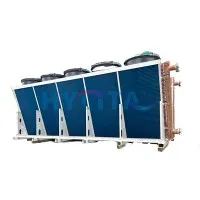
Hey there! As a supplier of Heat Exhaust Recovery systems, I've been in the thick of it when it comes to understanding the ins and outs of this industry. One of the most crucial aspects that businesses often grapple with is conducting a proper cost - benefit analysis for heat exhaust recovery. In this blog, I'll share some of the top tools and methods that can help you make an informed decision.
1. Payback Period Analysis
The payback period is a classic tool in cost - benefit analysis. It's super simple to understand. Essentially, it tells you how long it'll take to recoup the initial investment you make in a heat exhaust recovery system.
Let's say you install an Economiser Heat Exchanger. You shell out a certain amount of money upfront for the equipment, installation, and any associated costs. Then, you start saving on energy bills because the heat that would've otherwise gone to waste is now being used. The payback period is the time it takes for those savings to equal the initial investment.
A shorter payback period is obviously better. It means you're getting your money back faster and starting to make a profit sooner. But it's important to note that this method doesn't take into account the money you'll save or earn after the payback period. So, while it's a quick and easy way to get a rough idea, it's not the be - all and end - all.
2. Net Present Value (NPV)
NPV is a more sophisticated tool. It takes into account the time value of money. In simple terms, a dollar today is worth more than a dollar in the future because you could invest that dollar today and earn interest on it.
When you're looking at a heat exhaust recovery project, you estimate all the future cash flows - both the savings from energy and any additional revenue you might generate. Then, you discount those cash flows back to their present value using an appropriate discount rate. The discount rate reflects the cost of capital or the rate of return you could get from other investments.
If the NPV of a heat exhaust recovery project is positive, it means the project is expected to generate more value than it costs. For example, if you're considering investing in a Heat Exhaust Recovery system, a positive NPV indicates that the present value of all the future savings and benefits is greater than the present value of the costs. It's a good sign that the project is worth pursuing.
3. Internal Rate of Return (IRR)
IRR is another important metric. It's the discount rate at which the NPV of a project becomes zero. In other words, it's the rate of return that the project is expected to generate.
Let's say you're evaluating different heat exhaust recovery options. The option with a higher IRR is generally more attractive because it means you're getting a better return on your investment. For instance, if one system has an IRR of 15% and another has an IRR of 10%, the first system is likely to be a better choice, assuming all other factors are equal.
However, IRR has its limitations. It assumes that all the cash flows generated by the project can be reinvested at the same IRR, which might not be realistic in the real world.
4. Energy Savings Calculators
There are plenty of online energy savings calculators available that can be really helpful. These calculators take into account factors like the type of industry you're in, the amount of heat exhaust you produce, the efficiency of the heat recovery system, and the current energy prices.
For example, if you're in a manufacturing plant and you know how much hot exhaust gas your boilers produce, you can input that data into an energy savings calculator. It'll then estimate how much energy you can save by installing a Heat Energy Recovery system. This gives you a ballpark figure of the potential cost savings, which is a key part of the cost - benefit analysis.
5. Life - Cycle Cost Analysis (LCCA)
LCCA looks at the total cost of owning and operating a heat exhaust recovery system over its entire life cycle. This includes not only the initial purchase and installation costs but also the costs of maintenance, repairs, energy consumption, and disposal at the end of its useful life.
When you're comparing different heat exhaust recovery systems, LCCA can give you a more comprehensive view. A system might have a lower upfront cost but higher maintenance costs over its life. On the other hand, a more expensive system might be more energy - efficient and require less maintenance, resulting in lower overall costs in the long run.
Why These Tools Matter for Your Business
As a business owner, you want to make sure that any investment you make is going to pay off. Using these cost - benefit analysis tools can help you determine whether a heat exhaust recovery system is a good fit for your company.


They can also help you compare different systems and suppliers. For example, if one supplier offers a system with a shorter payback period and a higher NPV compared to another, it's a clear indication that the first system might be a better choice.
Making the Decision
Once you've used these tools to analyze the costs and benefits of heat exhaust recovery, it's time to make a decision. Remember, it's not just about the numbers. You also need to consider factors like the reliability of the system, the reputation of the supplier, and how well the system will integrate with your existing operations.
If you're still unsure, feel free to reach out to us. We've been in the heat exhaust recovery business for a long time and have helped many companies make the right choices. We can provide you with more detailed information, answer your questions, and even help you conduct a more in - depth cost - benefit analysis.
Investing in heat exhaust recovery is not only good for your bottom line but also for the environment. By recovering and reusing heat that would've otherwise been wasted, you're reducing your energy consumption and your carbon footprint. It's a win - win situation.
So, if you're interested in learning more about our Heat Exhaust Recovery solutions or want to start a conversation about a potential project, don't hesitate to get in touch. We're here to help you make the most of your heat exhaust and turn it into a valuable asset for your business.
References
- Brealey, R. A., Myers, S. C., & Allen, F. (2020). Principles of Corporate Finance. McGraw - Hill Education.
- Cengel, Y. A., & Boles, M. A. (2015). Thermodynamics: An Engineering Approach. McGraw - Hill Education.