


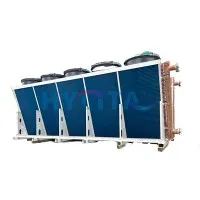
As a finned tube radiator supplier, I've witnessed firsthand the critical role these radiators play in various industrial and commercial applications. The efficient design of a finned tube radiator is paramount for achieving optimal performance, whether it's in a Vapour Radiator, Steam Exchanger, or Thermal Oil Radiator. In this blog, I'll share some insights on how to optimize the design of a finned tube radiator for better performance.
Understanding the Basics of Finned Tube Radiators
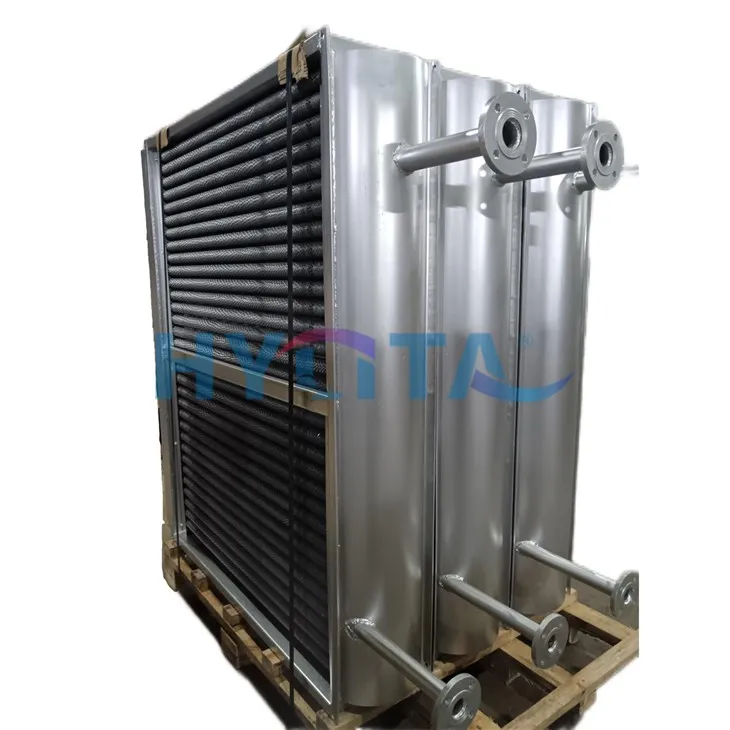
Before delving into optimization strategies, it's essential to understand the basic principles of finned tube radiators. These radiators work on the principle of heat transfer, where heat is transferred from a hot fluid (such as steam, hot water, or thermal oil) flowing inside the tubes to the surrounding air through the fins. The fins increase the surface area available for heat transfer, thereby enhancing the radiator's efficiency.
The performance of a finned tube radiator is primarily determined by three factors: heat transfer coefficient, surface area, and temperature difference. The heat transfer coefficient depends on the properties of the fluids involved, the flow rate, and the geometry of the tubes and fins. The surface area is directly related to the number and size of the fins, while the temperature difference is the driving force for heat transfer.
Optimizing Tube Design
The design of the tubes is a crucial factor in the performance of a finned tube radiator. The material, diameter, and wall thickness of the tubes can significantly affect the heat transfer rate.
- Material Selection: The choice of tube material depends on the application and the properties of the fluid being used. Common materials include copper, aluminum, and steel. Copper has excellent thermal conductivity and is resistant to corrosion, making it a popular choice for applications where high heat transfer rates are required. Aluminum is lightweight and has good thermal conductivity, but it may not be suitable for applications involving corrosive fluids. Steel is strong and durable, but its thermal conductivity is lower than that of copper and aluminum.
- Tube Diameter: The diameter of the tubes affects the flow rate and the pressure drop of the fluid inside the tubes. Smaller diameter tubes generally have a higher heat transfer coefficient, but they also result in a higher pressure drop. Larger diameter tubes, on the other hand, have a lower pressure drop but a lower heat transfer coefficient. The optimal tube diameter depends on the specific application and the requirements for flow rate and pressure drop.
- Wall Thickness: The wall thickness of the tubes affects the thermal resistance and the mechanical strength of the radiator. Thicker walls provide better mechanical strength but also increase the thermal resistance, reducing the heat transfer rate. Thinner walls, on the other hand, reduce the thermal resistance but may not be suitable for applications where high pressure or mechanical stress is involved.
Enhancing Fin Design
The fins are the key component of a finned tube radiator, as they significantly increase the surface area available for heat transfer. Optimizing the fin design can lead to substantial improvements in the radiator's performance.
- Fin Material: Similar to the tube material, the choice of fin material depends on the application and the properties of the fluid. Aluminum is the most commonly used fin material due to its lightweight, high thermal conductivity, and low cost. Copper fins can also be used for applications where high heat transfer rates are required, but they are more expensive than aluminum fins.
- Fin Geometry: The geometry of the fins, including the shape, height, thickness, and spacing, has a significant impact on the heat transfer rate. Different fin shapes, such as rectangular, triangular, and circular, have different heat transfer characteristics. In general, fins with a larger surface area and a smaller fin pitch (spacing between fins) provide better heat transfer performance. However, reducing the fin pitch too much can increase the pressure drop and make the radiator more prone to fouling.
- Fin Attachment: The method of attaching the fins to the tubes is also important for ensuring good thermal contact and efficient heat transfer. Common attachment methods include mechanical bonding, brazing, and welding. Mechanical bonding is the simplest and most cost-effective method, but it may not provide as good a thermal contact as brazing or welding. Brazing and welding provide a stronger and more reliable bond, but they are more expensive and require more complex manufacturing processes.
Improving Fluid Flow
The flow rate and distribution of the fluid inside the tubes and the air outside the tubes are critical for achieving optimal heat transfer performance.
- Tube Layout: The layout of the tubes in the radiator can affect the flow distribution and the pressure drop of the fluid. Common tube layouts include in-line and staggered arrangements. Staggered tube layouts generally provide better heat transfer performance than in-line layouts, as they create more turbulence in the fluid flow, enhancing the heat transfer coefficient.
- Flow Rate: The flow rate of the fluid inside the tubes and the air outside the tubes should be carefully controlled to ensure efficient heat transfer. Increasing the flow rate can increase the heat transfer coefficient, but it also increases the pressure drop and the power consumption of the pump or fan. The optimal flow rate depends on the specific application and the requirements for heat transfer performance and energy efficiency.
- Airflow Management: Proper airflow management is essential for ensuring uniform heat transfer across the radiator. This can be achieved by using fans or blowers to force the air through the radiator and by designing the radiator housing to minimize air leakage and ensure proper air distribution.
Considering Environmental Factors
In addition to the design and operating parameters, environmental factors such as ambient temperature, humidity, and air quality can also affect the performance of a finned tube radiator.
- Ambient Temperature: The ambient temperature affects the temperature difference between the fluid inside the tubes and the surrounding air, which is the driving force for heat transfer. In hot climates, the temperature difference is smaller, resulting in a lower heat transfer rate. To compensate for this, the radiator may need to be larger or more efficient.
- Humidity: High humidity can reduce the heat transfer rate by forming a layer of moisture on the fins, which acts as an insulator. This can be mitigated by using fins with a hydrophobic coating or by increasing the airflow rate to prevent the accumulation of moisture.
- Air Quality: The presence of dust, dirt, and other contaminants in the air can foul the fins and reduce the heat transfer rate. Regular cleaning and maintenance of the radiator are essential to ensure optimal performance.
Implementing Computational Fluid Dynamics (CFD) Analysis
Computational Fluid Dynamics (CFD) analysis is a powerful tool for optimizing the design of a finned tube radiator. CFD simulations can provide detailed information about the fluid flow, heat transfer, and pressure distribution inside the radiator, allowing engineers to identify areas for improvement and optimize the design accordingly.
By using CFD analysis, engineers can evaluate different design options, such as tube layout, fin geometry, and airflow management, and select the one that provides the best performance. CFD simulations can also be used to predict the performance of the radiator under different operating conditions, such as varying flow rates and ambient temperatures, helping to ensure its reliability and efficiency.
Conclusion
Optimizing the design of a finned tube radiator for better performance requires a comprehensive approach that considers all aspects of the radiator's design, including tube design, fin design, fluid flow, and environmental factors. By carefully selecting the materials, optimizing the geometry, and implementing advanced design techniques such as CFD analysis, it is possible to achieve significant improvements in the radiator's heat transfer efficiency, energy consumption, and reliability.
As a finned tube radiator supplier, we are committed to providing our customers with high-quality radiators that meet their specific requirements. If you are interested in learning more about our products or discussing your radiator design needs, please feel free to contact us. We look forward to the opportunity to work with you and help you optimize your radiator design for better performance.
References
- Incropera, F. P., & DeWitt, D. P. (2002). Introduction to Heat Transfer. Wiley.
- Kakaç, S., & Liu, H. (2002). Heat Exchangers: Selection, Rating, and Thermal Design. CRC Press.
- Shah, R. K., & Sekulic, D. P. (2003). Fundamentals of Heat Exchanger Design. Wiley.