


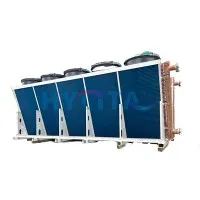
Hey there! As a supplier of Hot Water Economisers, I'm super stoked to dive into how these nifty devices work in a district heating system. So, let's get right into it!
What's a District Heating System?
First off, for those who might not know, a district heating system is like a big - time heating hub. It takes heat from a central source, like a power plant or a waste - to - energy facility, and distributes it to multiple buildings in a neighborhood or an industrial area. This setup is way more efficient than having individual heating systems in each building. It reduces fuel consumption, cuts down on emissions, and saves money in the long run.
Enter the Hot Water Economiser
Now, let's talk about the star of the show, the Hot Water Economiser. This thing is a real game - changer in district heating systems. Its main job is to recover heat from the flue gases that come out of the boiler or other heat - generating equipment.
You see, when a boiler burns fuel to produce heat, not all of the heat is used effectively. A lot of it goes up the chimney in the form of hot flue gases. That's where the Hot Water Economiser steps in. It's installed in the path of these flue gases, and it captures the heat that would otherwise be wasted.
How Does It Work?
The basic principle behind a Hot Water Economiser is heat exchange. It has a set of tubes through which cold water flows. The hot flue gases pass over these tubes. As the gases transfer their heat to the water in the tubes, the water gets heated up, and the flue gases cool down.
Let's break it down into steps:
Step 1: Cold Water Inlet
Cold water from the district heating system enters the Hot Water Economiser through an inlet. This water is usually at a relatively low temperature, and it's ready to soak up some heat.
Step 2: Heat Exchange
Once inside the economiser, the cold water flows through a network of tubes. Meanwhile, the hot flue gases from the boiler or other heat source flow around these tubes. The heat from the gases is transferred to the water through the tube walls. This is possible because heat always moves from a hotter substance to a cooler one.
Step 3: Heated Water Outlet
After the water has absorbed the heat from the flue gases, it leaves the economiser through an outlet at a much higher temperature. This heated water can then be sent back into the district heating system to provide warmth to buildings.
Step 4: Cooled Flue Gas Exit
As the flue gases transfer their heat to the water, they cool down. They then exit the economiser and go up the chimney at a lower temperature. This means that less heat is wasted, and the overall efficiency of the district heating system is improved.
Benefits of Using a Hot Water Economiser in a District Heating System
There are several reasons why a Hot Water Economiser is a great addition to a district heating system:
Energy Efficiency
By recovering heat from the flue gases, the economiser reduces the amount of fuel that the boiler needs to burn to produce the same amount of heat. This leads to significant energy savings, which is not only good for the environment but also for the bottom line.
Cost Savings
Less fuel consumption means lower energy bills. Over time, these savings can really add up, making the investment in a Hot Water Economiser well worth it.
Environmental Friendliness
Since the economiser helps reduce fuel consumption, it also cuts down on greenhouse gas emissions. This is a big plus in today's world, where we're all looking for ways to be more sustainable.
Types of Hot Water Economisers
There are different types of Hot Water Economisers available, each with its own advantages.
Shell and Tube Economisers
These are the most common type. They consist of a shell (a large outer container) and a bundle of tubes inside. The flue gases flow through the shell, and the water flows through the tubes. Shell and tube economisers are known for their high heat transfer efficiency and durability. You can learn more about similar heat - recovery units like the Vapour Economizer in Boiler.
Plate - Type Economisers
Plate - type economisers use a series of plates to transfer heat between the flue gases and the water. They are more compact than shell and tube economisers, making them a good choice for installations where space is limited. Another related product is the Exhaust Heat Exchanger, which also works on the principle of heat exchange.
Installation and Maintenance
Installing a Hot Water Economiser in a district heating system requires some planning. It needs to be placed in the right location in the flue gas path to ensure maximum heat recovery. A professional installer should be able to handle the job and make sure that everything is set up correctly.
Maintenance is also important to keep the economiser working efficiently. Regular inspections should be carried out to check for any signs of wear and tear, such as corrosion or blockages in the tubes. Cleaning the tubes periodically can help maintain good heat transfer performance.


Why Choose Our Hot Water Economisers?
As a supplier, we take pride in offering high - quality Hot Water Economisers. Our products are designed to be efficient, reliable, and easy to maintain. We use the latest technology and high - grade materials to ensure that our economisers can withstand the harsh conditions in a district heating system.
If you're interested in learning more about our Hot Water Economiser, or if you're thinking about adding one to your district heating system, we'd love to hear from you. Whether you're a building manager, an engineer, or someone involved in the district heating industry, we can provide you with all the information you need and help you make the right decision.
Contact us today to start a conversation about how our Hot Water Economisers can improve the efficiency and cost - effectiveness of your district heating system. Let's work together to make your heating system more sustainable and economical!
References
- ASHRAE Handbook of HVAC Systems and Equipment.
- Steam: Its Generation and Use, Babcock & Wilcox.