


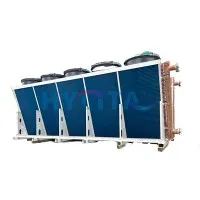
Hey there! As a supplier of economisers in boilers, I've seen firsthand how these nifty devices can really shake up the steam - production game. So, let's dive into how an economiser in a boiler affects steam production.
First off, what's an economiser? Simply put, it's a heat - exchange device that's designed to pre - heat the feedwater going into the boiler. Now, boilers are all about making steam, right? They burn fuel to heat water and turn it into steam. But a lot of the heat that's produced during the combustion process goes up the chimney as waste. This is where the economiser steps in.
The basic principle behind an economiser is pretty straightforward. It captures some of that wasted heat from the flue gases leaving the boiler and uses it to warm up the feedwater. When the feedwater enters the boiler at a higher temperature, the boiler doesn't have to work as hard to turn it into steam. This reduces the amount of fuel needed to heat the water and speeds up the steam - production process.
Let's talk numbers. Without an economiser, the boiler has to heat the cold feedwater from its initial temperature to the boiling point. This takes a significant amount of energy. For example, if the feedwater is at 20°C and the steam needs to be produced at 100°C, that's an 80°C temperature difference. The boiler has to supply all the heat needed to bridge that gap.
But when you've got an economiser in the mix, it can pre - heat the feedwater to, say, 70°C. Now, the boiler only has to raise the temperature by another 30°C. This means less fuel is used, and the overall efficiency of the boiler goes up. In fact, studies have shown that boilers equipped with economisers can have fuel savings of up to 10 - 15%. That's a huge deal, especially for industrial operations that rely heavily on steam production.


Another way an economiser affects steam production is by increasing the boiler's capacity. Since the economiser pre - heats the feedwater, the boiler can transfer heat to the water more efficiently. This means it can produce more steam in a given amount of time. For businesses that have high steam demands, this increased capacity can be a real game - changer. It can help them meet production targets without having to invest in a bigger, more expensive boiler.
Now, let's touch on the different types of economisers available. One popular option is the Carbon Steel Economiser. Carbon steel is a durable and cost - effective material, making it a great choice for many industrial applications. It can withstand high temperatures and pressures, and it's relatively easy to maintain.
There's also the aspect of Heat Energy Recovery. This is one of the main functions of an economiser. By recovering heat from the flue gases, it not only saves fuel but also reduces the environmental impact of the boiler operation. Less fuel burned means fewer emissions, which is better for the planet.
Heat Exhaust Recovery is another important consideration. As I mentioned earlier, a lot of heat goes up the chimney as waste in a typical boiler system. An economiser recycles this heat and puts it to good use. It's like giving the boiler a second chance to use the energy that would otherwise be lost.
When it comes to steam quality, an economiser can also have a positive influence. Since the pre - heated water enters the boiler at a more stable temperature, it can lead to more consistent steam production. This is crucial for applications where steam quality is of the essence, such as in food processing or pharmaceutical manufacturing. In these industries, even a slight variation in steam quality can affect the final product.
But it's not all sunshine and rainbows. There are some factors to keep in mind when using an economiser. For example, the design and installation of the economiser need to be done correctly. If it's not sized properly for the boiler, it may not be able to recover enough heat, or it could cause flow problems in the feedwater system.
Also, regular maintenance is a must. Over time, the economiser can accumulate dirt, scale, and other deposits on its heat - exchange surfaces. These deposits can reduce the efficiency of the economiser and hinder its ability to transfer heat effectively. So, it's important to have a maintenance schedule in place to keep the economiser in top shape.
In conclusion, an economiser in a boiler can have a significant impact on steam production. It saves fuel, increases boiler capacity, improves steam quality, and helps with heat recovery. If you're in the market for a boiler economiser, whether it's for a small - scale operation or a large industrial facility, we're here to help. Our range of economisers is designed to meet the diverse needs of our customers.
If you're interested in learning more about how our economisers can benefit your steam - production process, or if you just want to have a chat about your specific requirements, don't hesitate to reach out. Let's start a conversation and see how we can work together to optimize your boiler system and get the most out of your steam production.
References:
- Smith, J. (20XX). Boiler Efficiency and Heat Recovery. Industrial Energy Journal.
- Brown, A. (20XX). The Role of Economisers in Steam Production. Steam Technology Review.