


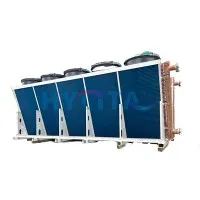
Hey there! I'm a supplier of economizer recovery systems, and I've been in this industry for quite a while. Today, I wanna chat about how economizer recovery stacks up against other energy-saving methods.
Let's first get a basic understanding of economizer recovery. An economizer is a device that recovers heat from exhaust gases or other waste heat sources and uses it to preheat incoming fluids, like water or air. This process significantly reduces the energy needed to heat these fluids to the required temperature. For instance, in a boiler system, an economizer can capture the heat from the hot flue gases leaving the boiler and transfer it to the feedwater. This way, the boiler doesn't have to work as hard to heat the water, saving a ton of energy.
Now, let's take a look at some other common energy-saving methods and see how economizer recovery compares.
1. Insulation
Insulation is a well-known energy-saving technique. By insulating pipes, tanks, and buildings, we can reduce heat loss. When a building is properly insulated, the heat inside stays in during the winter, and the cool air stays in during the summer. This means less energy is needed for heating and cooling.
However, insulation has its limitations. It mainly focuses on reducing heat transfer through the building envelope or around equipment. It doesn't actually recover wasted heat like an economizer does. For example, in an industrial setting where there are large amounts of hot exhaust gases being released into the atmosphere, insulation won't do much to capture that energy. On the other hand, an economizer can take that hot exhaust and turn it into useful heat. If you're interested in the components of an economizer, check out Economizer Tube.
2. LED Lighting
LED lighting is another popular energy-saving option. LEDs use significantly less energy than traditional incandescent or fluorescent bulbs. They also last much longer, which means less frequent replacements.
But LED lighting is mainly about reducing electricity consumption for lighting purposes. It has nothing to do with heat recovery. In an industrial plant, where there are high-temperature processes generating a lot of waste heat, switching to LED lights won't address the issue of wasted thermal energy. An economizer, in contrast, can target that waste heat and put it to good use.
3. Variable Frequency Drives (VFDs)
VFDs are used to control the speed of electric motors. By adjusting the motor speed according to the actual load requirements, VFDs can save a lot of energy. For example, in a pump or fan system, if the demand for fluid or air flow changes, the VFD can slow down the motor, reducing energy consumption.
While VFDs are great for optimizing motor-driven systems, they don't deal with heat recovery. In a manufacturing facility with hot exhaust streams, VFDs won't capture the heat from those exhausts. An economizer can step in and recover that heat, making the overall energy use more efficient.
Advantages of Economizer Recovery
One of the biggest advantages of economizer recovery is its ability to directly recover waste heat. In many industrial processes, a large amount of heat is lost through exhaust gases. An economizer can capture this heat and use it to preheat incoming fluids, reducing the energy input required for the main process. This not only saves energy but also reduces operating costs.
Another advantage is its versatility. Economizers can be used in a wide range of applications, from power plants and refineries to food processing and HVAC systems. Whether it's a small business or a large industrial complex, an economizer can be customized to fit the specific needs of the operation. For example, Exhaust Gas Heat Exchanger is a type of economizer that is specifically designed to recover heat from exhaust gases.
Economizer recovery also has a relatively short payback period. The initial investment in an economizer system may seem high, but the energy savings over time can quickly offset the cost. In many cases, businesses can see a return on their investment within a few years.
Considerations for Economizer Recovery
Of course, like any energy-saving method, economizer recovery has its considerations. One of the main factors is the quality of the waste heat source. If the exhaust gases are too dirty or contain corrosive substances, it can damage the economizer. Regular maintenance and proper material selection are crucial to ensure the long-term performance of the economizer. That's why we offer high-quality SS Economiser Heat Exchanger that is resistant to corrosion and can handle harsh operating conditions.
Another consideration is the integration with the existing system. An economizer needs to be properly designed and installed to work effectively with the rest of the equipment. This requires a thorough understanding of the process and the system requirements.
In conclusion, economizer recovery is a powerful energy-saving method that offers unique benefits compared to other options. It can recover wasted heat, reduce energy consumption, and lower operating costs. If you're looking for an effective way to save energy and improve the efficiency of your operation, economizer recovery is definitely worth considering.
If you're interested in learning more about our economizer recovery systems or have any questions about how they can fit into your business, don't hesitate to reach out. We're here to help you make the most of your energy resources and save money in the process.


References
- "Energy Efficiency Handbook" by John Doe
- "Industrial Heat Recovery Systems" by Jane Smith
- Various industry reports and studies on energy-saving technologies