


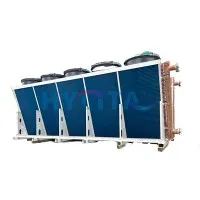
Hey there! I'm in the business of supplying Economizer Tubes, and today I wanna talk about the vibration effects on these tubes. You see, economizer tubes are a crucial part of heat recovery systems, like the SS Economiser Heat Exchanger and Exhaust Gas Heat Exchanger. They play a key role in improving energy efficiency and reducing operational costs. But vibrations can mess things up big time.
First off, let's understand what causes these vibrations. There are a few factors at play here. One major cause is the flow of fluids inside and around the tubes. When the fluid flow is irregular or turbulent, it can create unsteady forces that make the tubes vibrate. For example, in an exhaust gas heat exchanger, the high - velocity exhaust gases passing over the economizer tubes can cause vibrations. The uneven distribution of the gas flow, due to factors like bends in the ductwork or blockages, can amplify these vibrations.
Another source of vibration is the mechanical equipment connected to the economizer system. Pumps, fans, and compressors can generate vibrations that are transferred to the tubes. If these machines are not properly balanced or installed, the vibrations can be quite severe. Even small misalignments in the shafts of these equipment can lead to significant vibrations over time.
Now, let's dig into the effects of these vibrations on economizer tubes. One of the most immediate effects is wear and tear. The continuous back - and - forth movement of the tubes due to vibrations can cause friction between the tubes and their supports. This friction can gradually wear down the tube material, leading to thinning of the tube walls. As the walls get thinner, the tubes become more susceptible to leaks and failures. In extreme cases, the tubes can even rupture, which can be a major headache for any industrial operation.
Vibrations can also affect the heat transfer efficiency of the economizer tubes. When the tubes vibrate, the boundary layer of the fluid flowing over them gets disrupted. The boundary layer is a thin layer of fluid that plays a crucial role in heat transfer. A stable boundary layer allows for efficient heat transfer from the hot fluid (like exhaust gases) to the cooler fluid (usually water) inside the tubes. But when the vibrations disrupt this layer, the heat transfer rate decreases. This means that the economizer is not able to recover as much heat as it should, leading to lower energy efficiency and higher operating costs.
In addition to wear and reduced heat transfer, vibrations can cause fatigue in the tube material. Fatigue is a phenomenon where the material weakens over time due to repeated loading and unloading. The cyclic stresses induced by the vibrations can create small cracks in the tube material. These cracks can start off as tiny hairline fractures, but over time, they can grow and spread. Once the cracks reach a critical size, the tube can fail suddenly and catastrophically. This kind of failure can be very dangerous, especially in industrial settings where there are high - pressure and high - temperature fluids involved.
So, how can we deal with these vibration issues? Well, as an Economizer Tube supplier, I've seen a few solutions. One approach is to improve the design of the economizer system. This can involve using better - designed tube supports that can dampen the vibrations. For example, using flexible or spring - loaded supports can absorb some of the vibration energy and reduce the stress on the tubes.
Another solution is to optimize the fluid flow in the system. By ensuring a more even distribution of the fluid (either gas or liquid) over the tubes, we can reduce the unsteady forces that cause vibrations. This can be achieved by using flow straighteners, diffusers, or by redesigning the ductwork to minimize bends and blockages.
Proper maintenance of the mechanical equipment is also crucial. Regularly checking and balancing the pumps, fans, and compressors can prevent excessive vibrations from being transferred to the tubes. Ensuring that the equipment is properly aligned and lubricated can go a long way in reducing vibrations.
As a supplier of high - quality economizer tubes, I understand the importance of providing products that can withstand these vibration challenges. We use advanced manufacturing techniques and high - grade materials to produce tubes that are more resistant to wear, fatigue, and vibration - induced damage. Our tubes are designed to have a uniform wall thickness and excellent material properties, which helps them perform better in vibrating environments.
If you're in the market for economizer tubes or are facing vibration issues with your existing economizer system, I'd love to have a chat with you. We can discuss your specific needs and come up with the best solutions for your operation. Whether it's choosing the right type of tube material, improving the system design, or implementing vibration - damping measures, we've got the expertise to help you out.
In conclusion, vibrations can have a significant impact on economizer tubes, affecting their durability, heat transfer efficiency, and overall performance. But with the right approach, these issues can be managed effectively. So, don't let vibrations derail your industrial operations. Reach out to us, and let's work together to ensure that your economizer system runs smoothly and efficiently.
References:


- "Handbook of Heat Exchanger Design" by D. Q. Kern
- "Vibration Analysis for Engineers" by R. B. Randall
- Industry reports on economizer system failures due to vibrations