


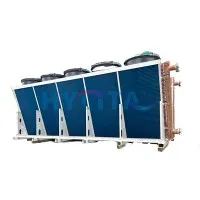
Hey there! As a supplier of dry coolers, I often get asked about the cooling capacity of these nifty machines. So, let's dive right in and break down what the cooling capacity of a dry cooler actually means.
What is Cooling Capacity?
First off, cooling capacity is basically how much heat a dry cooler can remove from a system in a given amount of time. It's usually measured in kilowatts (kW) or British thermal units per hour (BTU/hr). Think of it like the horsepower of a car but for cooling. The higher the cooling capacity, the more heat the dry cooler can handle.
Let's say you've got a small data center with a bunch of servers chugging away, generating heat. You need a dry cooler that can keep up with that heat output. If the cooling capacity of the dry cooler is too low, the servers will overheat, and you'll end up with some serious problems. On the other hand, if the cooling capacity is way too high, you're wasting energy and money.
Factors Affecting Cooling Capacity
There are several factors that can affect the cooling capacity of a dry cooler. One of the most important ones is the ambient temperature. The cooler the outside air, the easier it is for the dry cooler to transfer heat. For example, if it's a nice, cool day with an ambient temperature of 20°C, the dry cooler will be able to remove more heat compared to a hot day when the temperature is 35°C.
Another factor is the airflow. Dry coolers rely on air to carry away the heat. If the airflow is restricted, either due to poor installation or blockages, the cooling capacity will decrease. That's why it's crucial to make sure there's enough space around the dry cooler for proper air circulation.
The design and size of the dry cooler also play a big role. A larger dry cooler with more surface area for heat exchange will generally have a higher cooling capacity. Different designs, like the V Dry Cooler, are optimized for specific applications and can offer better performance in certain situations.
Calculating Cooling Capacity
Calculating the cooling capacity you need can be a bit tricky. It involves considering the heat load of the system you're trying to cool. For a data center, you'll need to take into account the power consumption of the servers, the lighting, and any other equipment in the room. You can use some formulas and online calculators to get a rough estimate, but it's always a good idea to consult with a professional.
Let's say you've got a small office with a few computers. The heat load might be relatively low, so you could probably get away with a smaller dry cooler. But if you're dealing with a large industrial facility with heavy machinery, you'll need a much more powerful dry cooler.
Different Types of Dry Coolers and Their Cooling Capacities
There are different types of dry coolers, each with its own range of cooling capacities. For instance, the Liquid Immersion Cooling Dry Cooler is designed for applications where liquid immersion cooling is used. These dry coolers can handle high heat loads and are often used in data centers and high - performance computing environments.
The Data Center Dry Cooler is specifically tailored to the needs of data centers. They come in various sizes and can have cooling capacities ranging from a few kilowatts for small data closets to hundreds of kilowatts for large enterprise data centers.
Importance of the Right Cooling Capacity
Getting the right cooling capacity is crucial for the efficient operation of your system. If the cooling capacity is too low, your equipment will run hot, which can lead to reduced lifespan, increased maintenance costs, and even system failures. On the other hand, if the cooling capacity is too high, you'll be spending more on energy and equipment than you need to.


For example, in a manufacturing plant, if the dry cooler can't keep up with the heat generated by the machinery, the quality of the products might be affected. The machinery could overheat, leading to production delays and costly repairs.
Real - World Examples
Let's look at a real - world example. A small e - commerce company has a data center with about 50 servers. After calculating the heat load, they find that they need a dry cooler with a cooling capacity of around 30 kW. They choose a Data Center Dry Cooler that meets this requirement. Since they got the right cooling capacity, the servers run at optimal temperatures, and they haven't had any overheating issues.
In contrast, a startup company decides to cut costs and buys a dry cooler with a lower cooling capacity than needed. As a result, their servers start to overheat, and they experience frequent downtime. They end up having to spend more money on emergency repairs and a new, more powerful dry cooler.
Choosing the Right Dry Cooler Based on Cooling Capacity
When you're choosing a dry cooler, it's important to work with a reputable supplier. At our company, we've got a wide range of dry coolers with different cooling capacities to suit various applications. We can help you calculate the exact cooling capacity you need based on your specific requirements.
We'll take into account factors like the size of your space, the type of equipment you're cooling, and the ambient conditions. Whether you need a Liquid Immersion Cooling Dry Cooler for your high - tech data center or a V Dry Cooler for an industrial application, we've got you covered.
Conclusion
So, there you have it. The cooling capacity of a dry cooler is a crucial factor in ensuring the efficient operation of your system. It's affected by things like ambient temperature, airflow, and the design of the dry cooler. By choosing the right cooling capacity and the right type of dry cooler, you can save money on energy, reduce maintenance costs, and keep your equipment running smoothly.
If you're in the market for a dry cooler and need help figuring out the right cooling capacity for your needs, don't hesitate to reach out. We're here to assist you in making the best choice for your application. Whether it's for a small business or a large industrial facility, we can provide you with a high - quality dry cooler that meets your requirements. Let's start the conversation and get you the perfect dry cooler solution!
References
- ASHRAE Handbook - HVAC Systems and Equipment.
- Cooling Technology Institute (CTI) standards.