


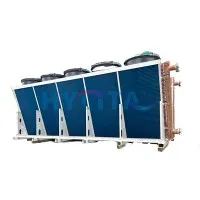
Yo, folks! As a supplier of heat exhaust recovery systems, I'm super stoked to break down how heat exhaust recovery works in boiler systems. It's a game - changer in the energy - saving world, and I'm here to make it easy to understand.
First off, let's talk about boilers. Boilers are everywhere, from industrial plants to commercial buildings. They burn fuel to heat water or produce steam, which is then used for various purposes like heating spaces or powering machinery. But here's the catch: a significant amount of heat gets wasted in the exhaust gases that are simply sent out into the atmosphere. That's where heat exhaust recovery steps in.
The Basics of Heat Exhaust Recovery
The main idea behind heat exhaust recovery in boiler systems is to capture the heat that would otherwise go to waste and use it for something useful. It's like taking money that's about to fall through the cracks and putting it back in your pocket.
When a boiler burns fuel, the exhaust gases are usually pretty hot. These gases contain a lot of thermal energy. Heat exhaust recovery systems are designed to transfer this thermal energy from the exhaust gases to another medium, usually water or air.
Let's say you have a boiler in a factory. The exhaust gases from the boiler are leaving at a high temperature. A heat exhaust recovery system can be installed to capture this heat. One common way to do this is by using a heat exchanger.
Heat Exchangers in Heat Exhaust Recovery
Heat exchangers are the heart of most heat exhaust recovery systems. They work by allowing two fluids (in this case, the hot exhaust gases and a cooler fluid like water or air) to come into close contact without mixing. The heat from the hot exhaust gases is transferred to the cooler fluid through the walls of the heat exchanger.
There are different types of heat exchangers used in boiler systems. One popular type is the Economiser Heat Exchanger. An economiser heat exchanger is specifically designed to pre - heat the feedwater going into the boiler.
When the cold feedwater enters the economiser heat exchanger, it comes into contact with the hot exhaust gases. The heat from the exhaust gases warms up the feedwater. This pre - heated water then enters the boiler. Since the water is already warmer, the boiler doesn't have to use as much fuel to heat it up to the desired temperature. This results in significant fuel savings.
Carbon Steel Economisers
Another important component in heat exhaust recovery is the Carbon Steel Economiser. Carbon steel economisers are widely used because they are durable and cost - effective.
These economisers are made of carbon steel tubes. The hot exhaust gases flow through the outside of the tubes, while the feedwater flows inside the tubes. The carbon steel material has good heat transfer properties, which allows for efficient transfer of heat from the exhaust gases to the feedwater.
Carbon steel economisers are also relatively easy to install and maintain. They can withstand high temperatures and pressures, making them suitable for a wide range of boiler applications. Whether you have a small commercial boiler or a large industrial boiler, a carbon steel economiser can be a great addition to your heat exhaust recovery system.
Heat Energy Recovery Process
The overall Heat Energy Recovery process in a boiler system can be broken down into a few steps.
- Exhaust Gas Collection: The first step is to collect the hot exhaust gases from the boiler. This is usually done using ducts or pipes that direct the gases towards the heat recovery system.
- Heat Transfer: Once the exhaust gases reach the heat exchanger (like an economiser heat exchanger or a carbon steel economiser), the heat transfer process begins. The heat from the exhaust gases is transferred to the cooler fluid (water or air).
- Utilization of Recovered Heat: After the heat has been transferred, the pre - heated fluid can be used in different ways. If it's pre - heated water, it can be fed into the boiler to reduce fuel consumption. If it's pre - heated air, it can be used for space heating or other industrial processes.
- Exhaust Gas Discharge: After the heat has been removed from the exhaust gases, they are discharged into the atmosphere at a much lower temperature. This not only saves energy but also reduces the environmental impact of the boiler operation.
Benefits of Heat Exhaust Recovery
There are several benefits to implementing a heat exhaust recovery system in your boiler system.
Fuel Savings: As I mentioned earlier, pre - heating the feedwater or using the recovered heat for other purposes reduces the amount of fuel the boiler needs to burn. This can lead to significant cost savings over time, especially for large - scale industrial boilers that consume a lot of fuel.
Environmental Impact: By reducing fuel consumption, heat exhaust recovery systems also reduce the amount of greenhouse gas emissions. This is great for the environment, as it helps to combat climate change.
Increased Boiler Efficiency: When the feedwater is pre - heated, the boiler can operate more efficiently. This means that it can produce more steam or hot water with the same amount of fuel, or it can produce the same amount of steam or hot water with less fuel.
Real - World Applications
Heat exhaust recovery systems are used in a wide variety of industries. In the food and beverage industry, boilers are used for cooking, sterilization, and other processes. Heat exhaust recovery systems can help these companies save on energy costs and reduce their environmental footprint.
In the chemical industry, boilers are used for various chemical reactions. By recovering the heat from the exhaust gases, chemical plants can improve their overall energy efficiency and reduce production costs.
In commercial buildings like hotels and hospitals, boilers are used for heating and hot water supply. Heat exhaust recovery systems can help these buildings save on energy bills and provide a more sustainable operation.
How to Choose the Right Heat Exhaust Recovery System
If you're thinking about implementing a heat exhaust recovery system in your boiler system, there are a few things to consider.
First, you need to assess the size and type of your boiler. Different boilers have different exhaust gas temperatures and flow rates, so you need to choose a heat recovery system that can handle these parameters.
You also need to consider the specific needs of your application. If you need to pre - heat feedwater, an economiser heat exchanger or a carbon steel economiser might be a good choice. If you need to heat air for space heating, a different type of heat exchanger might be more suitable.
It's also important to work with a reputable supplier. As a heat exhaust recovery supplier, I can tell you that experience and expertise matter. A good supplier can help you design a system that is tailored to your specific needs and ensure that it is installed and maintained properly.
Conclusion
Heat exhaust recovery in boiler systems is an amazing technology that offers both economic and environmental benefits. By capturing the wasted heat from the exhaust gases and using it for useful purposes, you can save on fuel costs, reduce your carbon footprint, and increase the efficiency of your boiler system.
If you're interested in learning more about heat exhaust recovery systems or if you're ready to start the process of implementing one in your boiler system, I'd love to talk to you. Whether you have questions about Carbon Steel Economisers, Economiser Heat Exchangers, or Heat Energy Recovery, feel free to reach out. Let's work together to make your boiler system more efficient and sustainable.


References
- "Boiler Efficiency and Steam Generation" by John A. Kitto and Steven J. Stultz
- "Heat Exchanger Design Handbook" by Sadik Kakac and Hongtan Liu
- Industry reports on energy efficiency in boiler systems from various research institutions.