


In the realm of industrial cooling solutions, dry coolers play a pivotal role in maintaining optimal operating temperatures for various systems. As a leading dry cooler supplier, we've witnessed firsthand the intricate relationship between air flow rate and cooling performance. Understanding this relationship is crucial for businesses seeking efficient and reliable cooling solutions. In this blog post, we'll delve into the science behind how air flow rate affects the cooling performance of dry coolers, exploring the key factors at play and the implications for your operations.
The Basics of Dry Cooler Operation
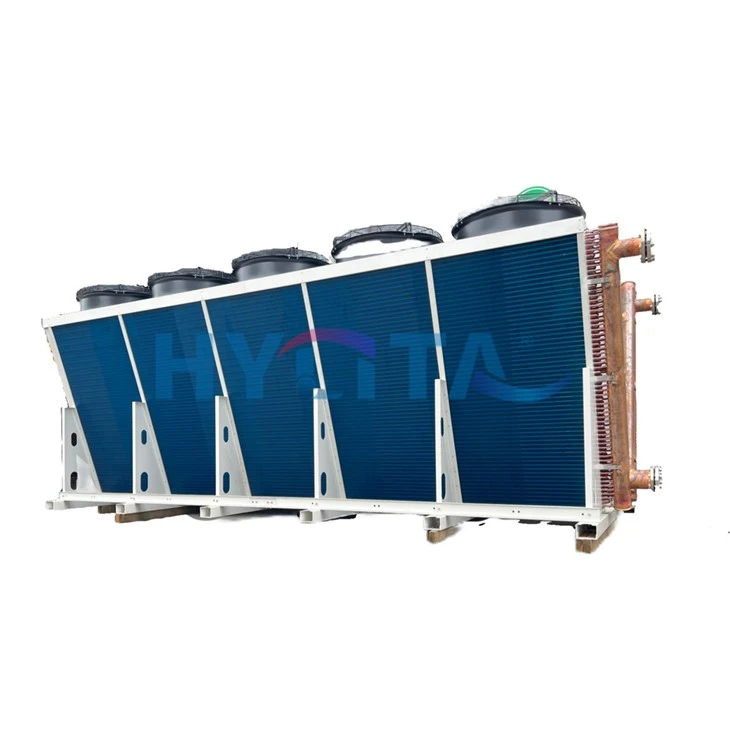
Before we dive into the impact of air flow rate, let's briefly review how dry coolers work. A dry cooler is a heat exchanger that uses ambient air to cool a fluid, typically water or a water-glycol mixture. The fluid is circulated through a series of tubes or coils, while a fan or fans draw ambient air over the surface of the tubes, transferring heat from the fluid to the air. The cooled fluid is then returned to the system it's cooling, while the heated air is exhausted into the atmosphere.
The efficiency of this heat transfer process depends on several factors, including the surface area of the tubes, the temperature difference between the fluid and the air, and the air flow rate. In this blog post, we'll focus specifically on the role of air flow rate in determining the cooling performance of dry coolers.
The Impact of Air Flow Rate on Cooling Performance
The air flow rate through a dry cooler has a direct impact on its cooling performance. In general, increasing the air flow rate will increase the rate of heat transfer from the fluid to the air, resulting in more efficient cooling. This is because a higher air flow rate increases the amount of fresh air that comes into contact with the surface of the tubes, carrying away more heat from the fluid.
However, the relationship between air flow rate and cooling performance is not linear. As the air flow rate increases, the rate of heat transfer will initially increase rapidly, but eventually, it will reach a point of diminishing returns. This is because at very high air flow rates, the air may not have enough time to absorb heat from the fluid before it is exhausted from the dry cooler. Additionally, high air flow rates can also increase the power consumption of the fans, which can offset the benefits of increased cooling efficiency.
To illustrate this relationship, let's consider a simple example. Suppose we have a dry cooler with a fixed surface area and a constant temperature difference between the fluid and the air. If we increase the air flow rate from 1,000 cubic feet per minute (CFM) to 2,000 CFM, we might expect the cooling capacity of the dry cooler to double. However, in reality, the cooling capacity may only increase by 50% or less, due to the factors mentioned above.
Factors Affecting the Optimal Air Flow Rate
Determining the optimal air flow rate for a dry cooler depends on several factors, including the specific application, the ambient temperature and humidity, and the design of the dry cooler itself. Here are some of the key factors to consider:
- Application Requirements: Different applications have different cooling requirements, which will affect the optimal air flow rate. For example, a data center may require a higher air flow rate to maintain a lower temperature, while a manufacturing process may be able to tolerate a slightly higher temperature and therefore require a lower air flow rate.
- Ambient Conditions: The ambient temperature and humidity can also have a significant impact on the cooling performance of a dry cooler. In hot and humid environments, the air may already be saturated with moisture, which can reduce the effectiveness of the cooling process. In these conditions, a higher air flow rate may be required to compensate for the reduced cooling capacity.
- Dry Cooler Design: The design of the dry cooler, including the size and shape of the tubes, the number of fans, and the layout of the air flow path, can also affect the optimal air flow rate. A well-designed dry cooler will be able to achieve a high rate of heat transfer with a relatively low air flow rate, resulting in lower energy consumption and operating costs.
Choosing the Right Dry Cooler for Your Application
When selecting a dry cooler for your application, it's important to choose a model that is designed to operate at the optimal air flow rate for your specific requirements. Here are some tips to help you make the right choice:
- Consult with a Professional: A qualified dry cooler supplier or engineer can help you determine the optimal air flow rate for your application based on your specific requirements and operating conditions. They can also recommend the right dry cooler model and configuration to meet your needs.
- Consider the Total Cost of Ownership: In addition to the initial purchase price of the dry cooler, it's important to consider the total cost of ownership, including energy consumption, maintenance, and replacement parts. A more efficient dry cooler may have a higher upfront cost, but it can save you money in the long run by reducing your energy bills and maintenance costs.
- Look for Quality and Reliability: When investing in a dry cooler, it's important to choose a model that is built to last. Look for a dry cooler that is made from high-quality materials and components, and that has a proven track record of reliability and performance.
Conclusion
In conclusion, the air flow rate plays a crucial role in determining the cooling performance of dry coolers. By understanding the relationship between air flow rate and cooling performance, and by considering the factors that affect the optimal air flow rate, you can choose the right dry cooler for your application and ensure that it operates efficiently and reliably.
At [Our Company], we're committed to providing our customers with the highest quality dry coolers and cooling solutions. Our Glycol Dry Cooler, Container Dry Cooler, and Server Dry Cooler are designed to meet the diverse needs of our customers, and are built to deliver exceptional performance and reliability.

If you're interested in learning more about our dry coolers or discussing your specific cooling requirements, please don't hesitate to [Contact Us]. Our team of experts is here to help you find the right solution for your business.
References
- [1] Incropera, F. P., & DeWitt, D. P. (2002). Fundamentals of heat and mass transfer. John Wiley & Sons.
- [2] Kakaç, S., & Liu, H. (2002). Heat exchangers: selection, rating, and thermal design. CRC Press.
- [3] ASHRAE Handbook: Fundamentals. (2017). American Society of Heating, Refrigerating and Air-Conditioning Engineers.