


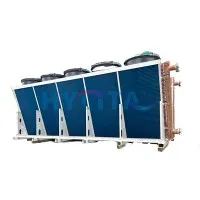
As a seasoned supplier of dry coolers, I've witnessed firsthand the challenges that salt air poses to these vital cooling systems. Dry coolers are often installed in coastal areas or industrial environments where salt air is prevalent, and this can lead to significant corrosion issues if not properly addressed. In this blog post, I'll share some effective strategies on how to prevent corrosion in a dry cooler exposed to salt air.
Understanding the Corrosion Process in Salt Air
Before we delve into prevention methods, it's crucial to understand how salt air causes corrosion in dry coolers. Salt air contains tiny salt particles that are carried by the wind and deposited on the surface of the dry cooler. When these salt particles come into contact with moisture in the air, they form a highly conductive electrolyte solution. This solution accelerates the electrochemical corrosion process, causing the metal components of the dry cooler to rust and deteriorate over time.
The most vulnerable parts of a dry cooler in a salt - air environment are the heat exchanger tubes, fins, and the outer casing. Corrosion in these areas can lead to reduced heat transfer efficiency, increased energy consumption, and ultimately, system failure.


Material Selection
One of the first steps in preventing corrosion is choosing the right materials for the dry cooler. Stainless steel is an excellent choice for components exposed to salt air. It contains chromium, which forms a passive oxide layer on the surface of the metal, protecting it from corrosion. Grade 316 stainless steel, in particular, has a high molybdenum content, making it more resistant to pitting and crevice corrosion caused by salt water.
Aluminum can also be used, but it needs to be properly treated. Anodized aluminum has a protective oxide layer that provides some resistance to corrosion. However, in a highly corrosive salt - air environment, additional coatings may be required.
Protective Coatings
Applying protective coatings is an effective way to shield the dry cooler from salt - air corrosion. There are several types of coatings available:
- Epoxy Coatings: Epoxy coatings are known for their excellent adhesion and chemical resistance. They form a tough, protective barrier on the surface of the metal, preventing salt particles and moisture from coming into contact with it. Epoxy coatings can be applied to both the internal and external surfaces of the dry cooler.
- Polyurethane Coatings: Polyurethane coatings offer good flexibility and weather resistance. They are often used in outdoor applications and can provide long - term protection against salt - air corrosion. These coatings can be formulated to have different levels of gloss and hardness, depending on the specific requirements of the dry cooler.
- Zinc - Rich Primers: Zinc - rich primers work by sacrificing the zinc to protect the underlying metal. When the coating is exposed to a corrosive environment, the zinc corrodes instead of the base metal. This sacrificial protection can significantly extend the lifespan of the dry cooler in salt - air conditions.
Regular Cleaning and Maintenance
Regular cleaning is essential to remove salt deposits from the surface of the dry cooler. Salt particles can accumulate over time, and if not removed, they will continue to accelerate the corrosion process. Use a soft brush or a low - pressure water spray to gently clean the dry cooler. Avoid using abrasive materials that could damage the protective coatings.
In addition to cleaning, regular maintenance checks should be carried out. Inspect the dry cooler for signs of corrosion, such as rust spots, pitting, or flaking paint. If any damage is detected, it should be repaired immediately. This may involve touch - up painting, replacing corroded components, or reapplying protective coatings.
Design Considerations
The design of the dry cooler can also play a role in preventing corrosion. For example, proper drainage should be incorporated into the design to ensure that any water, including salt - water runoff, can quickly drain away from the unit. This helps to reduce the amount of time that the metal components are in contact with the corrosive electrolyte solution.
The layout of the heat exchanger can also be optimized to minimize the accumulation of salt particles. For instance, using a fin design that allows for easy air and water flow can prevent salt from settling on the fins.
Environmental Monitoring
Installing environmental monitoring systems can help to detect changes in the salt - air environment. These systems can measure parameters such as salt concentration, humidity, and temperature. By continuously monitoring these factors, it is possible to take proactive measures to prevent corrosion. For example, if the salt concentration exceeds a certain threshold, additional cleaning or protective coating applications can be scheduled.
Our Product Offerings
At our company, we offer a range of dry coolers designed to withstand harsh salt - air environments. Our Data Center Dry Cooler is specifically engineered to provide reliable cooling for data centers located in coastal areas. It features high - quality stainless steel components and advanced protective coatings to ensure long - term performance.
Our Computing Center Dry Cooler is another excellent option for computing facilities in salt - air regions. It is designed with efficient heat transfer technology and corrosion - resistant materials to meet the demanding cooling requirements of modern computing centers.
For those looking for a Cooler Radiator Dry Cooler, we have a product that combines high - performance cooling with superior corrosion resistance. The radiator design is optimized to prevent salt accumulation and ensure efficient heat dissipation.
Conclusion
Preventing corrosion in a dry cooler exposed to salt air requires a comprehensive approach that includes material selection, protective coatings, regular cleaning and maintenance, design considerations, and environmental monitoring. By implementing these strategies, you can significantly extend the lifespan of your dry cooler and ensure its reliable operation in a harsh salt - air environment.
If you are in the market for a dry cooler that can withstand salt - air corrosion, we invite you to contact us for more information. Our team of experts can help you choose the right product for your specific needs and provide you with detailed guidance on installation, maintenance, and corrosion prevention.
References
- Jones, D. A. (1992). Principles and Prevention of Corrosion. Prentice Hall.
- Uhlig, H. H., & Revie, R. W. (1985). Corrosion and Corrosion Control: An Introduction to Corrosion Science and Engineering. Wiley - Interscience.
- Fontana, M. G. (1986). Corrosion Engineering. McGraw - Hill.