


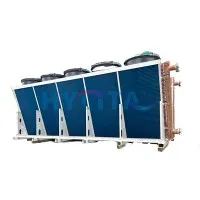
Hey there! As a finned tube supplier, I often get asked about how to test the performance of a finned tube. It's a crucial aspect, whether you're in the market for Aluminum Fin Radiator, Copper Fin Tube Radiators, or Copper Fin Radiator. In this blog, I'll share some practical ways to test the performance of finned tubes.
Understanding the Basics of Finned Tubes
Before we dive into the testing methods, let's quickly go over what finned tubes are. Finned tubes are essentially tubes with extended surfaces in the form of fins. These fins increase the surface area available for heat transfer, which is super important in applications like radiators and heat exchangers. The materials used for finned tubes can vary, with aluminum and copper being two of the most common ones. Each material has its own properties that can affect the performance of the finned tube.
Testing the Heat Transfer Performance
One of the most important aspects of a finned tube's performance is its heat transfer efficiency. There are a few ways to test this.
Laboratory Testing
In a lab setting, you can use a test rig specifically designed for heat transfer testing. This rig typically consists of a heat source, a cooling system, and sensors to measure temperature and flow rates. You'll need to set up the finned tube in the rig and run a series of tests under different conditions.
First, you'll want to establish a baseline. This means running the test with a known set of parameters, like a specific flow rate of the working fluid (usually water or a refrigerant) and a set temperature difference between the hot and cold sides. Measure the inlet and outlet temperatures of both the hot and cold fluids, as well as the flow rates. You can then calculate the heat transfer rate using the following formula:
$Q = m \times C_p \times \Delta T$
where $Q$ is the heat transfer rate, $m$ is the mass flow rate of the fluid, $C_p$ is the specific heat capacity of the fluid, and $\Delta T$ is the temperature difference between the inlet and outlet of the fluid.
After getting the baseline results, you can start varying the parameters. For example, you can increase the flow rate of the working fluid or change the temperature difference. Repeat the measurements and calculations to see how the heat transfer rate changes. This will give you an idea of how the finned tube performs under different operating conditions.
Field Testing
Field testing is another option, especially if you want to see how the finned tube performs in a real-world application. In a field test, you'll install the finned tube in the actual system, like a radiator in a vehicle or a heat exchanger in an industrial plant.
You'll need to monitor the system's performance over a period of time. This includes measuring the same parameters as in the lab test: temperatures and flow rates. However, in the field, you may have to deal with more variables, like changes in ambient temperature and system load.
To get accurate results, it's a good idea to take measurements at different times of the day and under different operating conditions. You can also compare the performance of the finned tube with other similar tubes in the system to see how it stacks up.
Testing the Pressure Drop
Another important factor to consider is the pressure drop across the finned tube. Pressure drop refers to the decrease in pressure of the fluid as it flows through the tube. A high pressure drop can mean that the system has to work harder to move the fluid, which can increase energy consumption.
Measuring Pressure Drop
To measure the pressure drop, you'll need pressure sensors installed at the inlet and outlet of the finned tube. You can then measure the difference in pressure between the two points.

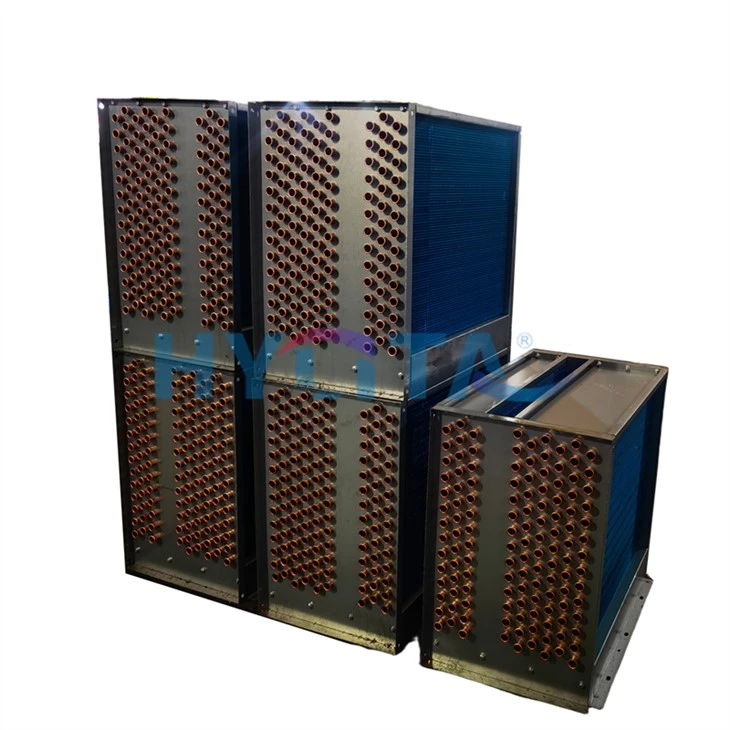
In a lab test, you can use a differential pressure gauge to directly measure the pressure drop. In a field test, you may need to use a more sophisticated data acquisition system to record the pressure readings over time.
It's important to note that the pressure drop can be affected by factors like the flow rate of the fluid, the geometry of the finned tube (including the fin density and shape), and the viscosity of the fluid. You'll want to test the pressure drop under different flow rates to see how it changes.
Testing the Structural Integrity
The structural integrity of a finned tube is also crucial, especially in applications where the tube may be subject to mechanical stress or vibration.
Visual Inspection
A simple way to start testing the structural integrity is through a visual inspection. Look for any signs of damage, such as cracks, dents, or loose fins. You can use a magnifying glass or a microscope to get a closer look at the surface of the tube and the fins.
Non - Destructive Testing
For a more in - depth assessment, you can use non - destructive testing methods. One common method is ultrasonic testing. This involves sending ultrasonic waves through the tube and analyzing the reflections to detect any internal defects, like cracks or voids.
Another method is X - ray testing. This can provide a detailed image of the internal structure of the tube, allowing you to identify any hidden defects.
Corrosion Resistance Testing
If the finned tube is going to be used in a corrosive environment, it's important to test its corrosion resistance.
Salt Spray Testing
Salt spray testing is a common method for evaluating the corrosion resistance of metals. In this test, the finned tube is placed in a chamber where it's exposed to a salt - water mist. The chamber is maintained at a specific temperature and humidity for a set period of time, usually several hours or days.
After the test, you'll inspect the tube for signs of corrosion, such as rust or pitting. You can also measure the weight loss of the tube to quantify the amount of corrosion that has occurred.
Immersion Testing
Immersion testing involves immersing the finned tube in a corrosive solution, like a salt solution or an acid solution. Similar to salt spray testing, you'll monitor the tube over a period of time and look for signs of corrosion. This method can give you a better idea of how the tube will perform in a real - world corrosive environment.
Why Testing is Important for You
As a buyer, understanding the performance of finned tubes is crucial. You want to make sure that the tubes you're purchasing will meet the requirements of your application. By testing the heat transfer performance, pressure drop, structural integrity, and corrosion resistance, you can make an informed decision about which finned tubes are the best fit for your needs.
Contact Us for Your Finned Tube Needs
If you're in the market for high - quality finned tubes, whether it's an Aluminum Fin Radiator, Copper Fin Tube Radiators, or Copper Fin Radiator, we're here to help. We have a wide range of finned tubes available, and we can work with you to ensure that you get the right product for your application. Contact us to start a discussion about your requirements and let's find the perfect finned tube solution together.
References
- Incropera, F. P., DeWitt, D. P., Bergman, T. L., & Lavine, A. S. (2007). Fundamentals of Heat and Mass Transfer. John Wiley & Sons.
- ASME Standards for Heat Exchangers. American Society of Mechanical Engineers.
- ASTM Standards for Testing Metals. American Society for Testing and Materials.