


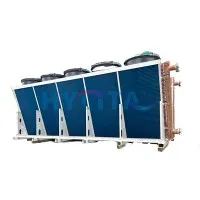
As a supplier of economisers in boilers, I understand the critical role these components play in enhancing the efficiency and performance of boiler systems. An economiser is a heat exchanger device installed in a boiler system to recover heat from the flue gases and use it to preheat the feedwater entering the boiler. This process not only reduces the energy consumption of the boiler but also increases its overall efficiency. In this blog post, I will discuss the key design considerations for an economiser in a boiler, drawing on my experience in the industry.
1. Heat Transfer Efficiency
One of the primary design considerations for an economiser is its heat transfer efficiency. The economiser's main function is to transfer heat from the hot flue gases to the feedwater, so maximizing this transfer is crucial. The heat transfer efficiency depends on several factors, including the surface area of the heat exchanger, the flow rate of the flue gases and feedwater, and the temperature difference between the two fluids.
To increase the surface area for heat transfer, economisers often use finned tubes. Fins provide additional surface area, allowing more heat to be transferred from the flue gases to the feedwater. The design of the fins, such as their shape, size, and spacing, can significantly impact the heat transfer efficiency. For example, a well - designed fin with a large surface area and proper spacing can enhance the convective heat transfer coefficient.
The flow rate of the flue gases and feedwater also affects heat transfer. A higher flow rate can increase the convective heat transfer coefficient, but it may also lead to higher pressure drops. Therefore, a balance must be struck to optimize the flow rates for maximum heat transfer without causing excessive pressure losses. The temperature difference between the flue gases and the feedwater is another important factor. A larger temperature difference generally results in more efficient heat transfer. However, in practical applications, the temperature of the flue gases at the inlet of the economiser is determined by the boiler operation, and the temperature of the feedwater is limited by the system requirements.
2. Material Selection
The choice of materials for an economiser is critical as it must withstand the harsh operating conditions. The economiser is exposed to high - temperature flue gases, which may contain corrosive substances such as sulfur compounds, ash, and moisture. Therefore, the materials used in the economiser should have good corrosion resistance, high - temperature strength, and thermal conductivity.
Common materials for economiser tubes include carbon steel, stainless steel, and alloy steels. Carbon steel is a cost - effective option and has good thermal conductivity. However, it is more susceptible to corrosion, especially in the presence of sulfur - containing flue gases. Stainless steel, on the other hand, offers excellent corrosion resistance but is more expensive. Alloy steels can be used in applications where high - temperature strength and corrosion resistance are both required.
In addition to the tubes, the headers and other components of the economiser also need to be made of suitable materials. The headers should be able to withstand the pressure of the feedwater and the thermal stresses caused by temperature variations. Gaskets and seals used in the economiser should be made of materials that can resist high temperatures and chemical corrosion to prevent leakage.
3. Pressure Drop
Pressure drop is an important design consideration in an economiser. As the flue gases and feedwater flow through the economiser, they encounter resistance, which results in a pressure drop. A high pressure drop in the flue gas side can increase the power consumption of the induced draft fan, while a high pressure drop in the feedwater side can require a more powerful feedwater pump.
To minimize the pressure drop, the design of the economiser should ensure smooth flow paths. This can be achieved by using proper tube layouts, such as in - line or staggered arrangements. A well - designed tube layout can reduce the turbulence and flow resistance of the fluids. Additionally, the size and shape of the tubes and headers can also affect the pressure drop. Larger diameter tubes generally result in lower pressure drops, but they may also require more space and increase the cost of the economiser.
4. Fouling and Cleaning
Fouling is a common problem in economisers. The flue gases contain ash, soot, and other particulate matter that can deposit on the surface of the heat exchanger tubes, reducing the heat transfer efficiency and increasing the pressure drop. Therefore, the design of the economiser should take into account the ease of cleaning.


Some economisers are designed with removable access panels or ports that allow for easy inspection and cleaning. In addition, the tube surfaces can be treated to reduce fouling. For example, a smooth tube surface can prevent the accumulation of particulate matter. Some advanced economisers use self - cleaning mechanisms, such as soot blowers, which can periodically remove the deposits from the tube surfaces.
5. Integration with the Boiler System
The economiser must be properly integrated with the boiler system. Its design should be compatible with the boiler's operating parameters, such as the flue gas flow rate, temperature, and composition, as well as the feedwater requirements.
The location of the economiser in the boiler system is also important. It is typically installed in the flue gas path downstream of the boiler but upstream of the air pre - heater or stack. This allows the economiser to recover heat from the relatively high - temperature flue gases before they are discharged to the atmosphere.
The control system of the economiser should be integrated with the boiler control system. This ensures that the operation of the economiser is coordinated with the boiler, such as adjusting the feedwater flow rate based on the boiler load and the temperature of the flue gases.
6. Safety Considerations
Safety is of utmost importance in the design of an economiser. The economiser should be designed to prevent overheating, which can lead to tube failure and potential safety hazards. Temperature sensors and pressure sensors should be installed to monitor the operating conditions of the economiser. If the temperature or pressure exceeds the safe limits, the control system should take appropriate actions, such as reducing the feedwater flow rate or shutting down the system.
In addition, the economiser should be designed to withstand seismic and other external loads. Proper structural supports and reinforcements should be provided to ensure the stability of the economiser during operation.
Conclusion
Designing an economiser for a boiler requires careful consideration of multiple factors, including heat transfer efficiency, material selection, pressure drop, fouling, integration with the boiler system, and safety. As a supplier of economisers in boilers, we have the expertise and experience to design and manufacture economisers that meet the specific requirements of our customers.
If you are looking for an efficient and reliable economiser for your boiler system, we are here to help. Our economisers are designed with the latest technology and best - practices to ensure optimal performance and energy savings. Whether you need a standard economiser or a custom - designed solution, we can provide you with the right product.
We invite you to explore our website to learn more about our products. You can find detailed information about Heat Exhaust Recovery, Economiser Heat Exchanger, and Heat Energy Recovery. If you have any questions or would like to discuss your specific needs, please feel free to contact us for procurement and further discussions.
References
- Incropera, F. P., & DeWitt, D. P. (2001). Fundamentals of Heat and Mass Transfer. John Wiley & Sons.
- Green, D. W., & Perry, R. H. (2007). Perry's Chemical Engineers' Handbook. McGraw - Hill.
- ASME Boiler and Pressure Vessel Code, Section I: Rules for Construction of Power Boilers.