


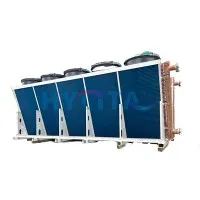
Hey there! I'm a supplier of finned tubes, and I've been getting a lot of questions lately about the optimal fin thickness for finned tubes. So, I thought I'd write this blog to share my insights on this topic.
First off, let's understand what finned tubes are and why fin thickness matters. Finned tubes are a crucial component in heat exchangers. They work by increasing the surface area available for heat transfer. The fins act like little wings on the tube, allowing more heat to be transferred between the fluid inside the tube and the surrounding environment. The thickness of these fins plays a significant role in how efficiently this heat transfer occurs.
Factors Affecting the Optimal Fin Thickness
There are several factors that come into play when determining the optimal fin thickness. Let's break them down one by one.
Heat Transfer Efficiency
The main goal of using finned tubes is to enhance heat transfer. A thinner fin generally has a larger surface - area - to - volume ratio. This means that more of the fin's surface is exposed to the surrounding fluid, which can potentially increase the rate of heat transfer. However, if the fin is too thin, it may not be able to conduct heat effectively from the tube to the outer surface of the fin.
On the other hand, a thicker fin can conduct heat more efficiently through its body. But, it also has a smaller surface - area - to - volume ratio, which might limit the overall heat transfer rate. So, there's a sweet spot where the fin thickness maximizes the heat transfer efficiency.
Material Properties
The material of the fin also affects the optimal thickness. Different materials have different thermal conductivities. For example, copper is a highly conductive material. When using copper fins, you might be able to get away with a thinner fin because it can conduct heat very well. You can check out our Copper Fin Tube Radiators to see how copper fins work in real - world applications.
Aluminum, on the other hand, has a lower thermal conductivity compared to copper. So, for aluminum fins, you might need a slightly thicker fin to achieve the same level of heat transfer. Our Aluminum Fin Radiator showcases the use of aluminum fins in heat exchangers.
Manufacturing Constraints
Manufacturing plays a big role in determining the fin thickness. Thinner fins can be more difficult to manufacture, especially when it comes to maintaining the fin's structural integrity. During the manufacturing process, there's a risk of the fin getting damaged or deformed if it's too thin.

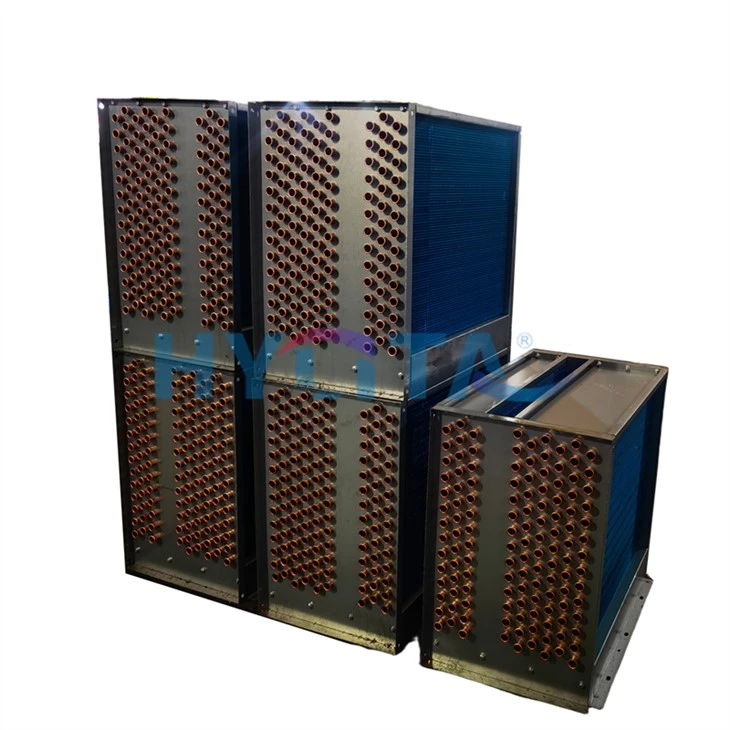
Also, the manufacturing process itself might have limitations on how thin or thick a fin can be. For example, some manufacturing methods might not be able to produce fins below a certain thickness.
Cost
Cost is always a factor in any engineering decision. Thicker fins generally require more material, which can increase the cost of production. However, if a thicker fin can improve the performance of the heat exchanger significantly, it might be worth the extra cost.
On the other hand, if a thinner fin can achieve similar performance at a lower cost, it would be a more economical choice. You can explore our Copper Fin Radiator to see how we balance cost and performance in our products.
How to Determine the Optimal Fin Thickness
Now that we've discussed the factors that affect the optimal fin thickness, let's talk about how to actually determine it.
Theoretical Calculations
There are several theoretical models available that can help you calculate the optimal fin thickness. These models take into account factors such as the thermal conductivity of the fin material, the heat transfer coefficient between the fin and the surrounding fluid, and the geometry of the fin.
For example, the fin efficiency equation can be used to analyze how different fin thicknesses affect the overall performance of the fin. By varying the fin thickness in the equation and calculating the fin efficiency, you can find the thickness that gives the highest efficiency.
Experimental Testing
Another way to determine the optimal fin thickness is through experimental testing. You can manufacture finned tubes with different fin thicknesses and test them in a controlled environment. Measure the heat transfer rate, pressure drop, and other performance parameters for each fin thickness.
By comparing the results, you can identify the fin thickness that provides the best overall performance. This method is more time - consuming and expensive, but it can give you very accurate results.
Industry Standards and Experience
Industry standards and the experience of other manufacturers can also be a valuable resource. There are often recommended fin thickness ranges for different types of heat exchangers and applications.
By following these standards and learning from the experience of others, you can get a good starting point for determining the optimal fin thickness.
Case Studies
Let's take a look at a couple of case studies to see how the optimal fin thickness is determined in real - world scenarios.
Case Study 1: HVAC System
In a heating, ventilation, and air - conditioning (HVAC) system, the goal is to transfer heat efficiently while keeping the cost and size of the heat exchanger in check. For this application, aluminum fins are commonly used because of their relatively low cost and good corrosion resistance.
Through a combination of theoretical calculations and experimental testing, the manufacturer determined that a fin thickness of around 0.15 mm provided the best balance between heat transfer efficiency and manufacturing cost. This fin thickness allowed for a high rate of heat transfer while still being easy to manufacture.
Case Study 2: Industrial Heat Exchanger
In an industrial heat exchanger used in a chemical process, the heat transfer requirements are much more demanding. Copper fins are often used because of their high thermal conductivity.
After extensive testing, it was found that a fin thickness of 0.2 mm provided the optimal performance. This thickness allowed for efficient heat transfer from the hot fluid inside the tube to the cold fluid outside, while also being able to withstand the high pressures and temperatures in the industrial environment.
Conclusion
So, what is the optimal fin thickness for a finned tube? Well, there's no one - size - fits - all answer. It depends on a variety of factors, including heat transfer efficiency, material properties, manufacturing constraints, and cost.
By considering these factors, using theoretical calculations, experimental testing, and industry standards, you can determine the optimal fin thickness for your specific application.
If you're in the market for finned tubes and want to discuss the optimal fin thickness for your project, don't hesitate to reach out. We're here to help you find the best solution for your heat exchange needs. Whether you're looking for copper fin tubes or aluminum fin radiators, we've got you covered. Let's start a conversation and see how we can work together to improve your heat exchanger performance.
References
- Incropera, F. P., & DeWitt, D. P. (2002). Fundamentals of Heat and Mass Transfer. Wiley.
- Shah, R. K., & Sekulic, D. P. (2003). Fundamentals of Heat Exchanger Design. Wiley.
- Kakac, S., & Liu, H. (2002). Heat Exchangers: Selection, Rating, and Thermal Design. CRC Press.