


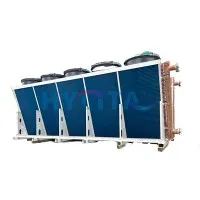
As a seasoned supplier of economisers in boilers, I've witnessed firsthand the significant impact these components have on boiler efficiency and performance. One of the most fundamental distinctions in economiser design lies in the difference between natural - circulation and forced - circulation economisers. Understanding these differences is crucial for anyone involved in the boiler industry, from engineers and operators to those making purchasing decisions.
Natural - Circulation Economisers
Natural - circulation economisers operate based on the principle of natural convection. In a boiler system, as water is heated, it becomes less dense and rises, while cooler, denser water sinks. This natural movement of water creates a circulation pattern within the economiser.
The main advantage of natural - circulation economisers is their simplicity. They have fewer moving parts compared to forced - circulation systems, which means lower maintenance requirements and potentially longer service lives. Since there are no pumps or other mechanical devices to circulate the water, the initial investment cost is often lower. This makes natural - circulation economisers an attractive option for smaller boiler systems or applications where budget constraints are a concern.
Another benefit is their reliability. With no pumps to fail, the risk of system breakdowns due to mechanical failures is reduced. In addition, natural - circulation economisers can operate in a relatively stable manner, as long as the temperature and pressure differentials within the system are maintained. This stability can lead to consistent heat transfer and energy recovery.
However, natural - circulation economisers also have some limitations. The circulation rate is highly dependent on the temperature difference between the hot and cold water. In situations where the temperature difference is small, the circulation rate may be insufficient, leading to reduced heat transfer efficiency. This can be a problem in boilers that operate at relatively low loads or in environments with limited temperature variations.
Moreover, natural - circulation economisers are more sensitive to the orientation and layout of the system. The pipes and tubes need to be carefully designed and installed to ensure proper natural convection. Any blockages or restrictions in the flow path can disrupt the circulation and affect the performance of the economiser.
Forced - Circulation Economisers
Forced - circulation economisers, on the other hand, use pumps to circulate the water through the system. This allows for greater control over the flow rate and circulation pattern. The pumps can be adjusted to maintain a constant flow, regardless of the temperature and pressure conditions within the boiler.
One of the key advantages of forced - circulation economisers is their ability to operate under a wider range of conditions. They can achieve high circulation rates even when the temperature difference is small, which means better heat transfer efficiency. This makes them suitable for boilers that operate at variable loads or in applications where precise control of the water flow is required.


Forced - circulation economisers also offer more flexibility in terms of system design. They can be installed in a variety of orientations and configurations, as the pumps can overcome the limitations of natural convection. This allows for more compact and efficient designs, which can be beneficial in space - constrained environments.
In addition, forced - circulation economisers can be used in conjunction with other heat recovery systems, such as Heat Exhaust Recovery. The ability to control the water flow enables better integration with these systems, leading to increased overall energy efficiency.
However, forced - circulation economisers also have some drawbacks. The pumps and associated control systems add complexity to the system, which can increase the initial investment cost and maintenance requirements. The pumps consume energy, which can offset some of the energy savings achieved by the economiser. In addition, the reliability of the system is dependent on the performance of the pumps. Any pump failures can lead to a significant reduction in the circulation rate and heat transfer efficiency.
Comparison of Key Features
Let's take a closer look at some of the key features of natural - circulation and forced - circulation economisers:
1. Circulation Mechanism
- Natural - Circulation: Relies on natural convection driven by temperature differences.
- Forced - Circulation: Uses pumps to actively circulate the water.
2. Efficiency
- Natural - Circulation: Can be efficient under ideal temperature conditions, but may suffer at low temperature differentials.
- Forced - Circulation: Generally more efficient across a wider range of operating conditions, especially at low loads.
3. Cost
- Natural - Circulation: Lower initial investment and maintenance costs due to fewer moving parts.
- Forced - Circulation: Higher initial investment due to the addition of pumps and control systems, and potentially higher maintenance costs.
4. Reliability
- Natural - Circulation: More reliable in terms of mechanical failures, as there are no pumps.
- Forced - Circulation: Reliability depends on the performance of the pumps, which can be a potential point of failure.
5. Design Flexibility
- Natural - Circulation: Limited by the requirements of natural convection, which restricts the layout and orientation.
- Forced - Circulation: Offers greater flexibility in system design, allowing for more compact and customized configurations.
Applications
The choice between natural - circulation and forced - circulation economisers depends on the specific requirements of the boiler system and the application.
Natural - circulation economisers are commonly used in small - to medium - sized boilers, such as those found in residential and commercial buildings. They are also suitable for applications where simplicity and reliability are the primary concerns, and where the operating conditions are relatively stable.
Forced - circulation economisers are often preferred in large - scale industrial boilers, power plants, and applications where high efficiency and precise control are required. They are also well - suited for systems that need to operate at variable loads or in challenging environments.
For example, in a power plant, a forced - circulation economiser can be used in combination with a Carbon Steel Economiser to maximize heat energy recovery. The forced - circulation system can ensure a consistent flow of water through the carbon steel tubes, enhancing the heat transfer process and improving the overall efficiency of the boiler.
Conclusion
In conclusion, both natural - circulation and forced - circulation economisers have their own unique advantages and disadvantages. As a supplier of economisers in boilers, I understand the importance of choosing the right type of economiser for each specific application. Whether it's the simplicity and reliability of a natural - circulation economiser or the high efficiency and flexibility of a forced - circulation economiser, our goal is to provide solutions that meet the needs of our customers and help them achieve optimal boiler performance.
If you're in the market for an economiser for your boiler system, I encourage you to contact us to discuss your specific requirements. Our team of experts can provide you with detailed information and guidance on the best economiser solution for your application. We can also assist you in the design, installation, and maintenance of the economiser to ensure its long - term performance and reliability.
References
- Smith, J. (2018). Boiler Economisers: Principles and Applications. New York: Elsevier.
- Johnson, R. (2019). Heat Transfer in Boiler Systems. London: Taylor & Francis.
- Brown, A. (2020). Energy Efficiency in Industrial Boilers. Berlin: Springer.