


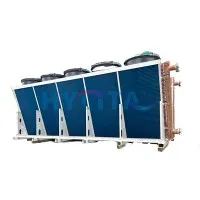
Scale formation is a common and persistent issue in heat exchangers, which can significantly impact their performance. As a heat exchangers supplier, I've witnessed firsthand the detrimental effects that scale can have on these crucial pieces of equipment. In this blog, I'll delve into the various effects of scale formation on heat exchanger performance and discuss why it's essential to address this problem promptly.
Reduced Heat Transfer Efficiency
One of the most significant effects of scale formation on heat exchanger performance is the reduction in heat transfer efficiency. Scale is a poor conductor of heat compared to the metal surfaces of the heat exchanger. When scale accumulates on the heat transfer surfaces, it acts as an insulating layer, impeding the transfer of heat between the hot and cold fluids.
This reduction in heat transfer efficiency means that the heat exchanger has to work harder to achieve the same level of heat transfer. As a result, more energy is required to maintain the desired temperature difference between the fluids, leading to increased energy consumption and higher operating costs. For example, in industrial processes where heat exchangers are used extensively, even a small reduction in heat transfer efficiency can result in substantial energy losses over time.


To illustrate this point, let's consider a shell-and-tube heat exchanger used in a chemical plant. If scale forms on the inner surfaces of the tubes, the heat transfer rate from the hot process fluid to the cooling water will decrease. This means that the cooling water will need to be circulated at a higher flow rate or at a lower temperature to achieve the same level of cooling. Both of these options require additional energy, which can have a significant impact on the plant's operating costs.
Increased Pressure Drop
Another effect of scale formation on heat exchanger performance is the increased pressure drop across the heat exchanger. As scale accumulates on the heat transfer surfaces, it narrows the flow passages, restricting the flow of fluids through the heat exchanger. This increased resistance to flow results in a higher pressure drop, which means that the pumps or compressors used to circulate the fluids have to work harder to maintain the desired flow rate.
The increased pressure drop not only increases energy consumption but can also lead to mechanical stress on the heat exchanger components. Over time, this can cause premature failure of the heat exchanger, resulting in costly repairs or replacements. For example, in a plate heat exchanger, scale formation between the plates can cause the plates to warp or deform, leading to leaks and reduced performance.
To mitigate the effects of increased pressure drop, regular maintenance and cleaning of the heat exchanger are essential. This can involve chemical cleaning, mechanical cleaning, or a combination of both. By removing the scale from the heat transfer surfaces, the flow passages can be restored to their original size, reducing the pressure drop and improving the overall performance of the heat exchanger.
Decreased Flow Rate
Scale formation can also lead to a decreased flow rate through the heat exchanger. As mentioned earlier, the accumulation of scale on the heat transfer surfaces narrows the flow passages, restricting the flow of fluids. This can result in a reduced flow rate, which can have a significant impact on the performance of the heat exchanger.
A decreased flow rate can lead to uneven heat transfer, as the fluids may not be able to circulate properly through the heat exchanger. This can result in hot spots or cold spots within the heat exchanger, which can affect the quality of the heat transfer and the overall efficiency of the process. For example, in a food processing plant, a decreased flow rate through a heat exchanger used for pasteurization can result in uneven heating of the food product, leading to potential safety issues.
To address the issue of decreased flow rate, it's important to monitor the flow rate through the heat exchanger regularly and take appropriate action if necessary. This may involve cleaning the heat exchanger to remove the scale or adjusting the operating conditions to increase the flow rate.
Corrosion and Fouling
Scale formation can also contribute to corrosion and fouling of the heat exchanger components. Scale can trap moisture and other contaminants, creating an environment that is conducive to corrosion. Over time, this can cause the metal surfaces of the heat exchanger to deteriorate, leading to leaks and reduced performance.
In addition to corrosion, scale can also act as a breeding ground for bacteria and other microorganisms. These microorganisms can form biofilms on the heat transfer surfaces, which can further reduce the heat transfer efficiency and increase the pressure drop across the heat exchanger. Biofilms can also be difficult to remove, requiring specialized cleaning techniques and chemicals.
To prevent corrosion and fouling, it's important to use high-quality materials for the heat exchanger construction and to implement a comprehensive maintenance program. This may include regular cleaning, chemical treatment, and monitoring of the water quality to prevent the formation of scale and biofilms.
Impact on Product Quality
In some industries, the performance of the heat exchanger can have a direct impact on the quality of the final product. For example, in the pharmaceutical industry, heat exchangers are used to control the temperature of the manufacturing process, which can affect the quality and stability of the drugs. If scale forms on the heat transfer surfaces, it can lead to uneven heating or cooling, which can result in variations in the product quality.
Similarly, in the food and beverage industry, heat exchangers are used for pasteurization, sterilization, and cooling processes. Scale formation can affect the efficiency of these processes, leading to potential safety issues and reduced product quality. For example, if a heat exchanger used for pasteurization is not operating at the optimal temperature, it may not be able to effectively kill all the harmful bacteria, resulting in a contaminated product.
To ensure the quality of the final product, it's important to maintain the performance of the heat exchanger at all times. This may involve regular monitoring, cleaning, and maintenance to prevent scale formation and other issues that can affect the heat exchanger's performance.
Solutions to Scale Formation
As a heat exchangers supplier, I understand the importance of addressing scale formation to ensure the optimal performance of heat exchangers. There are several solutions available to prevent or mitigate the effects of scale formation, including:
- Water Treatment: One of the most effective ways to prevent scale formation is to treat the water used in the heat exchanger. This can involve using water softeners, reverse osmosis systems, or chemical additives to remove or reduce the concentration of scale-forming minerals in the water.
- Regular Maintenance: Regular maintenance and cleaning of the heat exchanger are essential to prevent scale formation and to remove any existing scale. This can involve chemical cleaning, mechanical cleaning, or a combination of both.
- Use of Anti-Scale Coatings: Anti-scale coatings can be applied to the heat transfer surfaces to prevent scale from adhering to the surfaces. These coatings can be made of various materials, such as polymers or ceramics, and can provide a protective barrier against scale formation.
- Monitoring and Control: Regular monitoring of the heat exchanger's performance, including temperature, pressure, and flow rate, can help detect the early signs of scale formation. By taking appropriate action promptly, such as cleaning the heat exchanger or adjusting the operating conditions, the effects of scale formation can be minimized.
Conclusion
Scale formation is a common and serious issue that can have a significant impact on the performance of heat exchangers. As a heat exchangers supplier, I recommend that customers take proactive measures to prevent or mitigate the effects of scale formation. By implementing a comprehensive maintenance program, using water treatment solutions, and monitoring the heat exchanger's performance regularly, customers can ensure the optimal performance of their heat exchangers and reduce operating costs.
If you're experiencing issues with scale formation in your heat exchangers or are looking for high-quality heat exchangers for your application, I encourage you to contact me for a consultation. I can provide you with expert advice and solutions tailored to your specific needs.
Here are some of the high-quality heat exchangers we offer:
- Aluminum-fin Air Fin Cooler: Ideal for applications where efficient cooling is required in a compact design.
- Stainless Steel Evap Coil: Suitable for use in refrigeration and air conditioning systems, providing reliable performance and long service life.
- Oil-cooled Industrial Cooler: Designed to cool oil in industrial applications, ensuring the proper functioning of equipment and reducing the risk of overheating.
References
- Incropera, F. P., & DeWitt, D. P. (2002). Fundamentals of Heat and Mass Transfer. John Wiley & Sons.
- Kakac, S., & Liu, H. (2002). Heat Exchangers: Selection, Rating, and Thermal Design. CRC Press.
- Kern, D. Q. (1950). Process Heat Transfer. McGraw-Hill.