


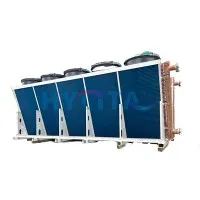
Hey there! As an Economizer Tube supplier, I've seen firsthand how the tube wall thickness can have a huge impact on the performance of economizer tubes. In this blog, I'm gonna break down the effects of tube wall thickness variation and why it matters for your economizer system.
Understanding Economizer Tubes
Before we dive into the effects of tube wall thickness, let's quickly go over what economizer tubes are and what they do. Economizer tubes are a crucial part of a waste heat recovery system. They're designed to capture heat from hot flue gases and transfer it to the feedwater in a boiler. This process helps to improve the overall efficiency of the boiler by pre - heating the water before it enters the boiler, which in turn saves energy and reduces fuel consumption. You can learn more about Waste Heat Recovery on our website.
The Role of Tube Wall Thickness
The wall thickness of an economizer tube is not just a random number. It plays a key role in several aspects of the tube's performance, including heat transfer, mechanical strength, and corrosion resistance.
Heat Transfer
One of the most important functions of an economizer tube is to transfer heat from the flue gases to the feedwater. The tube wall acts as a barrier between the hot gases and the cold water, and its thickness affects how quickly heat can pass through it.
A thinner tube wall generally allows for more efficient heat transfer. This is because there's less material for the heat to travel through, so it can reach the water faster. With a thinner wall, the temperature difference between the flue gas and the water can be more effectively utilized, resulting in a higher rate of heat transfer.
On the other hand, a thicker tube wall can slow down the heat transfer process. The extra material acts as an insulator, reducing the amount of heat that can be transferred in a given time. This can lead to a decrease in the overall efficiency of the economizer, as more energy is wasted in the form of hot flue gases leaving the system.
Mechanical Strength
Economizer tubes need to be strong enough to withstand the high pressures and temperatures inside the boiler system. The wall thickness is a major factor in determining the tube's mechanical strength.
Thicker tube walls provide greater mechanical strength. They can better resist the internal pressure of the water and the external forces exerted by the flow of flue gases. This makes them more suitable for applications where the operating conditions are more demanding, such as high - pressure boilers.
However, increasing the wall thickness also has its drawbacks. Thicker tubes are heavier and more expensive to manufacture. They also require more material, which can increase the overall cost of the economizer system.
Corrosion Resistance
Corrosion is a common problem in economizer tubes, especially when they're exposed to high - temperature and high - humidity environments. The tube wall thickness can affect the tube's resistance to corrosion.
A thicker tube wall provides more material for corrosion to attack before it reaches the point where the tube's integrity is compromised. This means that thicker tubes generally have a longer service life in corrosive environments.
But again, there's a trade - off. Thicker tubes may be more resistant to corrosion, but they can also be more difficult to inspect for signs of corrosion. It can be harder to detect early - stage corrosion in a thick - walled tube, which could lead to more serious problems down the line.
Effects of Wall Thickness Variation
In real - world applications, it's not always possible to have a perfectly uniform wall thickness in economizer tubes. Variations in wall thickness can occur during the manufacturing process or due to wear and tear over time. These variations can have several negative effects on the performance of the economizer tubes.
Uneven Heat Transfer
When there are variations in tube wall thickness, heat transfer becomes uneven. Areas with thinner walls will transfer heat more quickly than areas with thicker walls. This can lead to hot spots on the tube surface, which can cause local overheating and damage to the tube material.
Hot spots can also accelerate the corrosion process, as the higher temperatures can increase the chemical reactivity of the tube material with the surrounding environment. Over time, this can lead to tube failure and a decrease in the overall efficiency of the economizer system.


Stress Concentration
Wall thickness variations can also cause stress concentration in the tubes. When the tube is subjected to internal pressure or external forces, the stress is not evenly distributed across the tube wall. Areas with thinner walls will experience higher stress levels than areas with thicker walls.
This stress concentration can lead to the formation of cracks and fractures in the tube. Once a crack starts to form, it can propagate quickly under the influence of the operating stresses, eventually leading to tube failure.
Reduced Efficiency
Overall, wall thickness variations can reduce the efficiency of the economizer system. Uneven heat transfer means that not all of the available heat is being effectively transferred to the feedwater, resulting in wasted energy. Stress concentration and corrosion can also lead to tube failures, which require costly repairs and downtime for the boiler system.
Choosing the Right Wall Thickness
As an Economizer Tube supplier, I often get asked about how to choose the right wall thickness for a specific application. There's no one - size - fits - all answer, as the optimal wall thickness depends on several factors, including the operating conditions of the boiler, the type of flue gases, and the expected service life of the tubes.
For applications where heat transfer efficiency is the top priority, thinner tube walls may be a better choice. However, if the operating conditions are more demanding, such as high - pressure or corrosive environments, thicker tube walls may be necessary to ensure the tube's mechanical strength and corrosion resistance.
We offer a wide range of Economizer Tube options with different wall thicknesses to meet the diverse needs of our customers. Our team of experts can help you select the right tube wall thickness based on your specific requirements.
Conclusion
In conclusion, the tube wall thickness has a significant impact on the performance of economizer tubes. It affects heat transfer, mechanical strength, and corrosion resistance. Variations in wall thickness can lead to uneven heat transfer, stress concentration, and reduced efficiency.
When choosing economizer tubes, it's important to carefully consider the operating conditions and the trade - offs between different wall thicknesses. As an experienced Economizer Tube supplier, we're here to help you make the right choice for your waste heat recovery system.
If you're interested in learning more about our SS Economiser Heat Exchanger or other products, or if you have any questions about tube wall thickness and its effects, don't hesitate to reach out to us. We're always happy to have a chat and discuss your specific needs. Let's work together to optimize the performance of your economizer system!
References
- Incropera, F. P., & DeWitt, D. P. (2002). Fundamentals of Heat and Mass Transfer. John Wiley & Sons.
- ASME Boiler and Pressure Vessel Code, Section I, Power Boilers.
- ASTM International Standards for Steel Tubes and Pipes.