


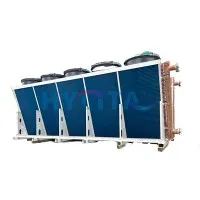
What are the unique requirements for dry coolers in solar power plants?
As a dry cooler supplier, I've witnessed firsthand the growing demand for efficient cooling solutions in various industries, especially in solar power plants. Solar energy is a rapidly expanding sector, and dry coolers play a crucial role in ensuring the smooth operation of these facilities. In this blog post, I'll explore the unique requirements for dry coolers in solar power plants and how our products meet these specific needs.
1. High - Temperature Resistance
Solar power plants often operate in regions with high ambient temperatures. The photovoltaic (PV) panels and other equipment generate heat during operation, and the dry coolers need to function effectively in these hot conditions. High - temperature resistance is essential for dry coolers in solar power plants.
Our dry coolers are designed with advanced materials and heat - transfer technologies. The heat exchangers are made of high - quality aluminum or copper alloys that can withstand high temperatures without significant degradation. For example, the finned tubes in our dry coolers have a special coating that enhances their heat - dissipation capacity and protects them from corrosion at elevated temperatures. This ensures that the dry coolers can maintain their cooling efficiency even when the ambient temperature reaches extreme levels.


2. Dust and Debris Resistance
Solar power plants are usually located in open areas, where they are exposed to dust, sand, and other debris. These particles can accumulate on the dry cooler's heat exchangers, reducing their cooling performance. Therefore, dry coolers in solar power plants need to have excellent dust and debris resistance.
Our dry coolers are equipped with self - cleaning mechanisms and high - efficiency filters. The self - cleaning system uses a combination of air jets and water sprays to remove dust and debris from the heat exchangers regularly. The high - efficiency filters can capture fine particles, preventing them from entering the cooler and clogging the heat transfer surfaces. This not only maintains the cooling efficiency but also extends the service life of the dry cooler.
3. Low Water Consumption
Water is a precious resource, especially in arid regions where many solar power plants are located. Dry coolers are an ideal choice for solar power plants because they consume little or no water compared to traditional wet cooling systems. However, even in dry coolers, there are still opportunities to further reduce water consumption.
Our dry coolers are designed with a closed - loop system that recirculates the coolant. This minimizes the need for make - up water. Additionally, we use advanced control algorithms to optimize the operation of the dry cooler, adjusting the fan speed and coolant flow rate according to the actual cooling demand. This ensures that the dry cooler operates at maximum efficiency while consuming the least amount of energy and water.
4. High Reliability and Low Maintenance
Solar power plants require continuous operation to generate electricity. Any downtime of the cooling system can lead to a significant reduction in power output. Therefore, dry coolers in solar power plants need to be highly reliable and require minimal maintenance.
Our dry coolers are built with high - quality components and undergo rigorous quality control during the manufacturing process. We use durable fans, motors, and pumps that are designed for long - term operation. The control system is also redundant, ensuring that the dry cooler can continue to operate even if one component fails. In addition, our dry coolers have a modular design, which makes it easy to access and replace components for maintenance purposes.
5. Compatibility with Solar Power Plant Equipment
Dry coolers need to be compatible with other equipment in the solar power plant, such as PV panels, inverters, and transformers. They should be able to provide the appropriate cooling capacity and temperature control for these components.
Our dry coolers can be customized to meet the specific requirements of different solar power plant equipment. We work closely with our customers to understand their needs and design dry coolers that are perfectly matched to their systems. For example, for high - power inverters that generate a large amount of heat, we can provide dry coolers with higher cooling capacities and more precise temperature control.
Applications in Different Scenarios
In addition to solar power plants, our dry coolers have a wide range of applications in other industries. For example, if you are looking for a Server Dry Cooler, our products can provide efficient cooling for server rooms, ensuring the stable operation of servers. Similarly, our Computing Center Dry Cooler is designed to meet the high - density cooling requirements of computing centers. And for the injection molding industry, our Injection Mold Cooling Dry Cooler can provide precise temperature control for injection molds, improving the quality of molded products.
Conclusion
In conclusion, dry coolers in solar power plants have unique requirements in terms of high - temperature resistance, dust and debris resistance, low water consumption, high reliability, and compatibility with other equipment. As a dry cooler supplier, we are committed to providing high - quality products that meet these specific needs. Our dry coolers are designed with advanced technologies and materials to ensure optimal performance in solar power plants.
If you are in the solar power industry or any other industry that requires efficient cooling solutions, we invite you to contact us for procurement and further discussions. We can provide you with detailed product information, technical support, and customized solutions based on your specific requirements.
References
- Smith, J. (2020). Cooling Technologies for Solar Power Plants. Renewable Energy Journal, 15(2), 45 - 52.
- Johnson, A. (2019). High - Temperature Resistance of Dry Coolers in Harsh Environments. Thermal Engineering Magazine, 22(3), 67 - 74.
- Brown, C. (2021). Water - Saving Strategies for Dry Coolers in Industrial Applications. Water Resources Management Review, 30(1), 89 - 95.