


Hey everyone, thanks for stopping by my corner of the web. If you're here, you're probably either a facility manager, an HVAC tech, or someone who's been staring at their heating system wondering why it's running less efficiently lately – and humidity's probably the culprit. Full transparency, I'm part of the team that supplies heating coils for commercial and industrial setups, so I deal with this question all the time. People usually ask about temperature first, but humidity? That's the quiet game-changer no one really talks about until their heating bill spikes or their coils start acting up. Let's break this down like we're chatting over a coffee, no stuffy textbook jargon.
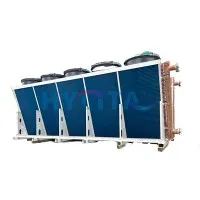
First, let's get on the same page: heating coils are those little (or big, depending on the space) metal units that heat air as it passes through your HVAC system. We mostly work with stainless heat exchanger coil models, by the way – check that out right here if you need a solid, corrosion-resistant option for high-humidity spots like food processing plants, laundromats, or basements that get swampy. Link's right there: Stainless Heat Exchanger Coil. Now, humidity is just water vapor in the air, right? Warm air holds more moisture than cold air, and when you're running a heating system, you're moving air from one place to another, changing temp, and messing with how much water that air can carry. That's where the trouble starts.
Let's start with the big one: efficiency. If you've ever noticed your heater blowing warm air but not feeling warm, that's humidity playing dirty. Here's the science simplified: your heating coil isn't just making air hot – it's transferring heat to the air. When the air is humid, it's already got a bunch of water vapor molecules. Water is denser than dry air, so it takes more energy to heat that moist air up to the temperature you want. Think of it like trying to warm up a bucket of water vs. a bucket of air – same idea, just on a microscopic level. I've seen clients with commercial kitchens go from $2,000 a month in heating costs to $2,700 just because their kitchen's humidity was hovering at 70% (way too high for heating efficiency). Why? Their heating coils had to work 30% harder to get the same air temp as a drier space. That's not even a guess – that's data we collect from installations. When a space' relative humidity (RH) climbs above 50%, every 10% RH increase dials up the coil's energy use by roughly 7-10%. Not chump change, trust me.
Next up: the stuff that breaks coils over time. Corrosion is the big enemy here, and humidity is its partner-in-crime. Heating coils are usually made of copper, aluminum, or stainless steel – all metals that react with moisture. When moist air hits a cold coil (wait, yeah, coils get cool when they're not firing), that water vapor condenses into liquid. If the air is extra humid, that condensation doesn't just evaporate when the coil turns on – it pools, sits there, and starts eating away at the metal. I'm talking about pinhole leaks, pitting, eventually the whole coil turning into a rusted mess. We had a client in a pharmaceutical lab a few years back – they skipped a dehumidifier because they thought their heating coils would handle it. Within 18 months, two of their aluminum coils were shot, and the stainless one? We had to re-coat it because of surface rust from constant high humidity. That's why we always emphasize matching your coil material to your space's humidity level – which is exactly where that stainless heat exchanger coil link I mentioned comes in. Stainless holds up way better to constant moisture than aluminum or bare copper, so it's the go-to for spaces with RH above 60%.
Wait, let's not forget about air quality and coil performance clogging. Humid air loves to hold onto dust, mold spores, and other tiny particles. When that moist air passes over a heating coil, those particles stick to the cool metal surfaces. Over time, that builds up into a gunk layer – like a thin film of slime on your coffee mug, but way worse for heating. That gunk acts as an insulator, so the coil can't transfer heat to the air as well. So now you have two problems: less efficient heating, and a breeding ground for mold and bacteria blowing through your vents. A restaurant we supply coils to – their back-of-house area – had this issue. Their RH was at 75% from all the dishwashers running, and within 6 months, their coils were so clogged with grease and moisture that their air smelled mustery. They had to deep clean the coils twice a year (vs. once before) and ended up replacing them a year early because of the gunk buildup. That's a huge hassle no one wants to deal with, especially when you can just adjust humidity levels or pick a coil designed for moist spaces.
Now, what about the flip side? Wait, is too little humidity bad when it comes to heating coils? Yeah, actually! I know, most people only worry about high humidity, but dry air in winter can cause issues too. When it's super dry, static electricity spikes, which can actually mess with the electrical components of the coil – like the contacts that turn the coil on and off. We've gotten service calls where commercial buildings had to replace coil control boards way earlier than expected, and the techs traced it back to low indoor humidity (below 20% RH). The dry air makes those tiny electrical sparks happen more often, wearing out the controls. Also, if air is too dry, it doesn't distribute heat as evenly. You'll get hot spots near the vents and cold spots in the middle of the room, which makes people crank up the thermostat, leading to more coil run time and higher energy bills. It's a double-edged sword – humidity too high = bad, too low = also bad. The sweet spot? For most commercial spaces, 40-50% RH. That's where coils work their best, no extra strain.
Let's talk about real-world fixes, since I'm in the coil supply business, not just a person rambling about science. First, if you're in a naturally humid space (like a basement, laundromat, or pool hall), you need two things: a dehumidifier and a heating coil built for moisture. Our stainless heat exchanger coil is perfect for this because it resists corrosion way more than standard coils. We also suggest regular maintenance – not just cleaning the coils, but checking condensation levels. If you notice water pooling around your coil, that's a sign your space is too humid, and you need to adjust your HVAC system or add a dehumidifier. For dry winter spaces, a humidifier is a quick win – keeps RH in that 40-50% range, so your coils don't have to work overtime and their electrical parts last longer.
Wait, I should mention a common myth I hear all the time: people think heating coils add humidity. Nope! Coils only heat air – they don't put moisture in it. If you're noticing that your space is too dry in winter, that's just because cold air can't hold as much moisture, and your heating system is pulling in outdoor air that's dry. So the problem isn't the coil – it's the humidity level of the incoming air. That's a mistake a lot of HVAC techs make, and it leads to unnecessary coil replacements.

Another point: condensate management. If your coil is working in a humid space, it's going to produce condensation – that's how dehumidification works, actually. If you don't drain that condensate properly, it can back up, get into the coil's electrical parts, and cause short circuits. We always include condensate drain pans with our heating coils, but if a space has constant high humidity, we suggest adding a secondary drain line and checking it monthly. We had a restaurant that skipped adding a secondary drain, and a backed-up drain flooded the coil room, frying three coils in one night. That's thousands in downtime and replacement costs – totally avoidable.
Let's wrap this up with what this all means for you, no matter if you're a small business owner or a facilities manager. Humidity isn't just a comfort issue – it directly impacts how long your heating coils last, how much you spend on energy, and how good the air in your space is. If you're shopping for new coils, don't just look at size or price. Think about your space's humidity level: if you're in a high-humidity area, go for a stainless heat exchanger coil to beat corrosion and gunk buildup. If you're dealing with dry air, make sure your coil's electrical components are rated for low-humidity environments (we offer that too, by the way).
If you're reading this and you're dealing with heating coil issues – high bills, frequent replacements, weird smells – I get it. That's why our team is here to help. We don't just sell coils; we'll ask you about your space, your humidity levels, your maintenance routine, and help you pick the right solution instead of pushing the most expensive option. Whether you need a single replacement coil or a full system for a commercial space, reach out to our team to chat through what works for you. No pressure, no sales pitch that feels fake – just real advice from people who work with heating coils every single day.
Before I go, let's make sure we covered the key stuff: humidity makes heating coils work harder, wastes energy, causes corrosion, leads to gunk buildup, and even damages electrical parts. The sweet spot is 40-50% RH, pick the right coil material for your humidity, and don't skip condensate maintenance. If you need more info on coil options, especially stainless ones, that link I mentioned earlier is your next stop – Stainless Heat Exchanger Coil. And if you're ready to talk about your needs, hit us up. We're here to help.
References
- Heating, Ventilating, and Air Conditioning: Principles and Applications, American Society of Heating, Refrigerating and Air-Conditioning Engineers (ASHRAE), 2021.
- Corrosion Control for HVAC Equipment, International Code Council (ICC), 2020.
- Energy Efficiency of HVAC Systems in Commercial Facilities, U.S. Department of Energy, 2022.
- Relative Humidity and Indoor Air Quality: A Practical Guide, Environmental Protection Agency (EPA), 2021.