


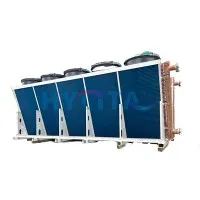
Let's keep it real - if you work with boilers, you know economizer scaling is the silent killer of efficiency. It creeps up over time, builds layer by layer on the tubes, and suddenly you're burning way more fuel than you should, dealing with downtime, and wasting money. As the team that supplies economizer heat exchanger parts (check out our Economiser Heat Exchanger line, by the way), we see this problem every single day. Let's break down what scaling actually is, why it happens, and what you can do to stop it dead in its tracks. First, scaling isn't just "hard water buildup" - it's the precipitation of minerals like calcium, magnesium, and silica out of boiler feedwater, sticking to the inner walls of the economizer tubes. The economizer's whole job is to preheat feedwater using exhaust heat, so if those tubes get blocked with scale, heat transfer drops like a rock. That means your boiler has to work harder, use more energy, and repairs get expensive fast. We've seen clients go from 85% combustion efficiency down to 70% in just six months because they skipped scaling prevention - it's not worth cutting corners here.
First off, let's talk feedwater quality because this is 90% of the battle. Most scaling starts with bad water, plain and simple. If your feedwater has high levels of dissolved hardness (hardness = calcium and magnesium ions), those will react to form insoluble compounds when heated in the economizer. Think of it like making scale in your kettle at home - same exact chemistry, just way bigger. So what fixes this? Water treatment, not just adding a drop of something and calling it a day. Some guys try sodium zeolite softeners, which swap hardness ions for sodium, but that only works if you're not dealing with silica (another big scale culprit). Silica is tricky because it stays dissolved in hot water but precipitates when temperatures climb above 340°F, which is exactly where economizer tubes operate. For silica, you need reverse osmosis (RO) or demineralization systems to strip it out before feedwater even hits the economizer. We've had clients test their feedwater and find 20 ppm silica - that's a disaster waiting to happen. If you partner with a reputable water treatment company to test regularly and adjust chemistry, you'll cut scaling risk by half before you even touch the economizer.
Next up, material selection matters more than people realize. A lot of boiler operators grab the cheapest parts they can find, and when it comes to economizers, that usually means basic carbon steel. Wait, but hold on - even carbon steel isn't all the same, and using the wrong grade can make scaling worse. Why? Because carbon steel reacts with impurities in water and gas to form rough oxide layers that scale sticks to super easily. We recommend our Carbon Steel Economiser line for clients who need cost-effective, durable parts - but only when paired with the right water treatment. For higher-pressure boilers or plants with extra-hard water, we push alloy options like stainless steel or cupronickel, which have smoother surfaces that scale can't grip as well. They also resist corrosion, which is a bonus because corrosion and scale often work hand in hand (corrosion creates pitting where scale forms). We had a client last year who switched from a generic carbon steel economizer to our specialized one - same water, same operating conditions, and their scaling rate dropped by 75% in the first three months. That's not a fluke; material choice directly impacts scale adhesion.


Then there's operation and maintenance routines that most teams sleep on. Let's start with flow velocity. If feedwater is moving too slow through the economizer tubes, minerals settle out and build up. If it's moving too fast, you get erosion and wear. The sweet spot is usually 3 to 10 feet per second, and that's something you can adjust with your pump controls. We work with clients to tweak their flow rates as part of our support packages, and it's a simple fix that makes a huge difference. Another big one is regular blowdown - not just continuous blowdown, but periodic blowdown. Continuous blowdown gets rid of surface impurities, but periodic blowdown (blowing a small amount of water out at intervals) removes the concentrated sludge at the bottom of the boiler drum before it can get pulled into the economizer. Most plants do this once a shift, but for high-scale risk environments, we suggest two times a shift. Also, don't skip the scheduled cleanings - but when you do clean, use the right method. Acid cleaning is common, but too much acid can damage tubes, especially if they're alloy. We recommend either mechanical cleaning (like tube brushing) for mild scale or chemical cleaning with a phosphoric acid solution that's gentler on metals. And for the love of all things efficient, don't wait until scale is thick enough to reduce heat transfer before cleaning - schedule inspections every 3 to 6 months, depending on your water quality.
Wait, let's not forget about the gas side - the exhaust that heats the economizer. If the flue gas coming into your economizer has high levels of sulfur dioxide (from burning high-sulfur fuel), that can create sulfuric acid when it condenses on the cold tubes. Acid corrosion eats away at the tube walls, creating rough surfaces that scale adheres to. So checking your fuel quality is part of prevention too. If you're burning heavy fuel oil or coal, you might need to add a desulfurization step to your fuel, or adjust the economizer's inlet temperature to keep it above the acid dew point (usually around 280°F to 300°F, depending on sulfur content). That's why our Heat Exhaust Recovery systems are designed to work with your specific fuel type - we tune them to avoid acid buildup while still maximizing heat energy reuse. We had a client who switched to low-sulfur fuel to cut emissions, but their acid-related scaling stopped almost overnight. It's not just environmental benefits - it's scale prevention too.
Another trick we've learned from years in the game: online monitoring tools. You can't fix what you don't measure, right? Installing sensors that track feedwater pH, conductivity, tube surface temperature, and pressure drop across the economizer lets you catch scaling early. Pressure drop is a dead giveaway - if it starts climbing steadily, that means scale is building up and blocking tubes. Our team can help you set up basic monitoring or integrate with your existing system, so you get real-time alerts instead of waiting for quarterly performance tests. One of our newer clients set up temperature sensors on their economizer tubes and noticed a 10°F drop in outlet water temp in four weeks - they got in there and found a thin scale layer that would have cost them $10k a month in extra fuel if they'd ignored it. It's the small, early alerts that save big money.
And let's talk about chemicals - but not just dumping any random scale inhibitor. Scale inhibitors work by sequestering mineral ions so they can't form hard scale, turning them into soft sludge that can be blown down. But you have to pick the right inhibitor for your water chemistry. For calcium scaling, you need something like phosphonates or polyacrylates; for silica, you need specialized polymers that keep it dissolved. The mistake most plants make is using a one-size-fits-all inhibitor that doesn't target their specific scale type. We work with clients to test their water, then recommend the right inhibitor dosage and type, plus help them adjust blowdown rates to flush out the softened sludge. Over-dosing inhibitors is just as bad as under-dosing - it can cause other issues like foam in the boiler, so testing is non-negotiable.
Let's wrap this up with a quick case to prove it all works. Last year, we had a mid-sized manufacturing plant with a 10-ton boiler that was dealing with major scaling - they were doing acid cleanings every 90 days, downtime was killing production, and fuel costs were through the roof. Here's what we did: First, we ran a full water test and found 18 ppm hardness and 12 ppm silica, plus their flow velocity was too low at 2 ft/sec. We swapped their old generic carbon steel economizer for our premium Heat Energy Recovery economizer, adjusted their feedwater pump to hit a 6 ft/sec flow rate, and recommended a tailored inhibitor and twice-daily blowdown. Six months later, their scale buildup was so minimal they skipped their next scheduled acid cleaning, and their fuel efficiency went from 72% to 84%. That's not just a win - that's how preventing scaling actually works, step by step, not with one magic fix.
So to recap, the key steps are: Nail your feedwater quality (test, treat, don't skimp), pick the right economizer material for your conditions, lock in solid operation and maintenance routines (flow, blowdown, inspections), watch the gas side for acid risk, use online monitoring to catch issues early, and don't guess on chemicals - get tailored advice. Scaling isn't inevitable, it's something you can control with the right setup and consistent work. If you're dealing with scale headaches or want to upgrade your economizer to reduce this problem, our team is here to help you figure out what works for your setup.
References
- American Boiler Manufacturers Association. (2022). Best Practices for Economizer Maintenance and Scale Prevention. ABMA Technical Bulletin TB-012.
- Lerner, A. H., & Linsley, D. A. (2021). Water Treatment for Industrial Boilers and Heat Recovery Systems. CRC Press.
- International Energy Agency. (2020). Heat Exhaust Recovery for Industrial Boilers: Efficiency and Operational Guidelines. IEA Industrial Technology Report.
- Nalco Water. (2022). Scale Prevention in Economizer Tubes: Chemistry, Material, and Operational Synergies. Nalco Technical Paper TP-418.
- Taylor, D. (2019). Corrosion and Scaling in Boiler Components: Causes and Mitigation. Journal of Industrial Chemistry, 45(3), 189-205.