


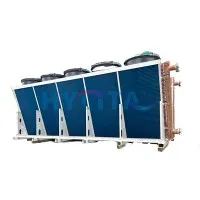
If you've ever stood near an industrial furnace or a ship's smokestack during operation, you've probably felt blasts of searing hot air slipping into the atmosphere. What most people write off as "waste" is actually a massive, untapped energy resource-one that global manufacturers and power producers are increasingly chasing down, thanks to advances in heat exchanger technology. As a provider of Waste Heat Recovery systems, I get asked all the time: "Why do heat exchangers matter so much for waste heat recovery (WHR)?" The short answer is simple: they are the workhorses that turn wasted heat into usable energy, cutting costs, reducing emissions, and making industrial operations far more sustainable than ever before.
What Is Waste Heat, And Why Is It Wasted?
To grasp heat exchangers' role, let's define the core problem first. Waste heat is the byproduct of any process that generates energy or does work: the hot exhaust from a gas turbine in a power plant, the heated gases escaping from a steel mill's reheating furnace, the warm air vented from a commercial building's HVAC system, even the hot water leftover from food processing. Studies from the International Energy Agency (IEA) estimate that 20–50% of the energy consumed in industrial operations ends up as waste heat-enough to power the entire continent of Africa several times over, if harnessed efficiently.
For decades, most of this heat was just released into the air or water, because there was no cost-effective way to capture and repurpose it. Early attempts at WHR relied on rudimentary tools like basic pipes and ductwork, but those failed to transfer heat across large temperature gaps without leaking, corroding, or losing too much energy. That's where heat exchangers step in: they are engineered devices designed to transfer heat from a hot fluid (gas or liquid) to a colder fluid without mixing the two, making it possible to capture waste heat and use it for downstream processes.
How Heat Exchangers Act As WHR's Critical Link
Heat exchangers aren't just "part" of waste heat recovery-they are the bridge between wasted energy and usable energy. Let's break down their key roles, using examples from real-world operations.
First, they enable heat transfer across temperature gradients that would otherwise be lost. Industrial waste heat often comes in two forms: high-grade heat (over 500°C, from furnaces or gas turbine exhaust) and low-grade heat (below 200°C, from exhaust fans or process cooling). A well-designed heat exchanger can pull heat from even low-grade waste streams that seemed useless. For example, in low-temperature waste heat applications such as steel slag flushing water and petrochemical circulating water, vacuum phase-change heat exchange technology has been successfully deployed to overcome scaling issues on heat transfer surfaces and enable stable heat recovery over long periods.
Second, heat exchangers solve a common pain point: keeping waste streams and process fluids separate to avoid contamination. This is non-negotiable in industries like pharmaceuticals, where a leak in a heat exchanger could ruin an entire batch of medicine. Corrosion-resistant stainless steel economiser heat exchangers are designed specifically for these sensitive applications: they transfer heat from hot exhaust gases to clean process water, with zero cross-contamination even when operating at elevated pressures. This reliability is why so many chemical and beverage manufacturers partner with WHR specialists for their needs.
Third, heat exchangers drive efficiency by reducing energy load on primary systems. For a power plant, preheating combustion air before it enters the turbine cuts down on the amount of fuel needed to reach operating temperatures. For a ship, recapturing exhaust heat to power auxiliary systems (like pumps or lighting) reduces the need to burn extra fuel, cutting both costs and carbon emissions. Finned economizer tubes are a key component here: these tubes are optimized for high heat transfer and low pressure drop, meaning they capture more heat without forcing the primary exhaust system to work harder.
The Evolution Of Heat Exchangers For WHR: From One-Size-Fits-All To Custom Solutions
It's important to note that not all heat exchangers are created equal. Twenty years ago, most WHR systems used generic shell-and-tube heat exchangers that were heavy, expensive to maintain, and inefficient for irregular waste heat streams. Today, advances in material science, computational fluid dynamics (CFD) modeling, and additive manufacturing have led to heat exchangers tailored specifically for WHR applications.
For example, CFD simulations are now used to map how hot exhaust gases flow through a heat exchanger's tubes, adjusting the fin design and spacing to minimize turbulence and maximize heat transfer. This is a far cry from the old days, where engineers would size a heat exchanger based on average conditions, leading to performance gaps when a plant ran at partial load. The result? Modern WHR systems can achieve thermal efficiency rates well above the industry average for generic units.
Another key innovation is corrosion-resistant materials. Many industrial waste heat streams contain corrosive compounds like sulfur dioxide, nitrogen oxides, or moisture-especially from coal-fired power plants or diesel engines. Standard carbon steel heat exchangers would rust or degrade within months in these conditions, leading to unplanned downtime. High-grade 316L stainless steel economisers resist corrosion even in environments with high levels of acidic exhaust gases, extending service life to 15+ years with minimal maintenance.

Real-World Impact: Heat Exchangers Driving Sustainability And Profit
Let's put numbers to this, using verified projects from the steel and petrochemical sectors.
In China, the "Super CO₂ No. 1" project-jointly built by Shougang Shuicheng Iron and Steel, the China Nuclear Power Research and Design Institute, and Jigang Group-was commissioned in late 2025 in Liupanshui, Guizhou. It is the world's first commercial-scale supercritical CO₂ waste heat power generation demonstration project. Using supercritical carbon dioxide as the working fluid, it recovers waste heat from steel sintering operations with an installed capacity of 2×15 MW (30 MW total). According to Xinhua News, the technology improves power generation efficiency by more than 85% and net power output by more than 50% compared with conventional steam cycles, while cutting water consumption by over 50%. The project generates approximately 120 million kWh per year, an increase of over 40 million kWh compared with the original steam-based system.
A second verified case is the Baosteel Zhanjiang hot rolling waste heat recovery project, which was successfully connected to the grid in November 2025. Built by MCC Jingcheng, the project uses waste heat boilers and thermal energy conversion technology to turn waste heat from the hot rolling production line into clean electricity fed into the plant's grid, significantly reducing standard coal consumption and CO₂ emissions.
A third example comes from Jianlong Group's cross-process waste heat cascade utilization for urban heating. Its Fushun New Steel subsidiary has built 23 heat exchange stations and 47 heat exchange points, with a heating capacity of 430 MW covering 10 million square meters. Chengde Jianlong uses vacuum phase-change heat exchange technology to recover blast furnace slag flushing water heat for heating, effectively solving the scaling problem on heat exchange surfaces. As of 2025, ten steel subsidiaries under Jianlong Group have implemented urban waste heat heating, covering 22.07 million square meters, saving 300,000 tonnes of standard coal and reducing CO₂ emissions by 780,000 tonnes per heating season.
In the petrochemical sector, Sinopec's Yanshan Petrochemical recovers waste heat from benzene production units and circulating water using a "heat exchanger + heat pump" system to supply 70/50°C heating water to Beijing Beiran Fangshan Heating Co., providing approximately 530,000 GJ of heat per year.
Across every industry, WHR systems paired with the right heat exchangers deliver three core benefits: lower operational costs, reduced regulatory risk, and improved brand reputation. For factories, cutting energy use by 15–30% directly boosts profit margins. For power producers, using waste heat to generate electricity helps them meet grid demand without building new power plants. And for companies focused on ESG targets, WHR is one of the most cost-effective ways to cut Scope 1 and Scope 2 emissions, often qualifying for tax incentives or carbon credits.
Common Mistakes To Avoid When Choosing WHR Heat Exchangers
After years of working with clients across sectors, I've seen plenty of companies buy WHR systems that underperform because they made a few key mistakes with their heat exchanger selection. Here's what to watch out for:
First, don't choose a heat exchanger based solely on upfront cost. A cheap, generic unit might save you money now, but higher maintenance costs, lower efficiency, and a shorter service life will cost you far more in the long run. For example, a steel mill that opted for a non-stainless steel economizer for its blast furnace exhaust had to replace the unit after just 18 months due to corrosion, costing many times more than the premium, corrosion-resistant unit that was originally offered.
Second, don't ignore your specific flow and temperature conditions. A heat exchanger that works perfectly for a gas turbine's exhaust might not work for a brewery's process steam, because their waste heat streams have vastly different flow rates, temperatures, and contamination levels. Customization is key, which is why leading WHR providers work with each client to audit their waste heat stream, design a heat exchanger matched to their needs, and provide ongoing maintenance support.
Third, don't forget about integration with existing systems. Many WHR failures happen because a heat exchanger is installed without accounting for how it will connect to a plant's boilers, turbines, or process lines. For example, a chemical plant that installed a WHR system without adjusting its water treatment process ended up with scaling in the heat exchanger tubes, reducing heat transfer by 18% within a year. Proper engineering integration with the client's existing infrastructure is essential to avoid these issues.
Ready To Turn Your Waste Heat Into Profit?
Heat exchangers are the unsung heroes of waste heat recovery: without them, that massive pool of wasted energy would stay in the atmosphere, unused. As WHR technology continues to advance, heat exchangers will only become more efficient, durable, and tailored to the unique needs of every industry.
If you're ready to stop letting valuable waste heat slip away and start reducing your energy costs and emissions, we'd love to help. Our team of WHR specialists can audit your operations, recommend the right heat exchanger and system design for your waste heat stream, and walk you through every step of the process. Contact us today to learn more about how our heat exchangers can transform your waste heat into a competitive advantage for your business.
References
International Energy Agency (IEA). *Tracking Industrial Energy Efficiency and CO₂ Emissions*. Paris: IEA, 2007.
Heat Exchange Institute (HEI). *Standards for Steam Surface Condensers*, 12th ed. Cleveland: Heat Exchange Institute, 2017.
Bruckner, S., Liu, S., Miro, L., Radspieler, M., Cabeza, L. F., & Lävemann, E. (2015). Industrial waste heat recovery technologies: An economic analysis of heat transformation technologies. *Applied Energy*, 151, 157–167.
Firth, A., Zhang, B., & Yang, A. (2019). Quantification of global waste heat and its environmental effects. *Applied Energy*, 235, 1314–1334.
Li, C., & Wang, H. (2016). Power cycles for waste heat recovery from medium to high temperature flue gas sources. *Applied Energy*, 180, 707–721.