


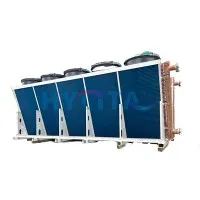
Dry coolers are essential equipment in many industrial and commercial applications, offering efficient heat rejection solutions without the need for water evaporation. As a dry cooler supplier, I've witnessed firsthand the diverse range of sectors that benefit from these reliable cooling systems. In this blog post, I'll explore the common applications of dry coolers and highlight how they contribute to the smooth operation of various industries.
Power Generation
One of the primary sectors where dry coolers are extensively used is power generation. In thermal power plants, whether they are coal - fired, gas - fired, or nuclear, a significant amount of heat is generated during the power production process. Dry coolers play a crucial role in removing this excess heat. They are used to cool the condenser, which is an integral part of the power plant's steam cycle.
Unlike traditional wet cooling towers, dry coolers do not rely on water evaporation for cooling. This is particularly advantageous in regions with water scarcity or strict water usage regulations. By using dry coolers, power plants can reduce their water consumption significantly, making them more environmentally friendly and sustainable. For example, in arid regions where water is a precious resource, dry coolers allow power plants to operate without depleting local water supplies.


HVAC Systems in Commercial Buildings
Commercial buildings such as offices, shopping malls, and hotels require efficient heating, ventilation, and air - conditioning (HVAC) systems to maintain a comfortable indoor environment. Dry coolers are often integrated into these HVAC systems as a part of the cooling loop.
In large - scale commercial buildings, the heat generated by the building's occupants, lighting, and electrical equipment needs to be removed continuously. Dry coolers can handle this heat load effectively. They are typically installed on the rooftop or in the mechanical room of the building. The compact design of modern dry coolers makes them suitable for installation in limited spaces. Moreover, they operate quietly, which is important in commercial settings where noise can be a nuisance. For instance, in a high - end hotel, a quiet - operating dry cooler ensures that guests are not disturbed while enjoying a peaceful stay.
Industrial Processes
Many industrial processes generate a substantial amount of heat that needs to be dissipated to ensure the quality of the products and the safety of the equipment. Dry coolers are widely used in industries such as chemical, pharmaceutical, and food and beverage.
In the chemical industry, various chemical reactions produce heat. Dry coolers are used to cool the reactors, condensers, and other process equipment. This helps in maintaining the optimal temperature for the chemical reactions, ensuring the quality and consistency of the chemical products. Similarly, in the pharmaceutical industry, dry coolers are used to cool the equipment used in drug manufacturing, such as distillation columns and refrigeration systems.
In the food and beverage industry, dry coolers are used for cooling during the production and storage processes. For example, in a brewery, dry coolers can be used to cool the fermentation tanks, ensuring that the yeast works optimally to produce high - quality beer. They are also used in cold storage facilities to maintain the low temperatures required for storing perishable food items.
Data Centers
With the exponential growth of digital data, data centers have become the backbone of the modern economy. These facilities house a large number of servers that generate a significant amount of heat. Efficient cooling is crucial to prevent server overheating, which can lead to system failures and data loss.
Data Center Dry Cooler is specifically designed to meet the high - demand cooling requirements of data centers. They can be used in conjunction with other cooling technologies such as chilled water systems. Dry coolers help in removing the heat from the data center's cooling loop, allowing the servers to operate at optimal temperatures. The reliability and energy efficiency of dry coolers make them an ideal choice for data centers, which are constantly looking for ways to reduce their energy consumption and operating costs.
Refrigeration Systems
Refrigeration systems are used in a wide range of applications, from supermarkets to cold storage warehouses. Dry coolers are an important component of these systems, especially in larger - scale installations.
In a supermarket, dry coolers are used to cool the refrigeration compressors. By removing the heat generated by the compressors, dry coolers help in improving the efficiency of the refrigeration system. In cold storage warehouses, which require a large amount of cooling capacity to maintain low temperatures, dry coolers can handle the heat rejection load effectively. They are often installed outdoors, away from the main storage area, to ensure that the cold air inside the warehouse is not affected.
Renewable Energy Systems
Renewable energy sources such as solar and geothermal power also benefit from the use of dry coolers. In concentrated solar power (CSP) plants, mirrors are used to concentrate sunlight onto a receiver, which heats a fluid. This heated fluid is then used to generate steam and produce electricity. Dry coolers are used to cool the working fluid after it has transferred its heat to the steam - generating system.
In geothermal power plants, dry coolers can be used to cool the geothermal fluid that has been used to extract heat from the earth. This helps in maintaining the efficiency of the power generation process and ensures that the geothermal resource can be used sustainably over the long term.
Specialized Applications
There are also some specialized applications where dry coolers are used. For example, in the automotive industry, dry coolers can be used in test facilities to cool the engines and other components during testing. This allows for accurate testing under different temperature conditions.
In the aerospace industry, dry coolers can be used in ground - based testing equipment for aircraft engines and other systems. They provide a reliable and efficient way to remove the heat generated during the testing process.
Types of Dry Coolers for Different Applications
Depending on the specific application, different types of dry coolers are available. Horizontal Dry Cooler is a popular choice for applications where space is limited or where a low - profile installation is required. The horizontal design allows for easy integration into existing systems and can be installed on rooftops or in mechanical rooms.
Glycol Dry Cooler is used in applications where the cooling fluid contains glycol. Glycol is often added to the cooling fluid to prevent freezing in cold climates. These dry coolers are designed to handle the specific properties of glycol - based fluids and ensure efficient heat transfer.
Why Choose Our Dry Coolers
As a dry cooler supplier, we offer a wide range of high - quality dry coolers that are designed to meet the diverse needs of our customers. Our dry coolers are built with the latest technology and high - quality materials, ensuring reliability and long - term performance.
We have a team of experienced engineers who can provide customized solutions based on your specific requirements. Whether you need a dry cooler for a small - scale commercial application or a large - scale industrial project, we can design and manufacture a system that fits your needs perfectly.
Our dry coolers are also energy - efficient, which helps in reducing your operating costs. We understand the importance of sustainability, and our products are designed to minimize the environmental impact.
Contact Us for Your Dry Cooler Needs
If you are looking for a reliable dry cooler for your application, we would love to hear from you. Our team of experts can provide you with detailed information about our products, offer technical support, and help you choose the right dry cooler for your needs. Contact us today to start the conversation about your dry cooler requirements and let us help you find the best cooling solution for your project.
References
- ASHRAE Handbook - HVAC Systems and Equipment. American Society of Heating, Refrigerating and Air - Conditioning Engineers.
- "Industrial Heat Transfer" by Donald Q. Kern. McGraw - Hill.
- "Power Plant Engineering" by P. K. Nag. Tata McGraw - Hill.