


In contemporary digital landscapes, server rooms stand as the linchpins of business operations. These facilities house critical IT infrastructure, from servers and networking equipment to storage systems, all of which generate substantial amounts of heat during operation. Maintaining an optimal temperature within server rooms is not just a matter of comfort but a necessity for ensuring the reliability, performance, and longevity of the equipment. The question then arises: Can an air cooler be used in a server room? As an air cooler supplier, I am well - versed in the intricacies of this topic and eager to share insights.
The Heat Challenge in Server Rooms
Server rooms are high - heat environments. Servers, by their very nature, consume large amounts of electrical power, and a significant portion of this energy is converted into heat. If this heat is not effectively managed, it can lead to a host of problems. High temperatures can cause servers to throttle their performance to prevent overheating, resulting in slower data processing and potential service disruptions. Prolonged exposure to elevated temperatures can also reduce the lifespan of hardware components, increasing the frequency of equipment failures and replacement costs.
Traditional cooling solutions for server rooms often involve the use of air - conditioning systems. These systems are designed to remove heat from the air and maintain a stable temperature. However, they come with their own set of drawbacks. Air - conditioning units are energy - intensive, leading to high electricity bills. They also require regular maintenance, including refrigerant checks and filter replacements, which can add to the operational costs.
The Case for Air Coolers in Server Rooms
Air coolers, on the other hand, offer a more energy - efficient and cost - effective alternative in certain scenarios. There are different types of air coolers available in the market, each with its own unique features and benefits.
Compressor Air Cooler
A Compressor Air Cooler is one such option. These coolers use a compressor to cool the air, similar to traditional air - conditioning systems but with some key differences. Compressor air coolers are generally more energy - efficient than large - scale air - conditioning units, especially when used in smaller server rooms or as supplementary cooling in larger facilities. They can quickly lower the temperature in a confined space and are relatively easy to install and maintain.
The compressor in these coolers works by compressing a refrigerant gas, which then releases heat as it condenses. The cooled refrigerant is then used to absorb heat from the air in the server room. This process is repeated continuously to maintain a stable temperature. Compressor air coolers are also available in a range of sizes, making them suitable for different server room configurations.
Air Cooler Heat Exchanger
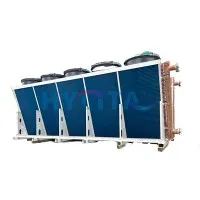
Another type of air cooler that can be considered for server rooms is the Air Cooler Heat Exchanger. Heat exchangers work by transferring heat from one medium to another. In the case of air cooler heat exchangers, they transfer heat from the hot air in the server room to a coolant, which is then cooled and recirculated.
These coolers are highly efficient in removing heat and can be customized to fit the specific needs of a server room. They are also relatively quiet in operation, which is an important consideration in a server room environment where noise can be a distraction. Air cooler heat exchangers are often used in conjunction with other cooling systems to enhance overall cooling performance.


Air Aluminum Cooling
Air Aluminum Cooling is a specialized type of air cooling technology that uses aluminum as a heat - dissipating material. Aluminum is an excellent conductor of heat, making it ideal for cooling applications. Air aluminum cooling systems are designed to quickly transfer heat from the servers to the surrounding air.
These systems typically consist of aluminum fins or heat sinks that are attached to the servers. As the servers generate heat, the aluminum fins absorb the heat and transfer it to the air flowing over them. Air aluminum cooling is a passive cooling method, which means it does not require a lot of energy to operate. It is also a reliable and low - maintenance solution, making it a popular choice for server rooms.
Factors to Consider When Using Air Coolers in Server Rooms
While air coolers offer several advantages for server room cooling, there are also some factors that need to be considered before making a decision.
Room Size and Layout
The size and layout of the server room play a crucial role in determining the effectiveness of air coolers. In larger server rooms, multiple air coolers may be required to ensure uniform cooling. The layout of the servers and the airflow patterns in the room also need to be taken into account. For example, if the servers are arranged in a way that restricts airflow, the cooling efficiency of the air coolers may be reduced.
Heat Load
The heat load of the server room, which is the amount of heat generated by the servers and other equipment, is another important factor. Air coolers have a limited cooling capacity, and if the heat load is too high, they may not be able to maintain the desired temperature. It is essential to accurately calculate the heat load of the server room and choose air coolers with a sufficient cooling capacity.
Humidity
Air coolers can increase the humidity in the server room, especially evaporative air coolers. High humidity levels can cause condensation on the servers and other equipment, which can lead to short - circuits and other electrical problems. It is important to monitor and control the humidity levels in the server room when using air coolers.
Conclusion
In conclusion, air coolers can be a viable option for cooling server rooms, especially in smaller facilities or as a supplementary cooling solution. Compressor air coolers, air cooler heat exchangers, and air aluminum cooling systems each offer unique benefits and can be tailored to meet the specific needs of a server room. However, it is important to carefully consider factors such as room size, heat load, and humidity before deciding to use air coolers.
As an air cooler supplier, I am committed to providing high - quality air cooling solutions for server rooms. Our range of products is designed to offer energy - efficient, reliable, and cost - effective cooling options. If you are considering using air coolers in your server room or have any questions about our products, I encourage you to contact us for a detailed consultation. We can help you assess your cooling needs and recommend the most suitable air cooling solution for your server room.
References
- ASHRAE (American Society of Heating, Refrigerating and Air - Conditioning Engineers). "Thermal Guidelines for Data Processing Environments."
- Server Room Cooling Best Practices. White paper from industry experts in data center management.